“Asian Folktales for Children: Traditional Tales from Japan, Korea, China, India, The Philippines and Other Asian Lands”
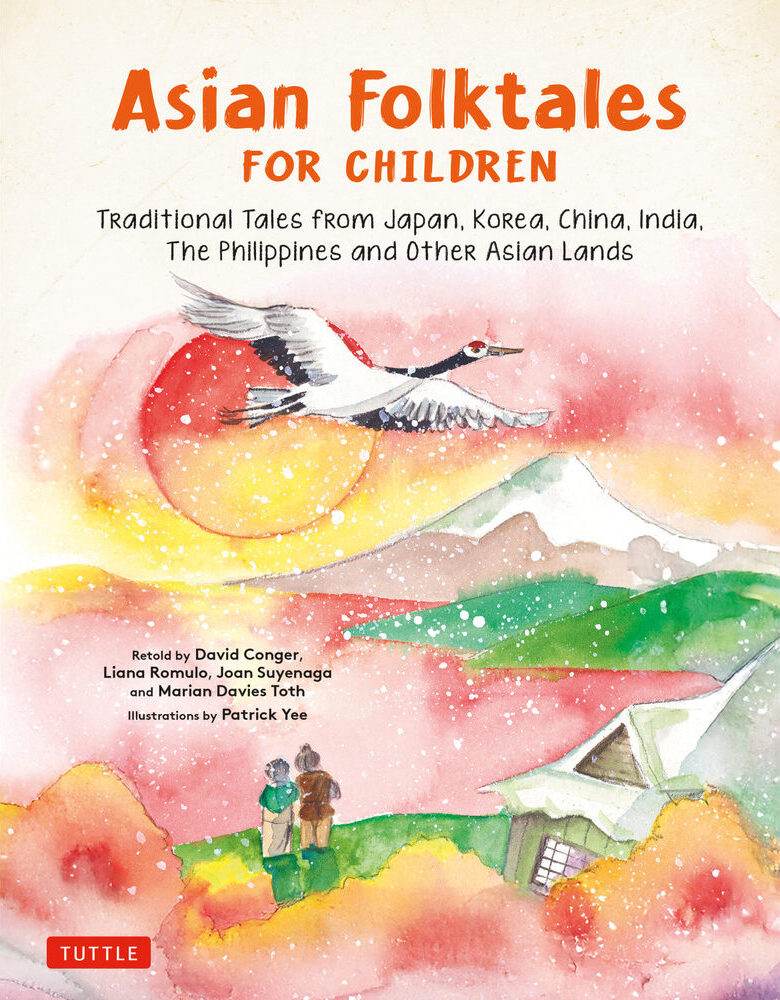
English language children’s picture books that center around Asian folktales and themes are no longer as uncommon as they once were. Yet it’s still rare to find collections of folktales that originate from Asian countries themselves. Now David Conger, Liana Romulo, Joan Suyenaga and Marian Davies Toth have come together in Asian Folktales for Children to retell stories from Japan, Korea, China, India, the Philippines, Thailand and Indonesia in, with illustrations by Patrick Yee.
The stories are (this being a children’s book) short; the entertaining tales are mainly told from the perspective of animals. If one has ever wondered why the preference for cats versus dogs can be so polarizing and why the two animals typically don’t get along, the first folktale in the book—from Korea—will shed light on this question. In “Why Cats and Dogs Don’t Get Along”, the two animals are old friends and do get along very well. Their human, a man named Shu, is given a magic coin that will forever supply him with unlimited rice. One day, Shu’s rice supply dwindles and it’s revealed the magic coin has disappeared from the rice container.
The resident cat and dog search for this missing coin and with the help of some rats, they locate and liberate the coin. But on the way back to Shu’s, they need to cross a river and the cat can’t swim. Old friends that they are, the dog lets the cat sit on its back while it crosses the river. A group of boys start taunting the animals and disaster strikes.
The dog ignored the commotion all around him. His only thought was to bring the coin back to his master. But in spite of her fear, the cat couldn’t keep a straight face. She began to think about how silly she must look to the children, all wet and shaking. No matter how hard she tried, the cat couldn’t stifle her laughter. When she finally lost control and began to laugh, the silver coin slipped out of her mouth, immediately sinking to the bottom of the river.
The story doesn’t end there, but the cat and dog’s friendship does. This tale could also explain why a dog is man’s best friend.
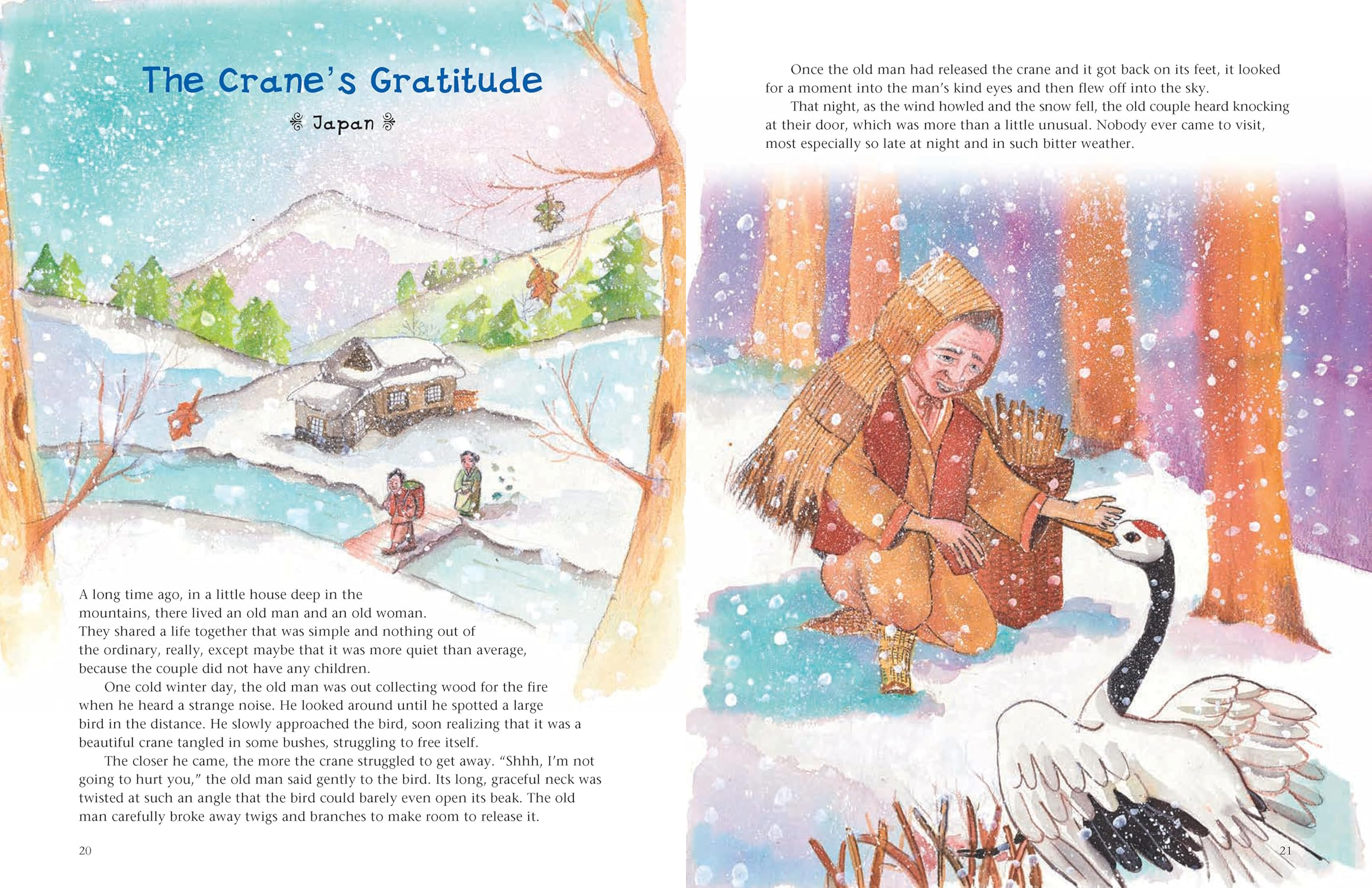
In “The Crane’s Gratitude”, a Japanese tale, an older man saves a crane from freezing to death and the next day a young girl appears at his front door. He and his wife offer her shelter and raise her as their own daughter. When their adopted daughter learns that they don’t have enough to eat, she weaves a luxurious fabric they can sell at the market to put more food on the table. By the end of the story, the connection between the crane and the girl becomes clear. It’s a heartwarming tale about helping those in need, including animals.
“The Lucky Farmer Becomes King” is from Thailand and is self-explanatory, although the farmer in the story’s title first takes credit for his wife’s hard work. The king informs the farmer that if he continues to do good deeds, he will advance in the royal court. At each bend in the road, the farmer comes across an opportunity he takes credit for and moves up in the esteem of the king. Unlike the other stories in this collection, the moral of the lucky farmer can be read in one of two ways. Yes, luck can take one far. In another sense the story could warn children that some people have no problem taking advantage of the good graces of others just to get ahead.
The stories in this collection include universal lessons for children and adults alike. Patrick Yee’s illustrations add humor and empathy to these stories.



You must be logged in to post a comment.