“City Like Water” by Dorothy Tse
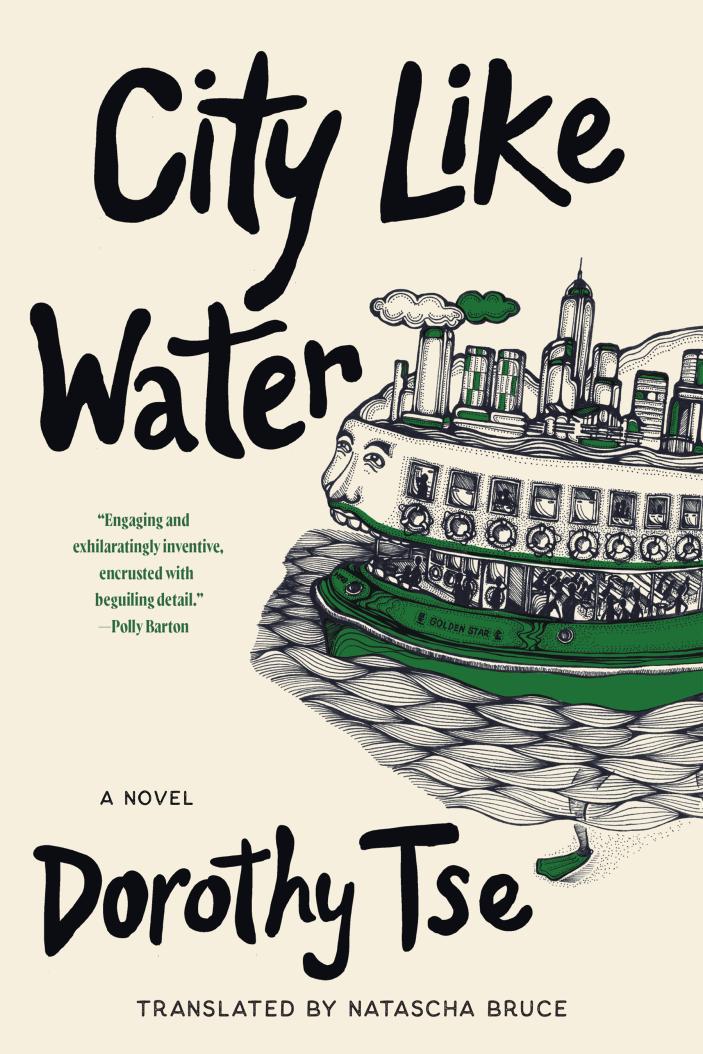
In a 2019 interview with Words Without Borders alongside her translator Natascha Bruce, Hong Kong writer Dorothy Tse said, “I believe experimenting with language brings insight to any type of writing.” Later in the interview, Bruce remarks, “There is usually a playful element to Dorothy’s work, coexisting with—or perhaps contributing to—a deeply sinister one.”
City Like Water is playful, and it is sinister. Tse blends these moods and twists inside a surreal, hypnotic cityscape, accented by ferocious bursts that will describe—for example—the thud of a falling body using the image of a meteor that bores through the narrator’s skull, turns it to coral, and crushes her at the bottom of a black ocean. Tse’s piece, short enough to call a novella, is experimental without pause. But its maze of impressionistic anxiety, sensory overload, and random reality shifts are not purely aesthetic. The maze and its terrors are means for insight into a place in time where place and time—and the will to live, the why to live—are becoming unmoored.
The metropolitan setting is nameless but not disguised. It is quite transparently Hong Kong—though a reader with no knowledge of Tse or the city could, in theory, plod though unaware. Those who do not know Hong Kong beneath its surface are likely to miss the sideways references to various incidents of the late 2010s (eg, 831, 721), but no reader will miss the reel and roil accompanying the boot of the state coming down, crushing dissent and transforming both the built environment and the collective (un)conscious inhabiting it. Police feature heavily in this book; some of them militarised.
Nineteen brief chapters structure City Like Water, of which a significant chunk take their names from mundane, grotesque, or unruly objects. Sample: “Black Bean Pig Tail Stew”, “Lotus Roots at War”, “Toe Cleavage Sirens”, and “Confusion TV”. At first the sheer intensity of each quickfire segment suggests Tse’s work is a series of themed vignettes, but as the work progresses it becomes—foremost—the story of a disrupted family. The narrator’s mother becomes involved in a protest against fake food, in which entanglement with the police sees all the protesters—including the mother—turned into statues. The narrator’s father recedes into the living room sofa, then further recedes into the state-issued television he is watching—but in its programmes, he only ever appears as a silent extra. The narrator’s sister is a haunting presence from the start. She may be a doll, or dead, or imagined. Or, the reader may infer that the narrator is dead (perhaps drowned) and in limbo, and that the witchlike little sister is reaching her in snatches from the realm of the living.
Besides Hong Kong, besides family, the topic is unreality. City Like Water, like water, cannot be grasped. Its reality feels built from brief, strobing offshoots of our own, and there is always a sense that the true or familiar city is being left behind. Shut down, or overwritten. Accordingly, the notion of the work as an exploration through metaphor of Hong Kong shedding its liberal values amid nostalgia and nightmare is easy to grasp. Yet there is more to it.
For almost a decade in the Anglophone world, comment on the unravelling of reality has become commonplace. See Brexit, Trump 1.0 and 2.0, pandemic, Trump 2024-, the surge in domestic terrorism, internet addiction, AI hallucination, and so on. “Post-truth” has, arguably, arrived hand-in-hand with state violence and social decay. Those who feel we have all literally or figuratively slipped onto the “wrong timeline” may think of their own familiar televisions as Tse describes a news anchor appearing onscreen with her usual smile absent, and instead of announcing the news: weeping.
When Tse finished writing City Like Water, it was 2020. One year prior, the Hong Kong government’s Extradition Law Amendment Bill had triggered massive protests, then confrontation and crackdown. City Like Water will arrive in publication in English translation a few months after a massive fire in an apartment complex in the city’s Tai Po area, triggering criticism and ferment in a time of severely diminished opposition to power. Elsewhere, meanwhile, as powerful states grow more brazen, more willing to trample norms, the world is growing weirder. Darker. Chaos is deepening, and hope is a slippery fish. Now is a good time for a City Like Water.