“Delay: A Comics Anthology”, edited by Charis Loke and Paolo Chikiamco
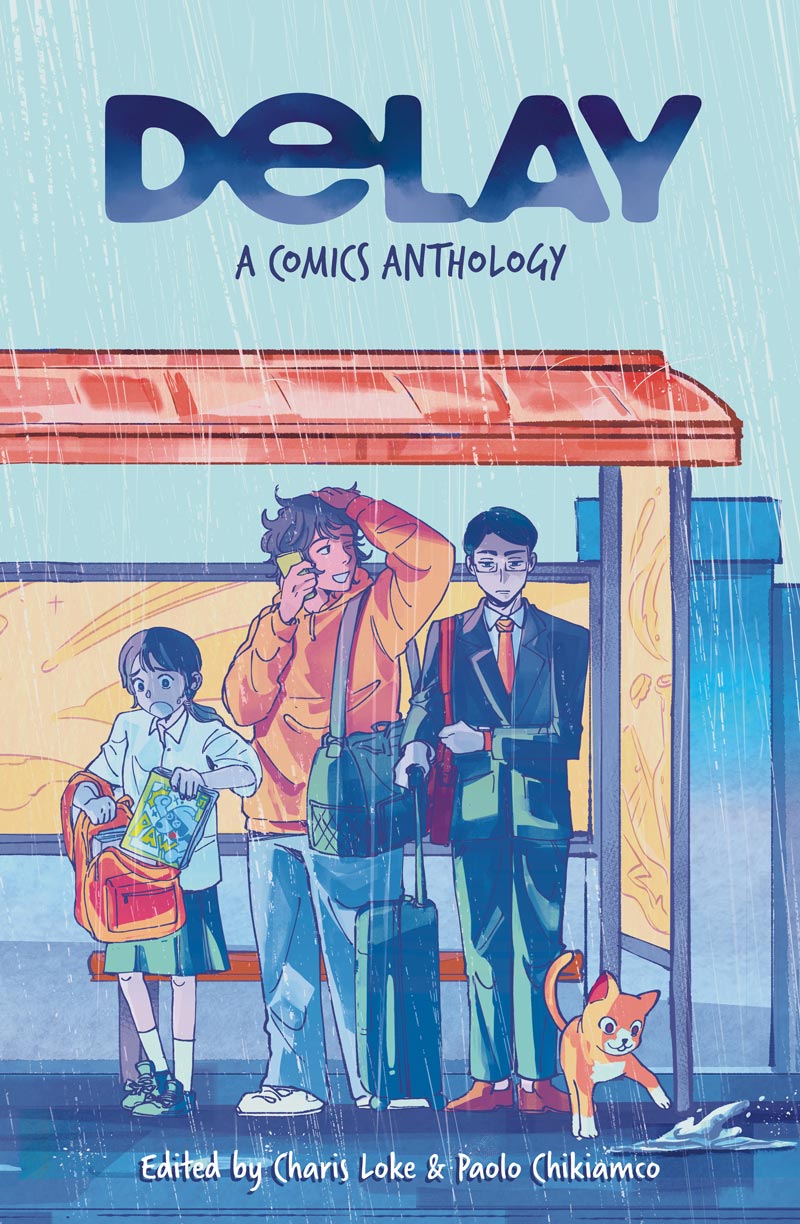
Time is one of the grand themes of literature and art. A new comics anthology, Delay, brings together 11 pieces of graphic fiction in the short form from various Southeast Asian artists including Singapore, Malaysia, Indonesia, and the Philippines, and connects the concept of time to such situations as feeling stuck, waiting, hesitation and anxieties about outcomes. Delay itself, as conceptualised by the editors Charis Loke and Paolo Chikiamco, and as captured by the writers in their contributions, has been handled in various scenarios: from old age, migration to recipes, exploration, parenting, infatuation and death. Published by the Singapore-based Difference Engine, the volume draws attention to the wider region’s expressions of the comics craft.
 The stories in the anthology deploy very different narrative situations and visual moods. In “Ad Astra”, the opening piece, Nicolette Lee shows a spirit after death: Yong Meng Yuet is on the journey to the afterlife with an angel helping her cross the river to reach the “other side”. The river will not permit baggage from this life. She is unable to move on because she feels guilty for holding the love of her life from pursuing his dream. The setting of the story is beyond or outside the Earth: the abstract space of life after death and the “real” space intersect with telescopes and stars as markers of both geographies. The art also juxtaposes the past of her lived life and the present of her after-death journey. The message is beautiful: mistakes should not be ruminated over to produce guilt because mistakes also inspire life lessons. That is the way to live (and perhaps even die) light. The other message is that uncertainty is not to be feared but embraced.
 “Fish Curry Tastes Better the Next Day” by Paati Philosophy stands out especially in contrast to the otherworldly nature of the first story. A mother relates the recipe of fish curry to her daughter, who is not bothered at all about the nuances of the cooking. The story and the recipe relate something deeper: the intentional waiting or delayed gratification. The art in this story focuses on the senses: from the focus on the ingredients to the zooming into the vessel as part of the visualisation of what happens to the dish as it is left overnight, the mother is shown to be taking the daughter on a boat ride into the gravy, witnessing what happens to the spices as they lose their rawness and as they melt into each other and how the aroma spreads to every corner of the house.
 Another story that takes about delay in optimistic terms is “Syncopation” by Aime Marisa and Bonnibel Rambatan, which follows a young woman who offers dance performances at various forums but her friend cannot participate because she is a migrant and without citizenship doesn’t qualify for such performances. But the friend is not disappointed at all: she thinks that when things get delayed, one must use the time to improvise. The panels show the fluidity of dance moves, rehearsals, and performances with swirls and musical notations.
 The editors also note that these stories offer glimpses into “thoughts, feelings, dreams, and hopes drawn from Southeast Asian lives.” Almost all stories do. It is not just the nationalities of the contributors that make the collection Southeast Asian but the realities of migration, the presence of multilingualism, and extended or traditional family structures in this part of the world. To go back to one of the stories mentioned above, paperwork delays reflect regional histories of borders and mobility. In another story “Ma, Pa, Delayed Ako”, a scholar is “delayed” in the sense that he will not graduate along with others of his cohort. He tries to forge transcripts to keep his parents in the dark. Eventually, he confesses but both the use of regional language (such as the Filipino or Tagalog word “ako” meaning “I” or “me” in the story “Ma, Pa, Delayed Ako”) and the reality of parental expectations reveal an emphasis on family.The stories are about daily lives and situations: from school life to citizenship to domestic spaces, Delayed invites the readers to reflect on what time means to them. As the editors put it,



You must be logged in to post a comment.