“Echoes from the Sino-Burmese Borderlands” by Wen-Chin Chang
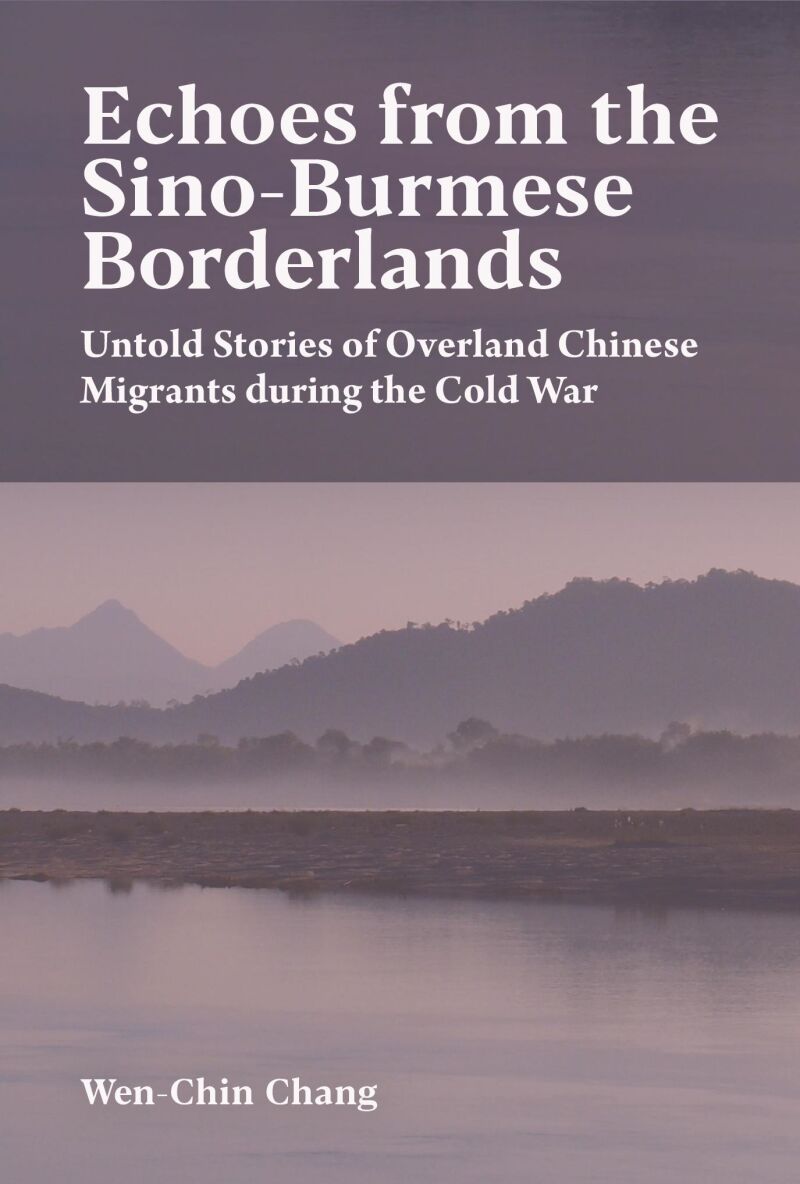
The Myanmar-China border stretches for over 2,000 kilometres between China’s Yunnan Province and Myanmar’s Kachin and Shan States. The border has long been a site of migration, trade and cultural exchange, and became a particularly significant area of escape during periods of political and economic hardship. The impact of this border on individual lives is the focus of Wen-Chin Chang’s new book, Echoes from the Sino-Burmese Borderlands: Untold Stories of Overland Chinese Migrants during the Cold War. Drawing on multiple long-form interviews, Chang details and analyses the experiences of individuals who undertook clandestine overland journeys from Yunnan into Burma during the Cold War, examining how they fared upon arrival and how their lives were impacted by this migration. Chang focuses on how “ordinary lives in the frontier region were affected by the volatile situation, how people reacted to it and how the survivors have remembered and told their stories.”
During the Cold War, China experienced profound political upheaval. In China, the arrival of the Communist Party into power, the Great Leap Forward, and the Cultural Revolution unleashed successive waves of migration as those deemed anti-regime, counterrevolutionary, or bourgeois fled across the border. Northern Burma was also heavily impacted by Chinese politics and soon became a convenient staging ground and rear base for the Kuomintang (KMT) as they attempted to regroup and reorganise. The border was also significant for the Chinese Communist Party (CCP). For the CCP, Burma became part of broader efforts to extend communist influence around the region, and Beijing provided support to the Communist Party of Burma (CPB), which was active along the border. As political divisions from China were replicated in northern Burma, Chinese migrant communities in places such as Myitkyina became deeply divided between KMT and CCP supporters. Northern Burma became a political battleground with migrants on both sides engaging in political activity and producing and circulating political texts with competing viewpoints on the situation in China.
A key attribute of the book is the space it gives to individual experiences. Each chapter centres on a different individual. For example, we are introduced to Yang Dage, born in Myitkyina in 1954 to a KMT-supporting family that had fled Yunnan due to political persecution. He attended a Chinese school that raised the ROC flag and sang the national anthem daily. Sent to Taiwan at seventeen for his education, Yang would never return to Burma. His father remained in Myitkyina as a school principal and KMT informant, frequently detained whenever high-ranking Chinese officials visited. Eventually arrested and extradited to China, he died in prison in Yunnan. Another account follows Chen Dashu, born in Yunnan to a landowning family. After the CCP takeover, he fled to Burma as a refugee. In the 1960s he left school early to join the KMT, was later arrested following a failed attack on a military base and imprisoned in Yunnan. After his release, he returned to Mandalay, where he became involved in running Chinese-language schools.
We also hear the story of Ma Dage, born into a Yunnanese Muslim family living in Kachin State, who worked as a KMT spy from 1983 to 1990. His involvement in espionage was motivated more by financial necessity than ideology. He collected intelligence from informants and transmitted it to Taiwan via telegram, using a sugar refinery as cover for these activities. Such operations lost much of their significance after 1987, when cross-strait travel between Taiwan and China was permitted following improved bilateral communication. Throughout his work, Ma Dage concealed his Muslim identity, presenting himself as Buddhist to facilitate surveillance. Only after retirement was he able to attend the mosque regularly and undertake the hajj.
By providing these detailed individual accounts, Chang offers fresh insight into how Cold War politics in China and Burma impacted the lives of individuals and drove cross border migration. It also helps illuminate how borderland communities navigated, negotiated, and at times defied state policies. The book shows, for example, how local Burmese village headmen assisted Chinese migrants and refugees in obtaining citizenship soon after arrival, enabling them to remain in Burma.
With its focus on the detailed life stories of individuals rather than an overtly dry theoretical approach, the book is almost narrative in style and as a result is highly-engaging account that provides significant insight into those who live along the Sino-Burmese borderlands during the Cold War.

