“Lion” by Tina Chang
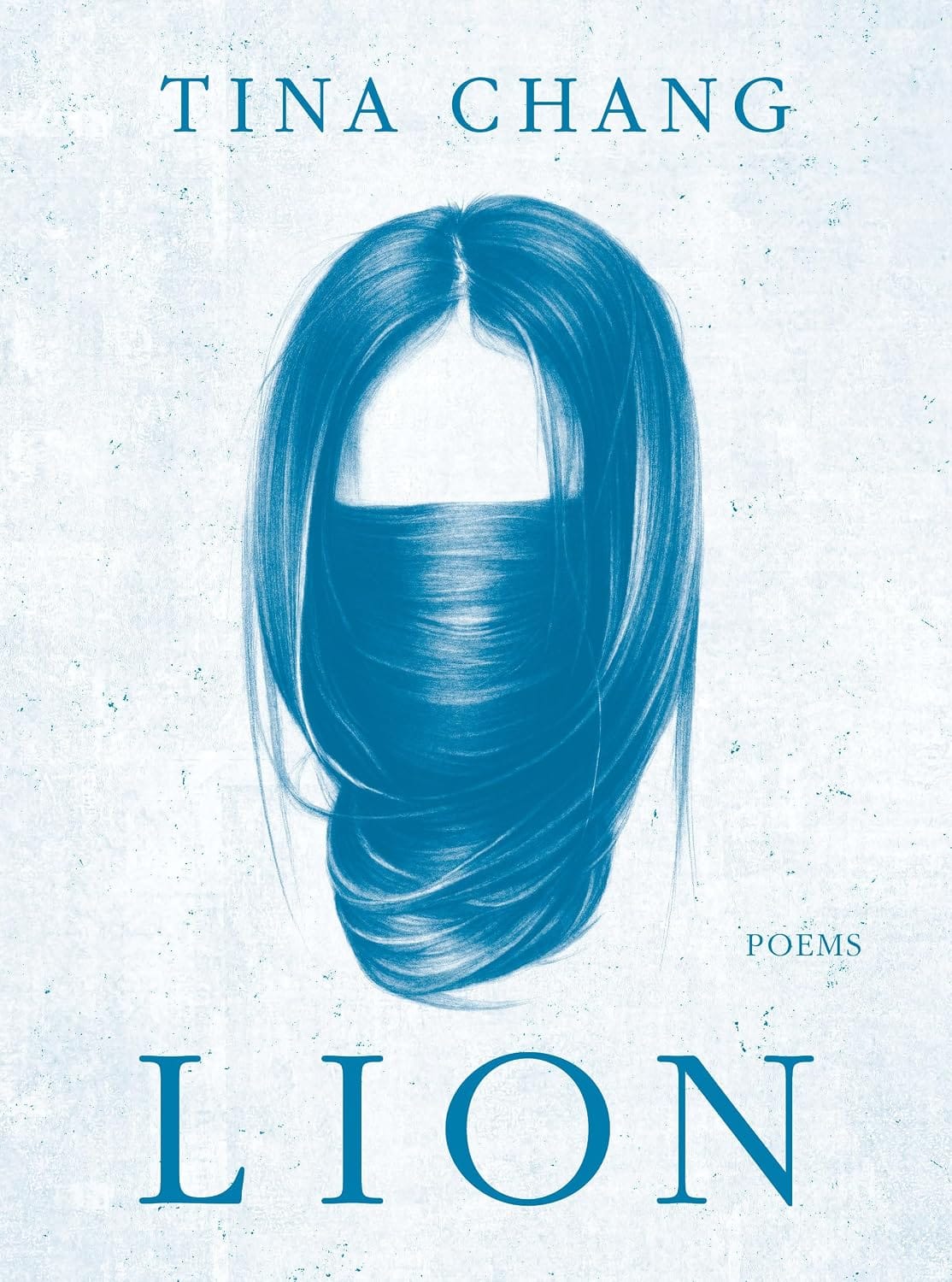
During the Covid-19 pandemic in the United States, hate crimes against Asian American women included some particularly gruesome murders. In March 2021, a man shot and killed six Asian women at two massage parlors and a spa. In January 2022, Michelle Alyssa Go was pushed by a man onto the subway tracks in New York City just as a train was approaching. A month later, Christina Yuna Lee was fatally stabbed in her New York City home by a man who had followed her into her apartment building. The media tends to report on the perpetrators—their backgrounds and their possible motives—as if the women themselves are invisible and not part of the crime. To tackle this problem, accomplished Asian-American Tina Chang, gives visibility to Asian American women in her latest collection.
In an early prose poem, “Selective Seeing”, Chang writes about this invisibility:
By virtue of being Asian American and a woman, she was often watched in her daily routine, though her duties and contributions were barely noticed. Sometimes, in the course of a day, the only interactions she might have had were with the mail carrier, a cashier at the local market, a neighbor she passed on her daily walk.
Besides the theme of invisibility, Chang also weaves in the image of the lion as a protector throughout her book. Early in the book, the title poem, “Lion”, begins:
I chewed into the wreck of the world,
into the neckbone of the past that pursued me.
All the while, I moved toward extinction,
bearing the burden of damage, language of the protector.
Later in this poem, Chang writes about her mother as part of a long lineage of protectors. Her mother also appears in another section of the book where Chang pairs very short poems of just a handful of lines with images of artwork from Hong Chun Zhang depicting women’s long hair in different iterations.
My mother stood before her mother as she departed
Taiwan for America, letting go a country where
she was subdued, for another where she was invisible.
She gave birth to an invisible daughter, who ate
the seeds of this country, who daily grew
into a semblance of her own masked face.
Chang’s writing particularly shines in the collection’s longest poem by far, “In Heartbeat: A Zuihitsu”, which refers to a Japanese literary tradition of telling a story through fragments.
The women live firmly in my new imagination. There, they keep living and my rehearsals end with their survival. They live good lives. They travel and bear witness to wonder, icicles drop from the lip of a roof, spring ruminates on its own supple bursting. Perhaps they linger on the errant bruise of a horizon as they long for a distant country. Waterfall. In their alternate lives they are fulfilled, or anxious, or enlightened. They get to choose. There is a steady drip somewhere.
Besides the section in the book that pairs poems with images of art from Hong Chun Zhang, Chang includes other images of art throughout her book, including one from Christina Yuna Lee, who worked at the Eli Klein Gallery in New York before her murder. She also includes an image of the New York subway line that Go about to board the day she was killed. Chang has taken the same R train and wonders later on in “Motivated: A Zuihitsu” if she and Go ever crossed paths.
Michelle Go was about to step onto the R train, which I took every day. Maybe we glimpsed each other once. Her face and my face, our reflections unalike but turned in the same direction.
As much as Change gives voice to Go and Lee, she doesn’t write about the women murdered in the Atlanta shootings, although she does mention them early on in her book. The collection on the whole is a lovely tribute to these women who lost their lives in violent and tragic ways, invisible no longer.

