“Silk Roads, Steppe Roads” by Jonathan Karam Skaff
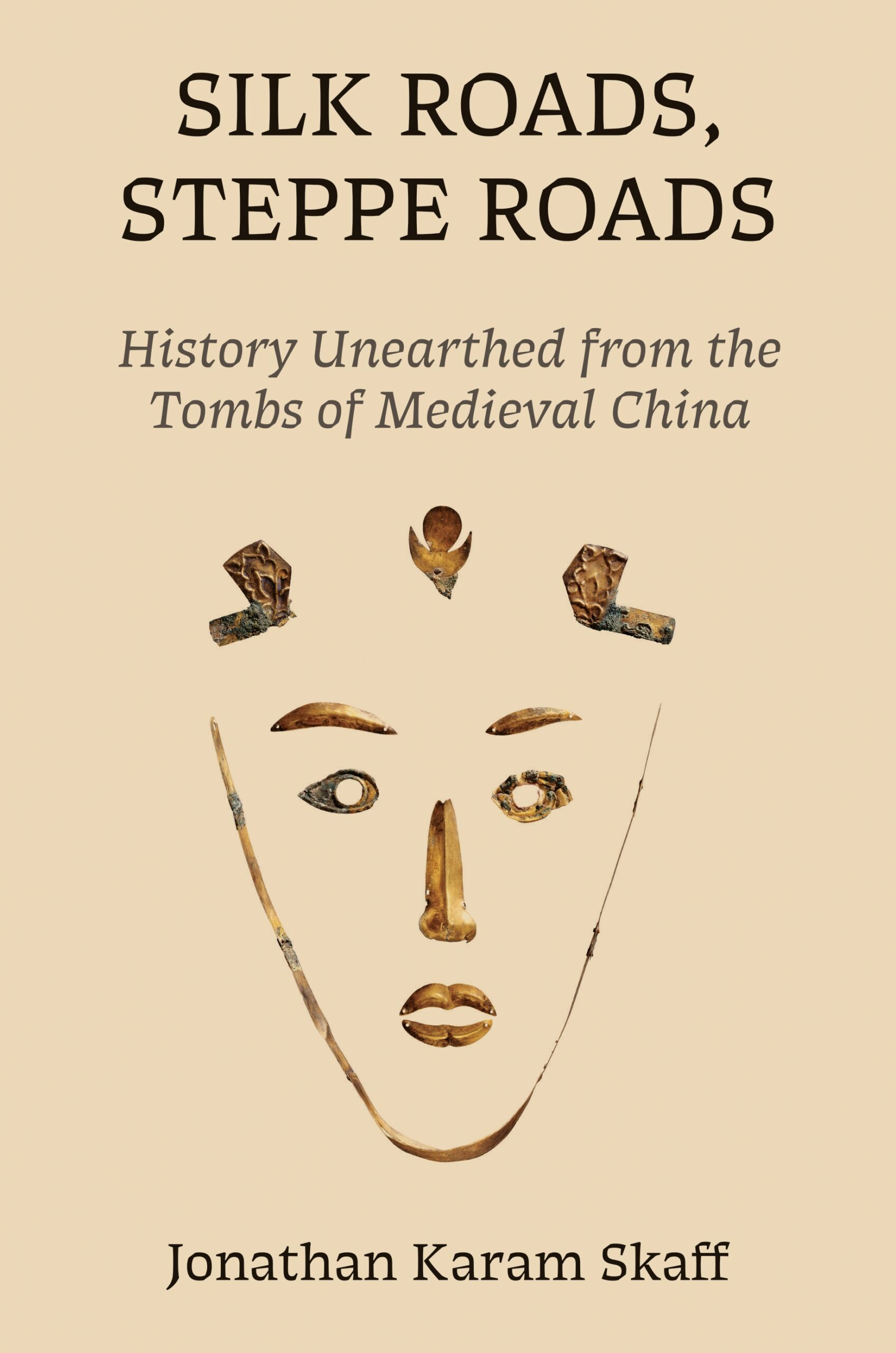
Silk Roads, Steppe Roads is not quite the general historical overview implied by its title and subtitle. It is instead a deep dive (literally) into Sui and Tang dynasty tombs in three places in northwestern China and Mongolia, places—in other words—where China bumped up against peoples from Central Asia and the steppe. Its detailed and specialised nature leaves little for the lay reader (for whom it is not intended), but Jonathan Karam Skaff’s main arguments are nevertheless clear enough.
Delving into the tombs reveals lives of people of diverse backgrounds and statuses, including slaves, common people, merchants, and officials of middle and lower ranks, who typically command little attention in the received Chinese-language sources. The tombs, which were meant to be places of final rest, turned out to contain evidence of movement, interactions, and change.
Skaff mines the tombs in Turfan—the first of the three “destinations”—for their written materials: paper documents that had been recycled to make grave goods (paper shoes, hats, etc). Among these documents are those that give evidence of what seems to have been a thriving slave trade. Skaff presents this, at least in part, to challenge the traditional views of the so-called “Silk Road” as
often idealized, conjuring up romantic visions of caravans laden with exotic silks and aromatic spices. The glamorous version of the Silk Road persists because at least one unsavory aspect of the trade, slavery, has received little scholarly attention.
Given the ubiquitousness of slavery, it would have been surprising not to find slavery an important part of early-medieval trade and commerce. It seems that Sogdian traders were not above trafficking their ethnic Central Asian cousins. Within the broader themes, and indeed underpinning them, Skaff can identify individual slaves as well as some information about their journeys.
The second set of tombs are in Guyuan in Ningxia. Here Skaff tracks two lineages with the same surname Shi, distinguishing the second by spelling it Shih. Skaff clearly enters into an apparently existing argument here, making the case that the Shis are Sogdian while (contrary, it seems, to some other views) the Shihs are in fact Chinese. He makes the case based on grave goods, epitaphs and other data. As interesting as the detailed explanation as to how the archaeologist/historian reaches such conclusions may be, the layman may be more interested in how well-integrated the Sogdian family appears to have been. They retained certain Sogdian ways and were proud of their ancestry, but nevertheless also seem to also have adopted a great deal of the lifestyle of their new society. By the seventh generation, the family is adopting conventional names rather than the bilingual names prevalent earlier. Conversely, the burials of the apparently Chinese Shih family contained elements of Central Asian origin.
Skaff asks whether the people in the tombs were “Sogdians or borderlanders?” He concludes the latter. Although he doesn’t ask the perhaps anachronistic question as to whether they were “Chinese”, it would seem that ethnic origins were little impediment to playing a full part in Tang-era society.
The final destination is a visit to two Tang-era and also heavily Tang-influenced tombs in Mongolia, some 200km west of what is now Ulaanbaatar. The deceased, Pung Yitu, was an important 7th-century Tang vassal and these tombs provide an excuse to write about this “little-known” period of history. It’s hard to take issue with Skaff’s conclusion that “Sui-Tang imperial power and norms cast a long shadow.”
These being tombs, Skaff dedicates many pages to grave goods. Much of this is for the cognoscenti but a number of tidbits are interesting—belt buckles, it would appear, were an important status symbol—and others fascinating: not only were there some Byzantine coins, but someone was faking them. One can’t help wonder why.