Podcast with Rakesh Kumar, “Chip Age”
Before a chip is placed inside a laptop or a smartphone, it crosses tens of thousands of miles and multiple borders. One country designs it; another fabricates it; others test and package; another may ultimately place it inside the device itself. Other countries may provide the raw materials or the chipmaking tools needed to make these chips.
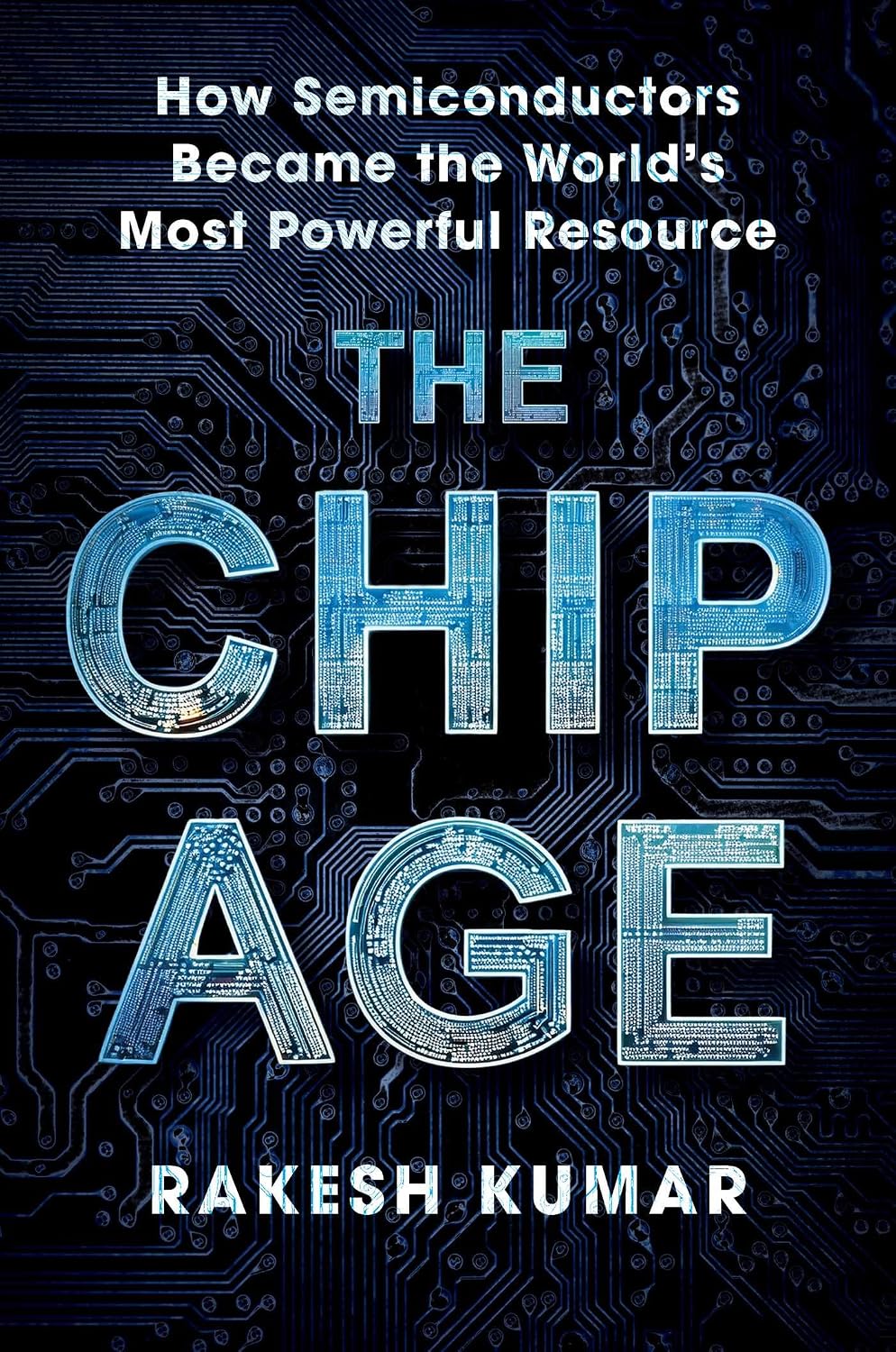
Rakesh Kumar, author of the book Chip Age: How Semiconductors Became the World’s Most Powerful Resource (Simon & Schuster, October 2026; Penguin India, September 2026) joins the show today to share how we should think about this strategic commodity.
The story runs from the invention of the integrated circuit in 1959 and the missile and space programmes that were its first customers, through the 1970s decision to keep the high-margin design work at home and outsource manufacturing to Asia, to Taiwan’s existential bet on electronics after its expulsion from the United Nations—and TSMC founder Morris Chang’s radical idea that a foundry should never design or sell chips of its own.
Today, chips shape much of our economy and our politics. Rakesh joins me to talk about how the chip supply chain really works and why chips aren’t really the new oil.
Rakesh Kumar is a professor of electrical and computer engineering at the University of Illinois Urbana-Champaign, and a fellow of the IEEE. He is the author of Reluctant Technophiles: India’s Complicated Relationship with Technology.
