“Moonlight Saga” by Arupa Patangia Kalita
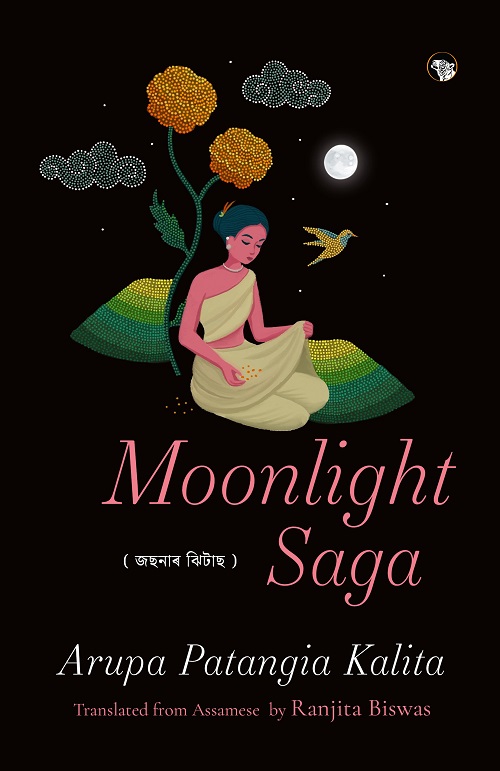
Set in the tea gardens of colonial Assam, Moonlight Saga follows the communities who built and maintain these delicate ecosystems on the frontiers of India, and the tensions and pressures of plantation life. Originally published in Assamese in 2022 and recently translated into English, this family saga set on the Atharighat Tea Estate in Assam, just below the Bhutan border, portrays life from both the perspective of Western planters and the Adivasi, India’s indigenous population, the labourers who sustain it. These alternating accounts provide contrasting portraits of life, danger and change on a colonial tea plantation. There is relatively little Assamese literature translated into English and this novel additionally benefits from a translation which incorporates some of the songs and phrases from Assamese.
After famine devastated their villages, Adivasi communities became “like birds which suddenly lost their shelter when a big tree was felled.” Survivors were compelled to travel across India to work on tea estates as bonded labourers, unable to return home. Difficulties didn’t end on their arrival. After a harrowing journey, before beginning work, new arrivals had their hair and beards cut, their old clothes were burned, and they were quarantined in the jungle for ten days against disease. Not that this brought safety: the myriad dangers of plantation life included malaria, cholera, leeches, disease, and the occasional man-eating tiger. As many as 60 out of every 100 new coolies die before they can even begin work.
The strict discipline of plantation life, furthermore, contrasts sharply with the freedom of their former existence. They are ordered around “like cattle driven by a stick.” Among the workers is Durgi, a talented singer and dancer, who brings moments of joy to the workers through her singing at festivals and religious celebrations. She falls in love with Dosaru, another labourer, and they marry. Their relationship, however, is strained by the brutalities of plantation life. As Dosaru is forced into acts and work he despises, his spirit gradually breaks and he turns to opium to cope.
The novel benefits from a translation which incorporates some of the songs and phrases from Assamese.
Jonathan is a British tea planter and manager of the plantation. He has spent decades building the plantation from a small nursery into a large and profitable estate. His authority is near-absolute, as is his feeling of superiority. The plantation company grants him freedom to rule over workers’ lives as he sees fit, a role he takes seriously. Workers are forbidden to ride bicycles or even open umbrellas while passing in front of his bungalow, “even if it was raining heavily.” The novel opens with Jonathan arranging the supply of more Adivasi labourers (which he calls “coolies”) to work on the plantation. He must manage their arrival, ensure they do not bring malaria or cholera with them, train them to avoid snake bites and tiger attacks, and keep them productive, while also worrying about his own health in a harsh climate with limited medical care.
When Jonathan retires, he is replaced by the new planter, Fraser. Young, studious, proud of his role in the empire, he encounters a plantation on the cusp of change. As Fraser introduces reforms that begin to alter the economic and social life of the plantation, the Indian independence movement gathers momentum. The exploitation of plantation labour comes under increasing scrutiny, and workers begin to demand better conditions. Meanwhile Durgi also grows in prominence among the workers and becomes known to Fraser.
Soon these two worlds, once rigidly separated, begin to collide.