“My Destiny” by Liang Xiaosheng
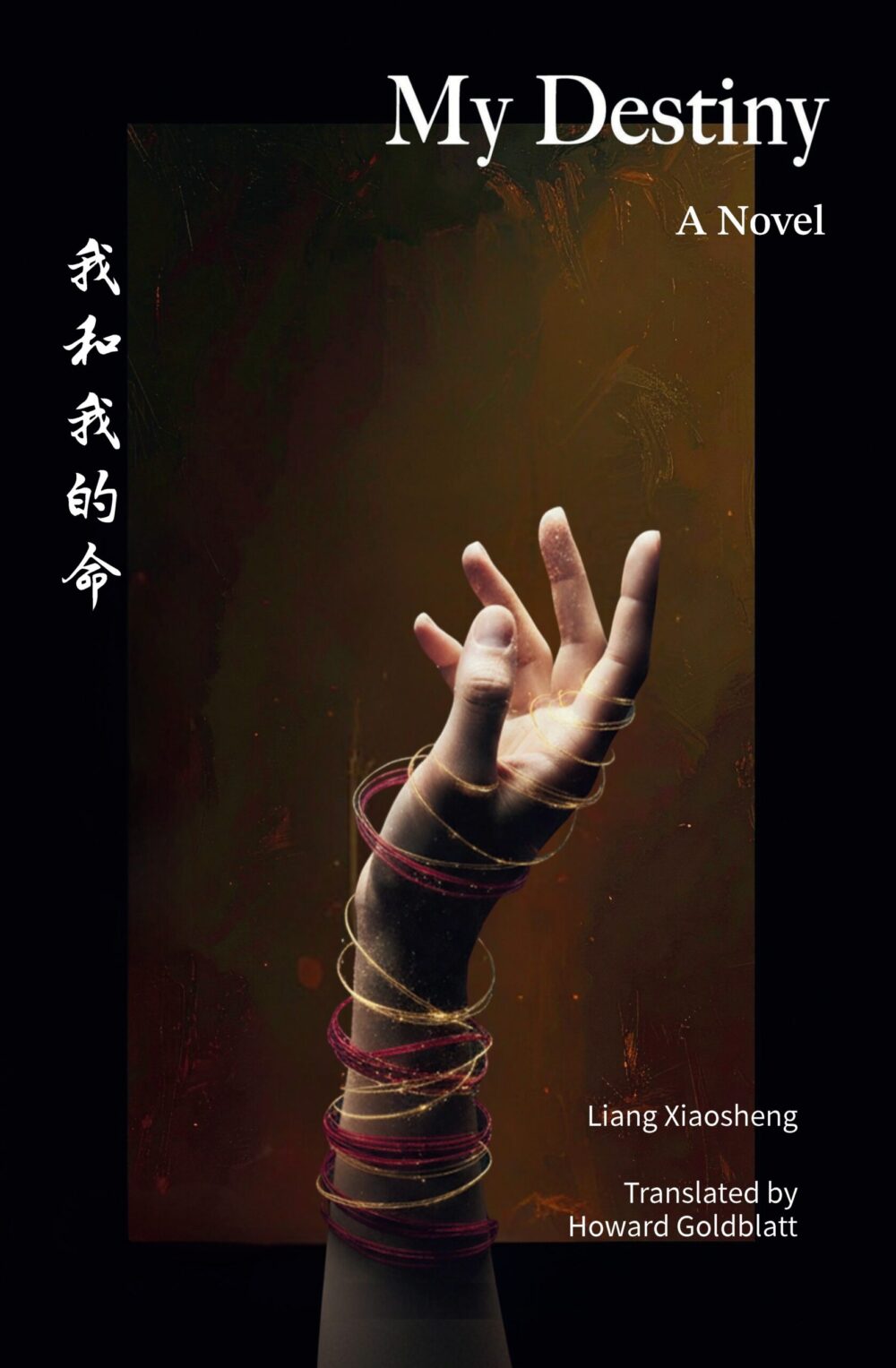
My Destiny is the third Liang Xiaosheng book brought into English translation, but the first novel. It follows the short story collection The Black Button published by Panda Books in 1992, and the memoir Confessions of a Red Guard from the University of Hawai’i Press in 2018. The latter and My Destiny are both translations by Howard Goldblatt, easily the foremost among Chinese-to-English literary translators of his time. My Destiny will arrive in English publication from China Books six years after its publication in Chinese, and one year after a television adaptation.
The jump to television feels intuitive. Liang’s novel is long, episodic, and does not shy from twists and melodrama. It tells the story of a woman named Fang Wanzhi, in her own words. She starts with her birth in southwest China at the tail end of the Cultural Revolution and ends when she is about forty, starting cancer treatment. As the title suggests, destiny is a major theme—running in contrast with the freedom to self-cultivate and steer one’s life. Fang Wanzhi serves as a moral model, dealing in good faith with the cards life deals her and the needs of friends and family. Across the plot, various dilemmas, heartaches, and opportunities are laid before her.The circumstance of Wanzhi’s birth sets up her moral journey. She is the biological child of poor peasants in a remote village in Guizhou Province who give her away for adoption by a family in the county seat, headed by a well-off mayor. Wanzhi gradually realises her privilege as she grows up. After she learns of her origins, she chooses to establish contact with her birth family—an emotional and social challenge she faces with only partial success. She has the will to help, but neither the funds nor emotional resilience.She declines the life of ease her (adoptive) father might have offered her, and heads off to Shenzhen to seek work. Here, Liang’s writing expands from a light bildungsroman to incorporate historical fiction of the recent past. The Shenzhen that Fanzhi migrates to is at the bleeding edge of China’s “reform and opening up”—the rapid shift toward a market economy. This is something rather rare in the Chinese fiction that reaches English translation—a ground-level view through the eyes of the internal migrant workers who powered this period of economic expansion. My Destiny is far from an edgy title, but it comes closest to realist grit in this blue collar Shenzhen section. While Wanzhi is living temporarily in a hotel full of fellow migrant workers, she bears witness to a police crackdown on prostitution. Though Liang occasionally uses Wanzhi’s narration to tell us directly about policies and trends of the time, he also shows us their effects on her.Wanzhi’s journey through Shenzhen and beyond is an economic evolution mirroring that of the nation’s formation of a new middle class. She begins slaving at menial kitchen work, living in cramped communal conditions with her colleagues. Next comes a period serving as secretary for an egotistical, lecherous factory boss. Then, with a little help from friends she makes along the way, she progresses to becoming the joint owner of a shop, and her entrepreneurialism expands incrementally in tandem with her social life. She partners up with a savvy intellectual, finding love while simultaneously finding the funds to support and visit her family back in Guizhou, whose village is finally benefitting from economic reforms and the state’s poverty alleviation efforts.My Destiny is not official, propagandistic literature, but alongside its tale of moral development there is an upbeat—if bumpy—tale of a nation growing wealthier while managing some of the drama and social questions that emerge from the “opening up” of a national Pandora’s box: inequality, precarity, and the dual anxieties triggered by the burden of personal responsibility and the withdrawal of the state’s social safety net. Suddenly, a trip to the hospital can ruin your life. The word “money” appears 276 times in My Destiny, exceeding “life” by 57 instances.The novel is as internal as well as social. Much of the depth in My Destiny derives from Wanzhi narrating her own thought processes. Her conscience is part of what makes her a “moral model”—she is not one to ignore the downside of a compromise. She is consistently considerate of others’ dignity and social standing, especially when they are worse off than her or do not enjoy the safety from destitution that her adoptive father provides. Wanzhi also grapples with moral questions, and—being articulate from page 1—proposes and polishes her own (or the author’s) detailed theories of destiny, fate, and free will. Late in the novel, Marx’s theory of man as a creature built through social relations enters the mix, but without any fervour to indicate that Wanzhi’s earnest intellect has shifted its focus from morality to Marxism. This is not a narrative of sturm und drang, uprising, despair, or the curse of mortality. Wanzhi’s cancer diagnosis and treatment crop up in the novel’s final sliver—too late to turn the tale existential.From start to finish, Wanzhi, the “I” of the story, remains quietly upbeat. Introspective, sometimes secretive, but never morbidly introverted. Readers who have struggled through life’s travails may find themselves envying her ability to nourish and maintain her relationships across expanding decades, vast provinces, dizzying financial transactions, and fraught family trees. Or, they may take it as inspiration—or even an affirmation—that this is what life can be all about, given the means, will, and thoughtfulness to roll with the punches and keep going—money or no money.