“Northern Tomb” by Isabelle Li
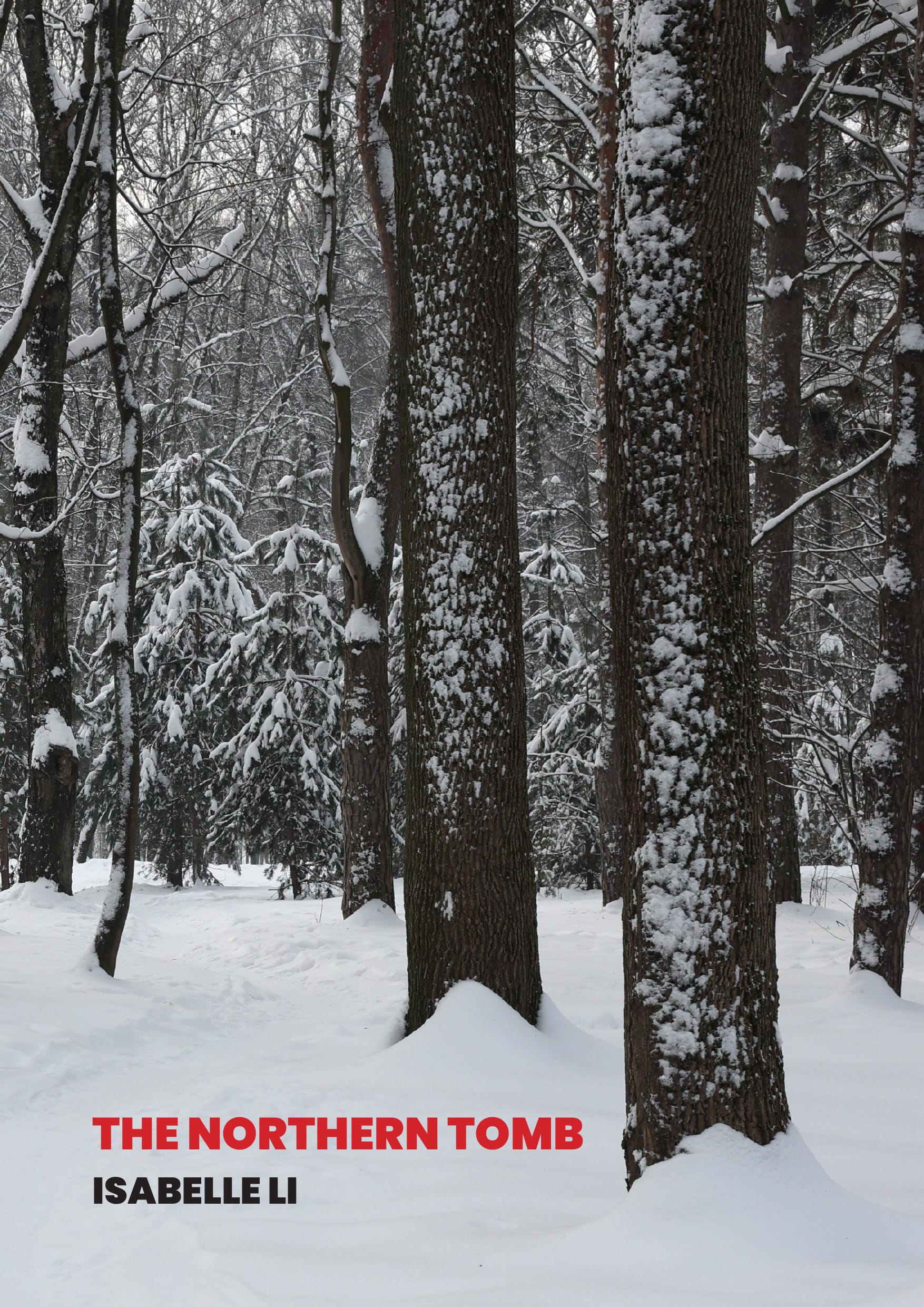
Few novelists dare to take on the backdrop of COVID-19 in China but Isabelle Li does not shy away. In The Northern Tomb, the government’s severe regulations are woven into the background of a story where Mr Zhao, an elderly widow enlists the help of 51-year-old Sister Zhu, a retired cleaner, to be his full-time carer. As the pandemic unfolds, the two housemates find themselves isolated together and develop a unique connection that helps them come to terms with their own painful pasts.
Trigger warnings? None. Rest assured, you won’t be forced to re-live any pandemic-era medical dramas or excessive COVID-swabbing. Instead, The Northern Tomb explores themes of ageing and loss and family relations. More specifically, we see how Mr Zhao navigates his life as a widower and his relations with his children—two daughters living in the UK and Australia, and a son in Shenyang with whom he has a somewhat strained relationship. Meanwhile, Sister Zhu grapples with difficult memories from her childhood in the countryside.
In Li’s China, life is a paradox where the old exists alongside the new. Mr Zhao lives near the Northern Tombs, an ancient mausoleum of Emperor Huang Taiji from the Qing dynasty steeped in history and pine-forested gardens. The city still has old markets and statues of Mao, yet bustles with all the trappings of modern capitalism: an expansive metro system, “girls [with] short hair and boys [with] long hair”, people working in IT or as influencers, and food delivery riders swarming the streets. Li describes modern-day society in all its rawness:
Once I saw a boy struck down and the driver scolded him for being careless. But he only worried about the food box rather than his bleeding leg. After checking the packaging was in order, he hopped onto his bicycle and rode off at lightning speed, no doubt trying to make up for lost time.
The novel is divided into four parts. The first part is narrated by Sister Zhu, recently retired from the hospital as a cleaner. Her son, an IT programmer, lives with her, and she recounts her story of fleeing poverty and abuse as a child.. The second part is narrated by Mr Zhao. Having lived through so much of China’s tumultuous past, Mr Zhao shares quiet reminiscences about the Japanese occupation, the Great Leap Forward, the Great Famine and the Cultural Revolution, shedding light on how these events have shaped him to be the person he is today.
In Part Three, Junior (Jr), Mr Zhao’s adult son enters as yet another narrator. His warm and liberal manner towards his children starkly differ from Mr. Zhao’s rigid parenting style. At nineteen, Jr was incarcerated during a Severe Strike Anti-Crime campaign, a security policy used by the government which ended up with excessive arrests during that time, many over minor offences. Jr’s own was a scuffle he’d carelessly joined with other boys in the neighbourhood, which landed him with a 12-year sentence. During this time, however, Jr learned various skills such as cooking and networking, and organising a prison-wide Spring Gala, making connections that helped him navigate the pandemic later. Jr said: “I learnt that to sustain a life in confinement one requires nourishing food, agreeable routine, and cordial relationships. The lessons were totally applicable to our long wait in 2020.”
The different voices in the book bring different perspectives, adding depth to the relationships between Mr Zhao, Sister Zhu and Jr. Through Mr Zhao’s eyes, Sister Zhu seems to be harbouring a deep-seated trauma from her past, incidents that were previously revealed in Sister Zhu’s narrative. Meanwhile, Sister Zhu notices the rift between Mr Zhao and Jr, friction that is slowly uncovered in Jr’s side of the story.
From the start, Sister Zhu’s voice is arrestingly clear as a middle-aged lady—uneducated but imaginative and bright. Li demonstrates a strong understanding of Chinese language—the curse words Sister Zhu uses sound like the direct translations of a peasant from the countryside: “They called me stinky no face, a broken shoe.”
Sister Zhu’s narratives are a joy to read, often infused with her passion for food: “Cold air pushed in, carrying with it the aroma of a hundred households’ breakfasts.” In describing the dishes she’d prepared for Mr Zhao, she says: “The dumplings were boiling white and stout, the colours of the ingredients alluring through the half translucent bellies.” Mr Zhao’s video calls with his daughters overseas are evocative of diasporic families today. Li describes the iPad scenes with vivid clarity. “The younger daughter wore a pair of glasses, her face so close to the camera, it blocked out her environment… December and January were summer in Australia and the Blue Mountains where the daughter lived was under threat from bushfire.”
Jr and his young twin children also join in the conversation. “The two aunts called out all sorts of endearments to the little ones who hung on to Jr’s shoulders from both sides, staring at the camera while eating biscuits. The Oxford boy had woken up and ambled into the green room, long body covered in a raincoat-shaped rug which his mother said was gifted by his Peruvian girlfriend.”
The novel is scattered with beautiful pieces of classical verse. They are in the songs Mr Zhao sings to his late wife, the poem his daughter recites over the phone and in the Chinese New Year couplets on the wall. Even Jr reads Tang poetry to his children:
Mountains need not be high. They become famous if gods reside in them.
Waters need not be deep. They are spiritual when dragons dwell
in them.
My house albeit humble is permeated by my virtues.
Mossy streaks green up the stairs. Grassy scapes fresh through the
windows …
The Northern Tomb is a rich, textured read about how COVID-19 and the enforced proximity helps bring the most unlikely people together. It’s been six years since the pandemic upended the world, time enough, perhaps, for people to forget the trauma and be willing to revisit this period and explore how this phenomenon has changed lives.