“Painters, Ports, and Profits: Artists and the East India Company, 1750-1850” edited by Laurel O Peterson and Holly Shaffer
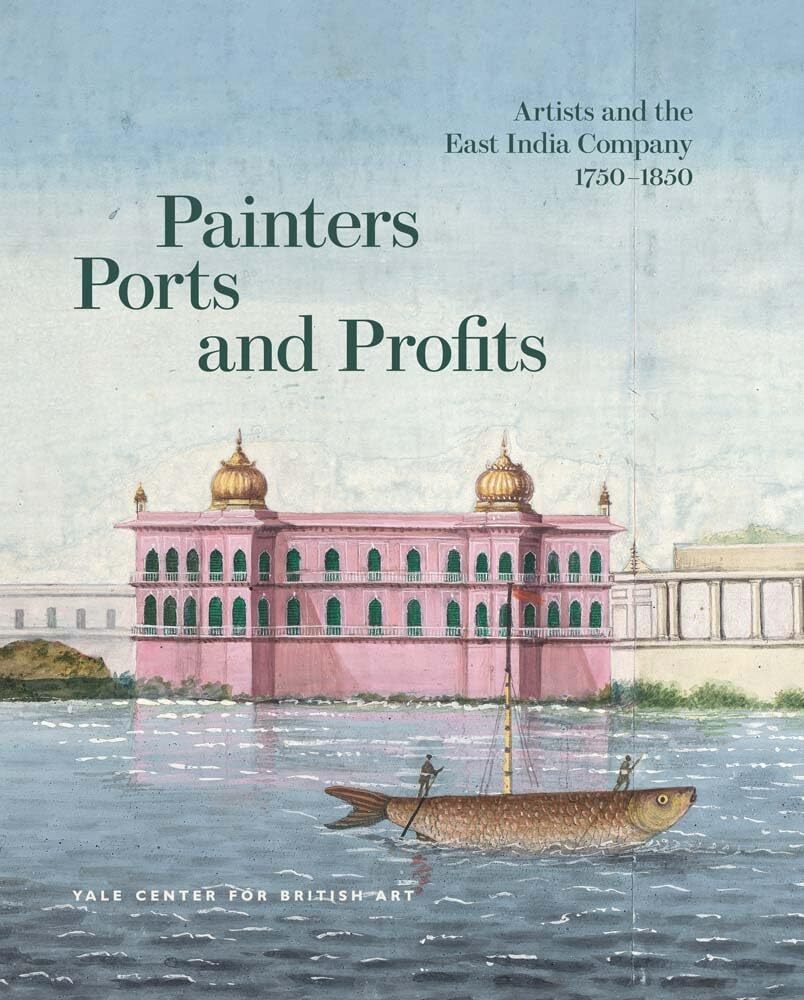
Painters, Ports, and Profits: Artists and the East India Company, 1750-1850 is the accompanying volume to an eponymous exhibition at the Yale Center for British Art which places painters, local and foreign, working in India and China in the context of the commercial and colonial operations of the East India Company. It
explores a remarkable historical contradiction: even as the British East India Company ruthlessly exploited the lands and labor of millions in its prosecution of imperial aims, the Company’s transcontinental networks fostered invention, opportunity, and exchange among artists.
Since the pieces come from the Center’s own collection, the result is perhaps more eclectic than comprehensive, although the editors have included other works evidently not in the exhibition and have made an effort to identify throughlines. The looks at materials, techniques and conservation as well as the actual artworks themselves.The works, perforce, are not, or more exactly, a large part of which are not, the “company art” one might have expected from the title, but instead include everything from courtly Mughal works to the ubiquitous George Chinnery with much in-between.Some of the works will be well-known, such as “A Great Indian Fruit Bat” by Bhawani Das which features in the frontispiece; another is Tilly Kettle’s 1772 “A Woman Holding a Hookah at Faizabad, India”. Also included in the book (if not necessarily in the exhibition) are George Chinnery’s portrait of William Jardine and a self-portrait of Chinnery’s competitor Lam Qua. Many of the others will feel familiar, at least to anyone with an interest in the period. The selection of Chinnery drawings and watercolours is of interest for the way it connects his earlier work in India with his perhaps better known later period on the China coast (wh ither he went to escape his debts).Structurally, Painters, Ports, and Profits is divided into a multitude of short contributions of a page or two by various contributors; these are for the most part on individual pieces—discursive, going well beyond catalogue entries—while some are thematic, some diving into X-ray analysis of pigments. These are prefaced by two (much) longer pieces by Holly Shaffer Laurel O Peterson on context and materials.
In “The Company We Keep: Art, Commerce, and Empire” discuss the political and commercial context in which this art was produced. At a time before photography, art documented peoples, flora and fauna. But art was also a profession and a business; many Indian and even British artists made a living producing painters for both local and colonial patrons.