“Pyongyang on the Brink: Sixteen Crises That Shaped North Korea” by Fyodor Tertitskiy
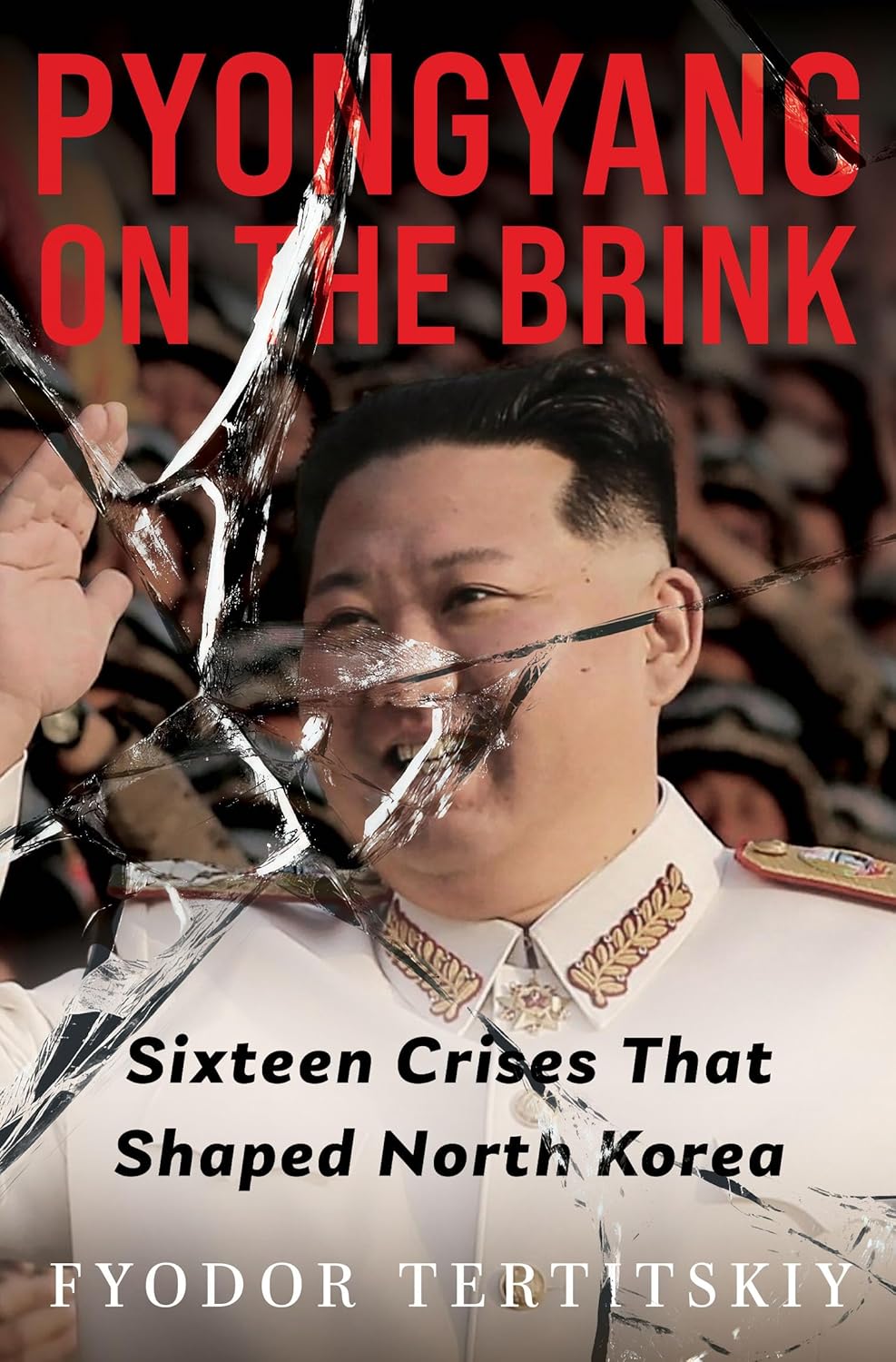
Sequels seldom seem as good as the works from which they spring. Many seem to repeat the originals, simply going over the same ground in a similar way. Such is thankfully not the case with Fyodor Tertitskiy’s new book, Pyongyang on the Brink: Sixteen Crises That Shaped North Korea, his sequel to last year’s Accidental Tyrant: The Life of Kim Il-sung.
Born in the Soviet Union, now a citizen of the Republic of Korea (ROK, aka South Korea), Tertitskiy conducts research on the Democratic People’s Republic of Korea (DPRK, aka North Korea). Last year’s book on North Korea’s first leader was written as a conventional biography, featuring research undertaken in ROK and Russian archives, the research shown in numerous endnotes. Tertitskiy concluded by denouncing Kim Il Sung as a tyrant who was “as skilled in scheming and preserving his power as he was inept in economic management and deaf to the plight of the common people” and argued in the book’s final two pages that Kim Il Sung’s rise to power was far from inevitable. In a nutshell, according to the author, “Events could still have turned out differently.” What is in effect a sequel continues with the idea that the appearance of North Korea and its continuing existence was by no means a sure thing.
While a sequel to the biography’s concluding chapter, Tertitskiy’s new book is also a departure. He writes this time not only of Kim Il Sung but of his son and successor, Kim Jong Il, and of his grandson, the incumbent leader Kim Jong Un. He writes his sequel without bibliography, endnotes or references to archives and other writers but instead offers not only a recounting of past events but alternative scenarios to them.
Tertitskiy offers alternate scenarios to what really happened at sixteen points in the DPRK’s history to argue that the regime, apparently unshakable, has long been and remains vulnerable.
Tertitskiy divides his book into four parts, starting with the DPRK’s creation in 1948 in the Soviet zone of Occupied Korea and ending with Kim Jong Un’s recent years in power. The author offers in each of the book’s sixteen chapters alternative resolutions to crises or incidents that DPRK leaders overcame in the course of the nation’s history. In his first chapter, Tertitskiy speculates that earlier US atomic bombings of Japanese cities in the Second World War could have prevented the Soviet occupation of northern Korea by compelling Japan’s surrender before Moscow’s invasion of August 1945. In the seventh chapter, Tertitskiy imagines Moscow deposing Kim Il Sung in response to a forceful call by Ri Sang Jo, ambassador to Moscow, for Kim’s removal. In reality, Kim survived Ri’s tepid proposal in 1956 that Soviet authorities pressure Kim to follow post-Stalinist reforms then sweeping the Soviet Bloc. In the sixteenth chapter, the author suggests that, had Kim Jong Un’s puzzling disappearance for a period of time in 2020 been due to his death, his demise without an established heir could have brought down the Kim dynasty.
The author offers alternate scenarios to what really happened at sixteen points in the DPRK’s history to argue that the regime, apparently unshakable, has long been and remains vulnerable. Moreover, he encourages DPRK dissidents and other opponents of North Korea to look forward to the demise of the regime in Pyongyang:
“This book began as an exercise in counterfactual history. But it ends with a more modest hope: that, in remembering how often the fate of North Korea has hung in the balance, we remain open to the idea that it may do so again, and that things may end differently next time.”
Tertitskiy spins his alternative scenarios and makes his arguments with the same readable, sharp writing found in last year’s biography. What, for example, is the “logic” that has kept the regime in North Korea from crumbling so far? A simple one, according to the author: “Reject reform.” After all, continuing his argument, “Why reform when you can rule?” The writing here, more that of a polemicist than a professor, should appeal to the general public. Without a bibliography or endnotes, the book is clearly still one written by a researcher with years of experience in the archives and knowledge of the secondary sources. However one views his line of argument, the author has written a worthy sequel to last year’s biography.