“Red Seal” by Rosa Kwon Easton
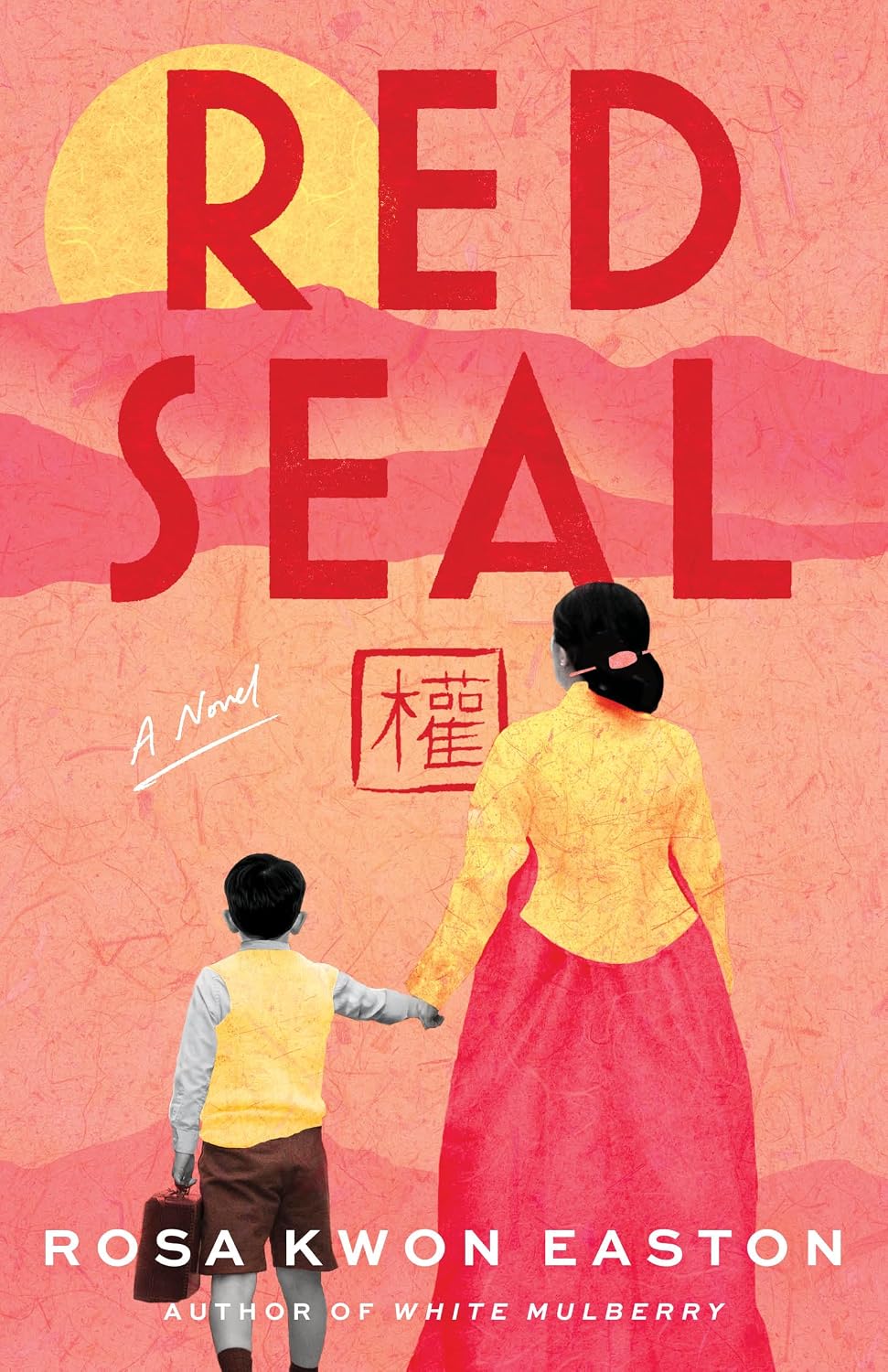
Rosa Kwon Easton’s debut novel, White Mulberry, tells the story of Miyoung, a Korean nurse who passes as Japanese while living and working in Japan as World War II erupts. In that book, Miyoung learns to do whatever she can to protect herself from danger. In the newly-published sequel Red Seal, which takes place across the Korean peninsula and in Manchuria, often at a frenetic pace, the person Miyoung seeks to protect the most is not herself, but her young son, Ko-chan.
The first book leaves off as Miyoung flees Japan with Ko-chan to return to Korea, where she can take care of her son without the interference of her in-laws. Tension is already present in the story as the book opens:
Uncertainty swirled over her homeland like thick fog. The port they had just departed creaked with sailors and porters packing overfilled ships and horns blaring as if ready for battle. Ash from steam engines and the scent of seawater choked her throat as she and Ko-chan passed wounded men, jeeps, and buildings flashing the Japanese flag. Japanese police and soldiers clutching large machine guns across their chests stomped through the streets in their heavy boots.
Mother and son don’t stay in Busan long. Their destination is Pyongyong, where Miyoung’s brother, Taeyoung lives. After an exhausting train ride north, Miyoung is devastated to learn that Taeyoung has left Korea for Manchuria. It’s 1943 and still in the thick of the war. Miyoung feels her only hope for safety is to take Ko-chan back on the road and head to Taeyoung’s new home in Andong, Manchuria.
It’s a good choice for a while. Ko-chan quickly takes to his uncle and remembers the chocolates Taeyoung used to send to him in Japan. Now in Manchuria, Taeyoung treats Ko-chan to more of these chocolates, thus earning the nickname, Chocolate Uncle. The security of living with Taeyoung becomes short-lived as Miyoung needs to escape the draft that includes female nurses. She is offered a job as head nurse one hundred kilometers down the Liaoning Peninsula in Zhuanghe. Once again, Miyoung takes Ko-chan, separating him from Chocolate Uncle. Ko-chan has suffered from anxiety since leaving Japan and it only gets worse, yet Miyoung feels as if she has no choice in the matter due to the dangers of the war.
One of the more harrowing parts of the story—and there are many—occurs when World War II ends and Chinese vigilantes vow to take revenge on the Japanese population in Manchuria. Miyoung has been passing as Japanese, so feels desperate to get Ko-chan back to Korea. The two settle in the north and Ko-chan now goes by his Korean name, Soonho. But as the north and south align with the Soviet Union and US, respectively, Miyoung leaves with Soonho again, this time to safety in the south. She smuggles mercury in a canteen that she can sell, but mother and son almost get caught at the border crossing.
Instead of letting them through, the policeman took them to the end of a long line of people waiting for questioning. They finally entered a cold, small room next to the ticket booth. There were high windows with bars across them that Soonho imagined were what a jail cell looked like. Two more policemen holding machine guns sat across from them. Soonho’s knees quaked. Sweat trickled down Mother’s face. She took out a handkerchief from her hanbok and blotted her damp skin. She didn’t look at the canteen once, although she had been staring at it all morning on the train with worried eyes.
Although the two spend the war years evading danger, traveling from city to city around Korea and Manchuria, Soonho grows resentful of Miyoung for always uprooting him. Kwon Easton writes the story through the alternating points of view from Miyoung and Soonho, capturing both the physical and psychological tolls of migration through the two wars.