Old post
This post was published before January 2026. Some links, images or other content may no longer display or work as originally intended.
“Running behind Lakshmi: The Search for Wealth in India’s Stock Market” by Adil Rustomjee
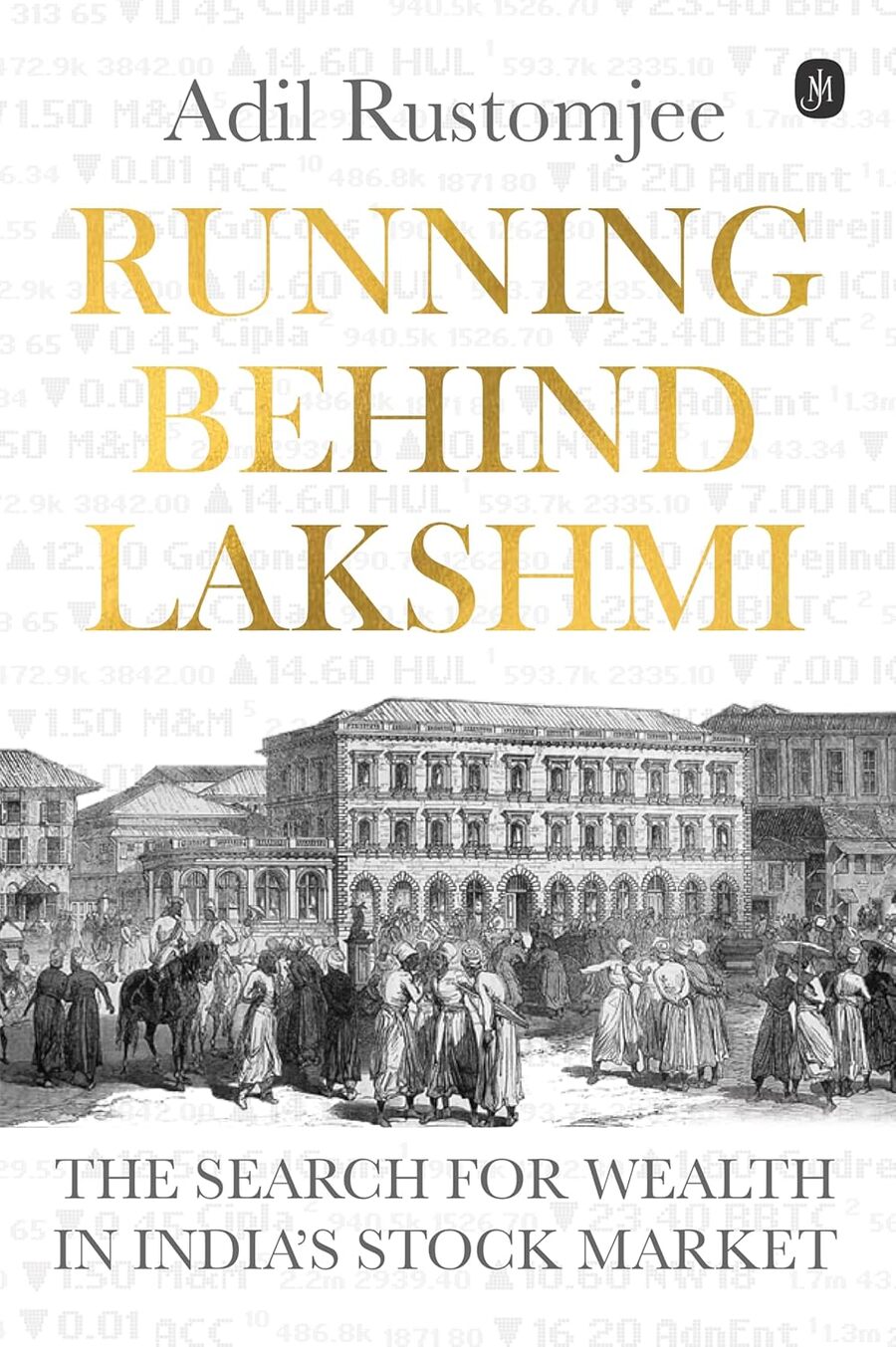
A recent report comparing stock market returns from 1995 to 2025 across 14 major countries found that India boasted the highest annualized returns … while also displaying the greatest volatility. Anyone hoping to profit from that tremendous but erratic growth would do well to peruse Running Behind Lakshmi. Adil Rustomjee’s indulgent editors allowed him to publish a book that is equal parts history, textbook, and personal musing. Like India itself, the work is enormous, variegated, occasionally exasperating and utterly unique.
The book describes India’s financial past and present, from the 1829 share issuance of the Calcutta Union Bank to Narendra Modi’s demonetization of 2016. Early chapters focus on the Bombay Stock Exchange and its badla system, whereby most equity trading in effect amounted to unmargined options on future price movement. The BSE survived in a government-enforced system of local monopolies that limited competition. At those municipal exchanges, brokers made markets by quoting both the buying and selling prices. But with market reform came the arrival of a new regulatory authority in 1992: the Securities and Exchange Board of India. SEBI ushered Indian financial markets into the modern age.
After decades of gambling on single stocks, Indian investors began to buy and hold mutual funds in 1993 by way of rupee-cost averaging in the Systematic Investment Plan. The National Stock Exchange opened in Mumbai in 1994 and sparked a paradigm shift, replacing brokers with a transparent order-driven system matching the highest bidder with the lowest seller. In 1995 a modern clearing house began to guarantee trades by demanding collateral. And the more India’s markets came to resemble the developed world’s, the more that Western financial theory became relevant for its investors.
Indian financial markets still feature many idiosyncrasies.
Rustomjee devotes much of the book to explicating basic financial theories in the Indian context. Academic luminaries like Benjamin Graham, James Tobin, and Aswath Damodaran all receive their due. The book devotes an entire chapter to the Efficient Market Hypothesis: the proposition that markets reacting swiftly to current news will make the future trajectory of a stock’s price unpredictable. But people buy and sell individual stocks to the extent they believe they can, in fact, predict the future. Indians, it seems, are a confident bunch: stock picking remains the standard practice, in contrast to the passive index funds currently en vogue for Americans. The book also delivers value for fund managers by elucidating the technical minutia of Modern Portfolio Theory. A chapter on behavioral finance explores the foibles and blind spots that plague investors in every country.
While Western practice and theory have their place, Indian financial markets still feature many idiosyncrasies. The Sensex benefits from foreign institutional investors looking to diversify their risk exposure, but Indians themselves continue to exhibit widespread home-country bias in their stock purchases. Rustomjee coined the phrase “long corner” to describe the practice of family owners retaining most shares. By cornering the market on a given stock, they not only increase its quoted price, but they also protect themselves from activist shareholders who might overwise agitate for reform. Companies disguise the long corer by frequently splitting their stock. These “bonus shares” serves two purposes: they distract current shareholders from low dividend payout while also enticing small investors by keeping the nominal price low.
Rustomjee has scant regard for the small-rupee speculators who constitute the bulk of Indian investors. The names and technology change, but the madness of crowds does not: from neglecting to follow the progress of the US Civil War during the Cotton and Share Mania of the 1860s, to assuming that real estate prices would always rise amid the Unitech bubble of the 2000s. Rustomjee might condescend to the amateurs, but he takes personal offense at the timid professional analysts who repeatedly tweak their company reports to justify the current price, regardless of the underlying business’ fundamentals. Likewise for the BSE administrators who constructed the Sensex without regard for the actual distribution of industries in the economy. Regulators and the financial media receive their comeuppance for dirigisme and sensationalism, respectively. All these failures stem from an inability to appreciate nuance. Whether one relies on the “India Shining” narrative or a discounted cash flow model, filtering information through a single mode of thought creates an illusion of knowledge more dangerous than ignorance.
Rustomjee attributes these cognitive limits to an education system narrowly focused on science and engineering. Running Behing Lakshmi starts fighting that tendency from its very title by calling on the Hindu goddess of wealth, then proceeds to reference a bookshelf’s worth of authors from across the humanities. The Talmud, Mahabharata and New Testament all lend their wisdom, as do philosophers from Aristotle to David Hume to Reinhold Niebuhr. Rustomjee justifies his historical approach with quotes from Edward Gibbon, Leopold von Ranke and Richard Hofstadter. Not many books will reference Isaiah Berlin, Zubin Mehta, and Vikram Seth on a single page, but this one does so with aplomb.
But the question remains: how to makes sense of (and wealth in) India’s markets?
But the question remains: how to makes sense of (and wealth in) India’s markets? Like many gurus before him, Rustomjee’s vidya lies in unraveling a contradiction: one must scour the details while accepting that knowledge is never certain. The many financial ratios that justify an analyst’s “buy” rating have their worth, but any one number can obscure as much as it reveals. He compares technical analysis to palmistry, only to concede that when enough traders follow chart patterns, their prophecies may become self-fulfilling. On the one hand, everything matters: from the hidden distribution of stop-loss orders that accelerates an avalanche of losses, to the favorable tax status of farming income that keeps rural wealth out of India’s stock market. On the other hand, most explanations for market moves are narratives constructed after the fact and thus have no bearing on the future. Only a trader who understands business, history, politics, analytics, and economics can beat the market… if he’s lucky.
Rustomjee has much to offer readers, but he might have said more with less: a series of roman à clefs and character sketches take up two entire chapters. While clever, they add little to book. Explanations of bank corruption, the “moat” protecting business from competition, or the Unitech’s original business model are engaging the first time they appear, but less so the second. More than a few apt phrases grow worn with use; again and again the “Twilight Zone”, the “Chattering Class”, and the “Rabbit Warren” describe over-optimistic valuations, the business media, and Mumbai offices, respectively. Still, by the book’s end those blemishes count for little. Rustomjee comes across like a voluble but erudite dinner host, one whose guests scarcely notice the late hour. Anyone risking their wealth in India’s financial markets should spend a few hours (or more) in his company.