“The Arab Bureau: The Story of Britain’s Most Ingenious Intelligence Unit” by Eamonn Gearon
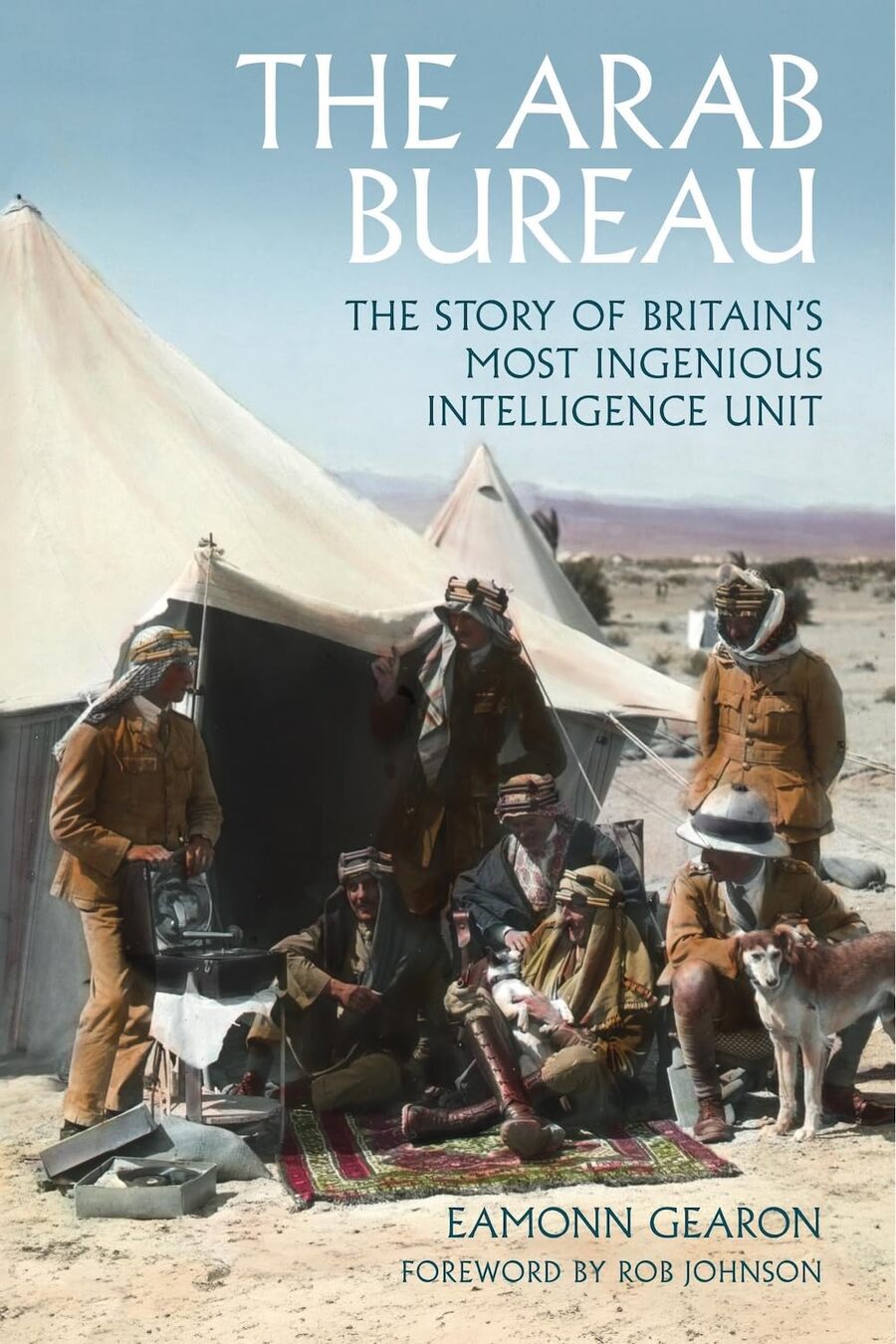
The Arab Bureau: The Story of Britain’s Most Ingenious Intelligence Unit, Eamonn Gearon (Hurst, January 2026)
Intelligence failures are quite common in the history of warfare. During the First World War, according to a new book by Arabist and author Eamonn Gearon, British intelligence failures at Gallipoli and Kut al-Amara (in what later became Iraq) against troops of the Ottoman Empire spurred the creation of the Arab Bureau, which Gearon describes as an organization that “revolutionized the way in which intelligence operations were conducted in complex cultural environments, and pioneered methods that would influence approaches to intelligence work …for decades, … even up to the present day.”
The most famous member of the Arab Bureau was TE Lawrence, who was immortalized by the movie Lawrence of Arabia, which depicts Lawrence as a singular British facilitator of the Arab revolt against the Ottoman Empire. The truth, as Gearon notes, is that Lawrence was a member of a team of intelligence specialists that included scholars, linguists, regional experts and archaeologists who brought their respective talents together to provide British statesmen and military leaders with a broader, cultural understanding of the Middle East. The Arab Bureau, Gearon writes, served as the “meeting point of information, intelligence, and propaganda in the service of imperial strategy”.At the war’s outset, Gearon explains, Britain suffered from what he calls an “intelligence blind spot” in the Middle East that underrated the Ottoman military and initially misunderstood a key vulnerability of the Ottoman Empire, namely Arab nationalism. In 1916, the Arab revolt manifested itself in attacks against Ottoman troops in Medina and Mecca, and in efforts to sabotage the Hijaz Railway led by Hussein bin Ali al-Hashimi, who envisioned himself as the leader of an independent Arab kingdom. British intelligence for the region prior to the establishment of the Arab Bureau was divided between the War Office, the Government of India, and the Residency in Cairo, each of which “maintained their own separate intelligence networks, jealously guarding information while pursuing often contradictory policies.”The creation of the Arab Bureau changed all of that. Lawrence was, to be sure, a key player in the new intelligence organization, but others made major contributions—archeologist David Hogarth, writer and explorer Gertrude Bell, Captain Stewart Newcombe, archeologist Leonard Woolley, writer Philip Graves, Islamic scholar Alfred Guilla. Gearon credits Hogarth for bringing to intelligence work the archeologist’s ability to “reconstruct historical narratives from fragmentary evidence” and “transforming . . . data collection into systemic knowledge production”. The Bureau’s office was in the Savoy hotel in Cairo. Its work emphasized human intelligence in an effort to understand the Middle East by integrating “cultural, historical, and political knowledge into operational intelligence”.The Arab Bureau made effective use of maps, aerial reconnaissance, monitoring Ottoman communications, and establishing and expanding human intelligence networks. The Bureau’s intelligence product influenced British tactics and strategy. It also published newspapers that both informed their readers about actual events and attempted to shape their political views. Arab nationalism was a tool that the Arab Bureau used during the war against the Ottomans, but the ultimate goal was to advance British, not Arab, interests. The Bureau collaborated with Arab nationalists, especially Arab intellectuals, but it was a marriage of convenience. The promotion of Arab nationalism was, Gearon writes, “wartime expediency” which ended after the war when Britain and France divided up the region in what turned out to be a last gasp imperial scramble for empire.Gearon believes the key to the Bureau’s successes was its members’ ability to “function effectively within Arab cultural contexts.” Gearon calls this the shaping of an “imperial epistemic community” that transformed “scholarly understanding into strategic capability”. Here, and at other times in the book, Gearon slips into academic jargon—his book grew out of an academic paper and sometimes reads like a dissertation. It is frequently repetitive—sometimes annoyingly so. But his repeated emphasis on the intelligence value of cultural awareness and human connections rings true.Gearon concludes the book—taking a page from Lawrence—by setting forth “Seven Pillars of Intelligence Wisdom” which rehashes and summarizes in twenty pages the main points of his book, which in the end would have been more effective had it been more concise.