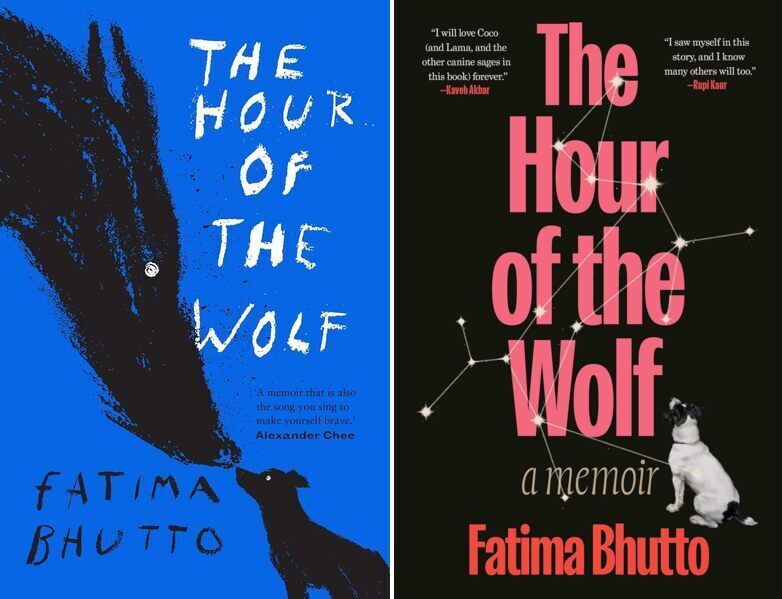
Author and journalist Fatima Bhutto reflects on how caring for her pet dog shed light on her own relationships in this tender and insightful memoir of a doomed love affair.
Bhutto is the daughter of Pakistani politician Murtaza Bhutto (who was assassinated in 1996). She is also the niece of the former prime minister, Benazir Bhutto, who she roundly criticised in her first memoir,
Songs of Blood and Sword, published in 2010.Being a scion of such a famous family is one of the many excuses given by her lover, whom she calls simply “the man”, for why he is reluctant to formalise their liaison. Although Bhutto yearns to get married and have children, the man feels uncomfortable with her public persona to the extent that he won’t even meet her friends. Undoubtedly they are soul mates, he assures her, but he is a free spirit and cannot be pinned down. She just has to wait until he is ready.And wait she does, for ten years. While it is clear to everyone else that she is in the grip of a controlling narcissist, Bhutto can’t see it. It helps that the man is handsome, charismatic and self-confident while Bhutto is depressed, suffering from the resurgent trauma of her parents’ divorce, a toxic relationship with her difficult stepmother and the murder of her father. Initially she sees the man as a kind of guru because he intuits her feelings and shows her how to heal herself. However, as soon as Bhutto becomes dependent on him, he exposes his cruel side, undermining or taunting her and threatening to leave when she complains.Having low self-esteem and terrified that yet another loved one will be taken from her, Bhutto considers every argument to somehow be her fault and rushes to make amends. Besides, as Bhutto explains:
I never thought that someone like me, strong-willed and independent, could be in danger of entrapment. I convinced myself those relationships were normal, acceptable.
Luckily there is one loyal and loving character in Bhutto’s life, her Jack Russell terrier, Coco. The pair are inseparable, spending every waking (and sleeping) moment together. This partnership allows Bhutto to compare the animal kingdom with human society and to focus on the covenant between mankind and dogs which is “forty thousand years old”. Drawing on myth, religion and philosophy from across the globe, Bhutto argues for the superior qualities of animals in terms of dignity and self-sacrifice. She gives the example of the stag who meets the wolf’s eye before the strike, confirming he has chosen his own death so that the rest of the herd can survive.Some humans are capable of such nobility: Bhutto mentions her father as someone who had embraced the inevitability of being killed in his bid to secure the greater good for the nation. This is the exception that proves the rule: most of humanity is ravenous and careless about their environment. Bhutto writes:
The wild … was once the only thing true and resilient enough to survive man and the force of our weak, damaged hearts. But soon, in our rapaciousness, we will consume it too.
Bhutto faces her own Hour of the Wolf when Coco becomes pregnant. The book’s title is derived from the 1968 film by Ingmar Bergman, a psychological drama which takes place mostly in the dark hours between midnight and dawn. This is also the time when Coco’s puppies are born. Bhutto gives up everything to help look after the newborns. The work (for which there is no contract or expectation of anything in return) is gruelling but rewarding. The process of providing unconditional support brings revelations, as Bhutto explains:
I didn’t expect to learn this much about love or God or grace from any of this. I didn’t expect to be so moved by the simple act of care.
It is a small leap from here for Bhutto to realise that whatever kind of love she shares with the man is damaging and she doesn’t have to accept it. She writes:
This, for me, has been a liberation. To learn, very belatedly, that love can and must uplift you and illuminate you instead of oppressing and wounding you has been a joyous discovery.
Having finally seen the man for what he truly is, Bhutto finds the strength to break up with him and move on. She ends the memoir having created a new family, which includes Coco and two of the puppies. The uplifting finale begs the question of what valuable lessons we could all learn from respecting, rather than ransacking, the natural world.
Contributor
Jane Wallace
Jane Wallace is a Hong Kong-born journalist and author living in London.