This post was published before January 2026. Some links, images or other content may no longer display or work as originally intended.
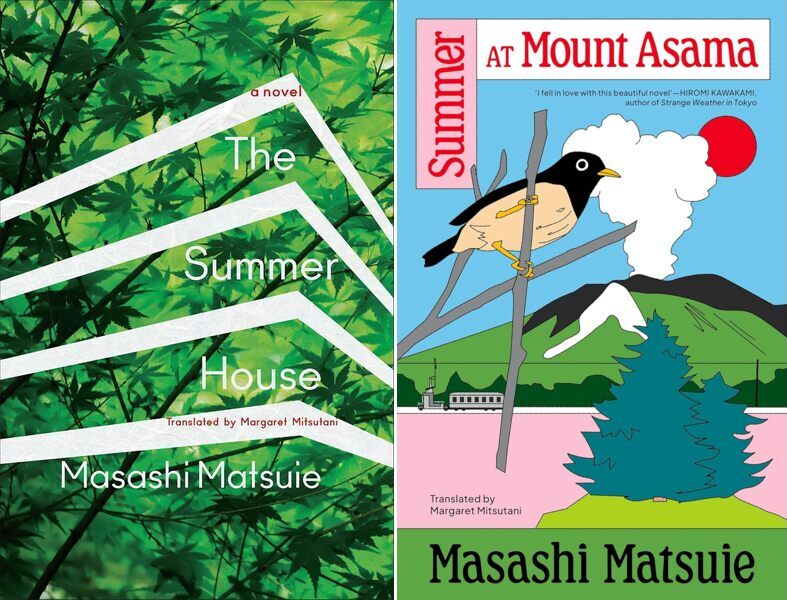
Awarded Japan’s Yomiuri Prize for Literature, The Summer House is Masashi Matsuie’s debut novel. Also published as Summer at Mount Asama, the 2012 work reaches English readers through Margaret Mitsutani’s expert translation. Matsuie constructs the story just as his character Sensei, architect Shunsuke Murai designs buildings: with deceptive ease, creating spaces that beckon people to withdraw from the noise of the outside world. “You don’t want to talk loudly in one of Sensei’s houses,” explains the narrator.
.There’s something relaxing about the textures, the way the light comes in, delicate touches people don’t even notice till they’ve lived there for a while. As if the building’s speaking to them softly, so they follow suit.
.This quiet, character-driven novel follows the employees of the Murai Office of Architectural Design from the point of view of the new employee Tōru Sakanishi. He joins his colleagues for their annual retreat at Sensei’s summer house in the Aoguri Mountains. There, they work on projects for current clients and prepare an entry for the National Library of Modern Literature competition.At the summer house, without the distractions of the city, time seems to slow. Under the shade of the katsura tree and with a view of Mt. Asama in the distance, the architects immerse themselves in designing buildings and furniture, carefully sketching and resketching their plans by hand. Set in the 1980s, although technological change is imminent, they begin each workday with the ritual of sharpening their Staedtler pencils:
.Both in the Kita-Aoyama office and Aoguri the day began with the sound of pencils being sharpened. It wasn’t a bad way to start. When your brain is still half asleep, the smell of wood being whittled wakes you up almost like the smell of fresh-brewed coffee.
.As they live and work together in close quarters, relationships between colleagues deepen. Sakanishi soon finds himself attracted to the two women on staff—Mariko and Yukiko. Despite this potential distraction, everyone stays focused on plans for the National Library of Modern Literature.Looking for inspiration, Sensei asks Sakanishi to recall his favorite library. He describes one from his elementary school days: a small building with a gable roof with a cherry tree out front. Inside, a cozy space where children comfortably spend time alone. Sensei expounds:
.It matters, that freedom to be alone. It’s as important for children as for adults. Books carry you away—from your family, from the society you live in. Alone but not lonely. Discover that when you’re a child, and you have a place to come back to for the rest of your life. In that sense a library is something like a church, somewhere you can go by yourself, that will always take you in, just as you are.
.For Sensei, a building isn’t just a blueprint or a finished structure, but a space that welcomes and supports visitors. Earlier in his career, he was an apprentice of Frank Lloyd Wright who integrated his buildings with the natural environment. Indeed, Sensei’s architectural philosophy is guided by the belief that a building’s interior and exterior should echo one another, creating a comfortable experience and enduring impression:
.If buildings aren’t remembered for generations, the architect hasn’t really done his job. That holds true whether he’s working for the government or a construction company. You sometimes find amazingly good work in post offices or telephone exchange buildings. It’s great if people go into an everyday sort of place like that and feel so at home there that they start wondering when and how it was designed
.Much like a well-designed library, the book offers a place for quiet reflection, where readers can linger long after the door to
The Summer House is closed.
Contributor
Mary Hillis
Mary Hillis (@mhillis) is a teacher and writer based in Japan.