“The Young Will Remember” by Eve J Chung
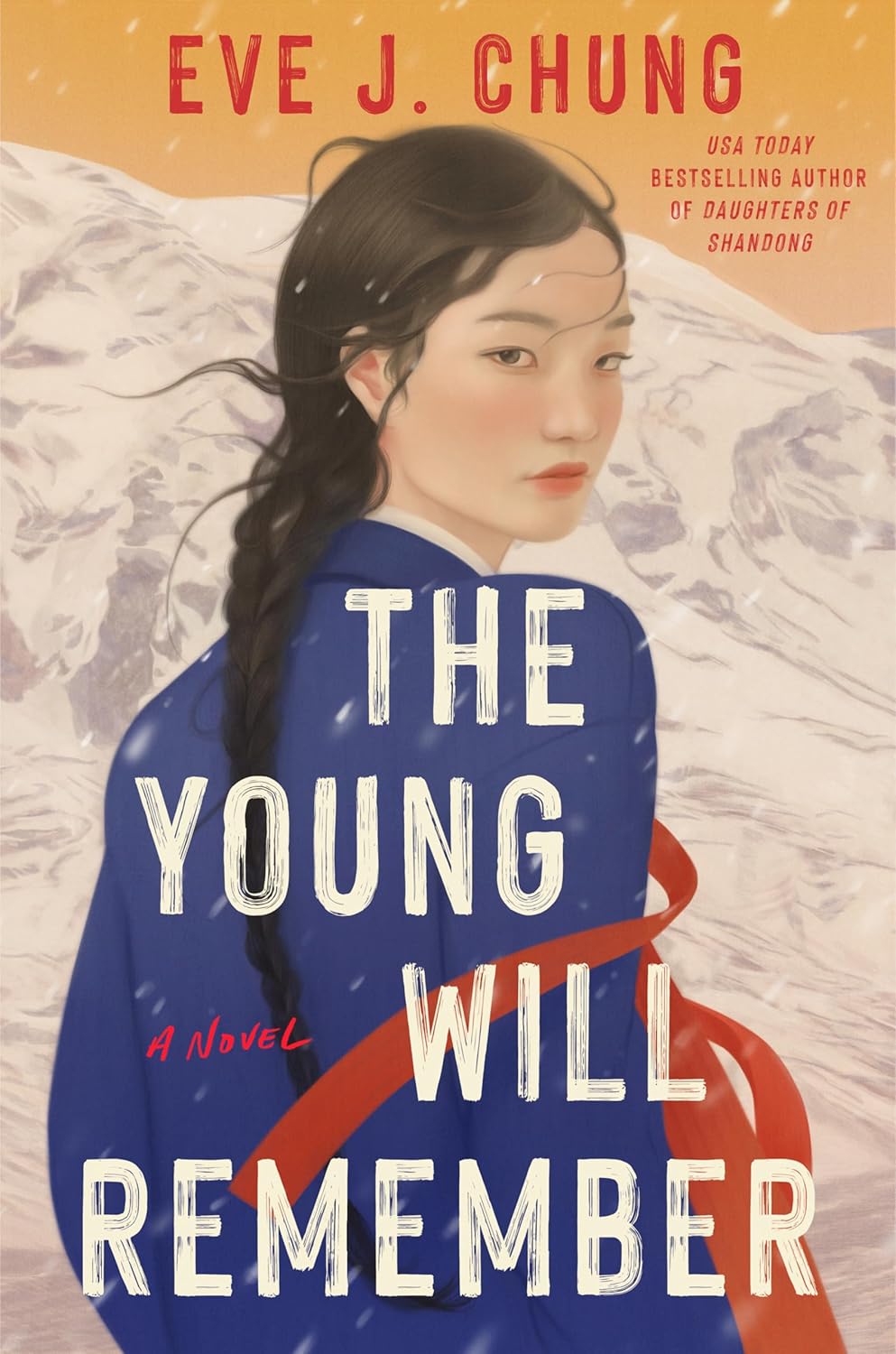
A number of female war correspondents and photographers covered the Korean War for the American media, although much of this history has faded from public consciousness. Eve J Chung resurrects the memory of these journalists in her new novel, The Young Will Remember, an engaging story that revolves around Ellie Chang, a Chinese American war correspondent sent to cover the Korean War.
Ellie’s family came to the US from Taiwan well before World War II, that is, when it was still a Japanese colony. Journalism, especially when it meant being sent to a war zone, was not her parent’s first choice of career for their daughter. Their concerns were justified, for when hitching a ride in an American military plane, Ellie and the pilot suffer an emergency landing behind enemy lines. The Japanese American pilot is killed by the North Korean army, but Ellie survives thanks to the quick thinking of a Korean woman who claims Ellie is her daughter. This woman (whom Ellie calls Emma after mis-hearing the Korean word for mother, or eomma), is searching for her actual daughter, Yun-Hee, who was abducted as a fourteen-year-old by the Japanese military during World War II. Knowing her likely fate as one the numerous “comfort women”, Ellie doesn’t hold out much hope that Yun-Hee is still alive in 1950.
Most of the novel’s 430 pages covers Ellie’s determination to get back to South Korea, and to persuade Emma to come with her.
Emma treats Ellie as her own daughter and introduces her to the Pak family, a pastor and his wife who have taken in Emma as she searches for Yun-Hee. The number of in Christians in Korea grew enormously in the decades before the conclusion of World War II and were instrumental in the movement for independence. Ellie is able to communicate with her Christian hosts in North Korea because Pastor Pak studied under American missionaries. Japanese also serves as a common language in the former Japanese colonies of Korea and Taiwan, where Ellie’s family had come from.
Chung states in her author’s note that she takes the history aspect of the narrative seriously, but this is still historical fiction. While female reporters were embedded with the US military, it doesn’t appear that there was a Chinese-American female correspondent in the Korean war. And Ellie can at times seem to be channeling the character of a young woman today, rather than of seventy years ago. Her critical stance regarding the US government and its involvement in both World War II in Asia and in the Korean War seem not altogether compatible with her views about Taiwan, whose future was very much in the balance.
Fiction is however fiction and Chung helps draw attention to those important parts of history that should be remembered: the female war correspondents, the “comfort women” and the Christians who supported Korean independence during Japanese occupation.