The Lowland by Jhumpa Lahiri
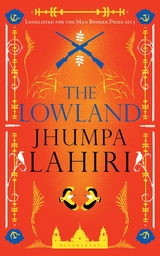
It is one of those Biblical stories—two brothers, so similar and still so different, connected by a bond that survives separation and devastation. Easily one of the year’s most anticipated novels, The Lowland by Jhumpa Lahiri, recently long-listed for the Man Booker Prize 2013, is a sweeping family saga, not unlike her earlier novel, yet still vastly different.
Subhash and Udayan Mitra are brothers and best friends growing up in Calcutta around the time of Indian Independence. But they find themselves drawn apart by differing ideology. Udayan’s Communist sympathies align him with the Naxalbari movement of the 1960s, while Subhash, less given to such political fervour, moves away to a tranquil life of academia in a quiet corner of the United States. But tragedy in Udayan’s life leads Subhash to be inextricably connected to his brother’s impassive wife, Gowri, in ways he could never have foreseen. When Udayan is brutally murdered in the lowlands outside their family home in Calcutta, Subhash breaks ties with his family and marries his brother’s pregnant widow. Back in the USA, Gowri and Subhash attempt to make a family with the daughter that Gowri now gives birth to. The ties of parenthood bind her more to her uncle-turned-stepfather than to her own mother, and she is not to know of her true parentage until much later. Meanwhile, Gowri is tormented by the dark secrets of her life with Udayan, and finds it difficult to break free of his hold on her. Across continents and coasts, the book comes full circle in its final bend, with a surge of warm-hearted aspiration.
Lahiri’s most endearing characters have always been her quiet, thoughtful men. In The Lowland, Subhash Mitra, like Ashoke Ganguli of The Namesake, forms the introspective centre of the story. But Gowri, the woman who infiltrates his life in so many ways, becomes the real talking point very soon; her decisions, written at first as cold, unfeeling choices, shape the plot and its most lingering moments with pensive dolour. She is most at home in solitude, habitually locking herself up with books and research, seeking out the reticent spaces that give her peace.
Between Subhash and Gowri, who are as fire and ice, grows a chasm that is never quite bridged, but is slowly filled and deepened by the hope of a new generation. This, really, is the magic of Lahiri: always, from the slumped heart of sorrow and pain grows the prospect of silent, unexpected joy, and it changes our way of reading her.
In the years that the novel spans, a family grows and matures and lives are altered heavily by the revolutions that take the world by its throat. This, though, is a tale that studies the impact of individual choices, a psychologically perceptive and even-handed record of a tumultuous era. It is almost a series of nuanced portraits of men and women torn apart by their differences, yoked together by their vulnerabilities. It is closest to her most recent collection, Unaccustomed Earth, in its haunting, visceral depiction of human relationships and the poignant aftershocks of grief.
Lahiri remains the master of restraint. But where, in her previous works, her controlled prose was charged with emotion that lay siege with bittersweet suddenness, The Lowland gives way to none of this. The book has a more glacial, impersonal style, often reading like an objective newscast, matter-of-fact and unaffectedly stoic.
At times, the toneless narrative can be maddening. Several sentences summarise with transitional phrases: “And so she felt antagonized by a man who did nothing to antagonize her, and by Bela, who did not even know the meaning of the word.” Others narrate from moment to moment with annotations: “He hadn’t accompanied him to the rally, nor had Udayan asked him to come. In this sense they had already parted.”
The dry reportage has its own version of detached beauty. The most morally ambiguous decisions of her characters are treated non-judgementally, as mere plot points, festering delicately under several layers of melancholy.
Restraint, though, does not mean a lack of detail. With Lahiri, restraint lends itself to extraordinary complexity and trenchant insight. The book is dense with imagery, lushly exquisite and stylistically precise. Her taut turn of phrase and her economy with words somehow collide with the level of specificity she is able to infuse into her writing:
Nor was her love for Udayan recognizable or intact. Anger was always mounted to it, zigzagging through her like some helplessly mating pair of insects.
The combination makes for a work of unusual poise; it is sophisticated, self-assured, and eloquent, and ultimately a book with the sort of integrity that makes Lahiri one of our greatest living storytellers.
Editor's note 20 Sept 2013: The Lowland has been shortlisted for the Man Booker Prize.