“Night Train” by Xu Zechen
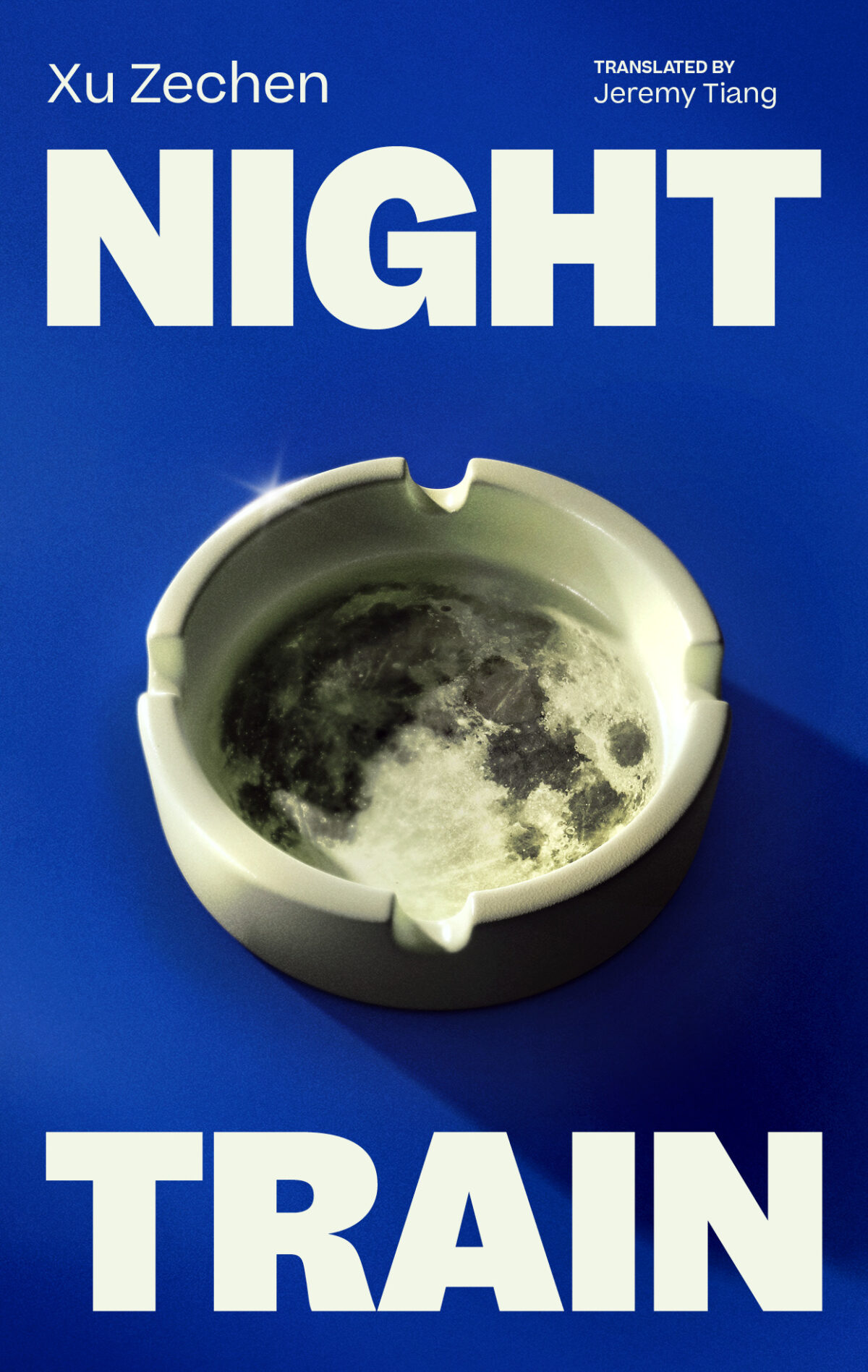
Chen Munian is not a murderer. Yet who is he accused of murdering? Why can he not shake off the accusation? These questions, otherwise central in a book initially presented as a murder mystery, unravel in Xu Zechen’s Night Train. The novel begins with Munian working as a gardener at a unaccredited institute of higher learning near Nanjing, struggling to keep his job, and failing to enter graduate school. By day he works in the greenhouse, by night he writes papers for practice. Written in Chinese, and newly translated into English, the novel navigates filial expectations, the politics of academia, both social structures set against Munian’s own desire to escape—whether to his own or to the detriment of others.
Through introspection and dialogue, the novel explains early on why, despite his abilities, Munian is unable to enter graduate school. Longing to travel before his postgraduate studies begin, he attempted to extract money from his father, a trishaw driver, and told him he strangled a man and threw his body into a river. The title Night Train is a reference to his primary mode of travel as he escapes the scene of the fabricated crime.
After twenty-one days roaming the country, he returned home with his stomach in knots. The excitement of night trains, the freedom and expansiveness of that life, the sensation of being in strange places—they’d overstimulated him so much he’d barely slept.
Munian returns to find the police looking for him, and learns that his father has reported his crime. In the wake of his arrest and subsequent release, Munian must abandon his plans for a doctorate. His academic aspirations are considered an afterthought, ignored by everyone except his mentor Professor Shen. Rather than propel him as a scholar, his mentor’s encouragement instead binds him to the school. He lives off a gardener’s meagre wage and the dream of academic redemption. The transcript and diploma that might extricate him from his squandered life are, perhaps justifiably, kept away from him. A kafkaesque bureaucracy ensues. At a breaking point, Munian questions the chancellor of the school:
“The school’s been investigating for four years now. Is something wrong with me?”
“No one person can say whether there’s anything wrong with you. I don’t get to decide that, and neither do you. Get back to work, and I’ll speak to the other administrators. How does that sound?” The chancellor is already ushering him out the door.
The fallout from his detrimental journey, however, does not prevent Munian from becoming increasingly
enthralled by the train, which morphs into a motif for escapism and freedom. The incremental description of humiliation and pressure makes Munian’s unreasonable desires all the more understandable. Later in the novel, the protagonist impulsively jumps on a train out of the city and is forced to hop on cargo trains to make his way back. Once aboard, he climbs atop a car full of lumber for a better view.
The wind is fierce, an endless bolt of cloth unfurling over him. What a lonely figure he cuts against this grand backdrop. As the air passes under his arms, he feels them sprout feathers, and soon he’s soaring through the night.
The striking metaphor is representative of Jeremy Tiang’s ability as it diligently translates the original Chinese and reads seamlessly in the English. The “expansiveness” of the world in which Munian might take flight is set against his drab dormitory life. His neighbours—some colleagues, others scholars and artists, all of them outsiders—form the principal cast of side characters. On the floor above, an artist paces his room with loud slippers that keep Munian up at night.
Downstairs, in the fifth-floor kitchen, Little Japan is singing a tune, something to do with Tibet. He enjoys singing, playing basketball, talking about women, and watching porn. Those are his only hobbies, and he’s pretty good at them. His voice is bright, resonant, and can effortlessly carry all the way to the public toilet on the road outside.
Each room in the dormitory contains a character struggling with the banality of their own lives. One couple begins to argue through the night. The artist tears apart his own paintings. One after another, pretty girls abandon Little Japan. The clear and easy prose, beautifully translated, brings to life this community of eclectics. At the centre of the dormitory, between the tinge of sexuality and hints of madness, Munian suffers a crisis in confidence.
What is anyone doing with their lives except constantly rearranging things?… Your entire lifetime is spent rearranging things, constantly challenging yourself, putting it vertical if horizontal doesn’t work, and if that’s no good then going back to vertical, back and forth till you’ve used up all of your time. Certainly that’s how Munian sees his life.
Munian’s own romanticism juxtaposes the trappings of the academic world, which punished him for trying to abscond, and that in turn reinforces his escapist tendencies. Night Train especially excels in giving no hints as to whether Munian might break that cycle, or whether that cycle might break him. Even when he manages to board a train, for one reason or another, he always returns home, and does so a more defeated man. By these traditional measures, Munian is a tragic character—a frustrating but perfectly amiable one. And as with the best examples of the archetype, there is every hope he might prevail.
First published in Chinese in 2009, Night Train joins a larger literary tradition of the academic novel, but immediately subverts the expectations of upward mobility and intellectualism that typify the genre. Other novels of this kind, such as John William’s Stoner or David Lodge’s trilogy, also make the point of satirising or disparaging the academic profession. However, Xu Zhechen’s positioning of academia, not just as a problem, but as a manifestation of societal structures, distinguishes the novel as a study of Chinese scholarly life.