“Have You Seen Romit?” by Chital Mehta
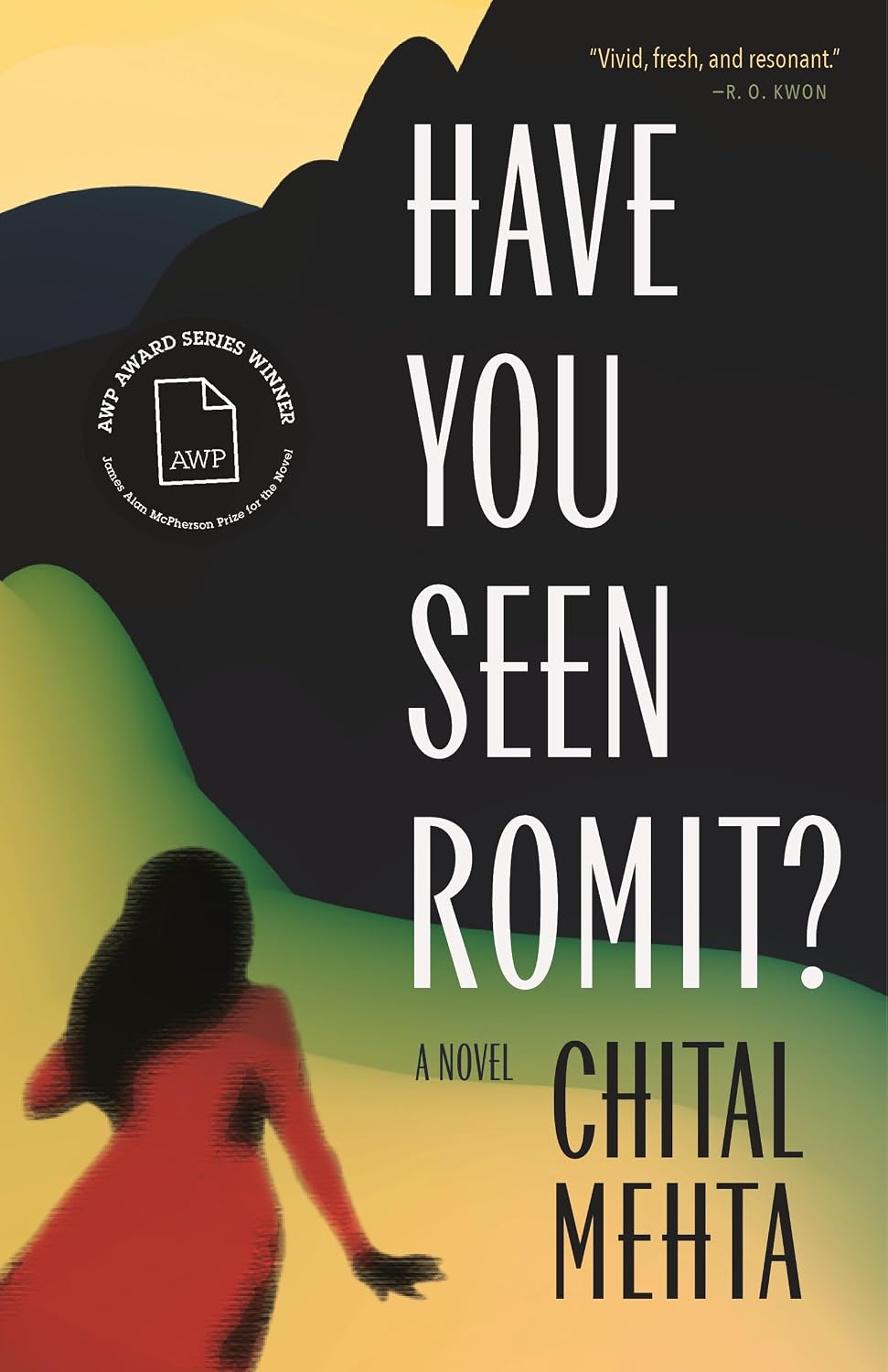
Usha and her husband Om are part of a Gujarati community in Coimbatore and the parents of three grown children: sons Ashmit and Romit and a daughter named Pari. Om is co-owner of a textile store and takes his role seriously as head of his household even though all three children have moved out. As Chital Mehta describes him early on in her debut novel, Have You Seen Romit?:
He loves being a controller like the TV remote, switching channels with the press of a thumb. He believes he holds a string to control people in his life as if they are his puppets. Usha doesn’t mind being a puppet because it keeps the air inside their house peaceful and quiet. It is the purpose of her life as a married woman. To keep her family together. To keep the love contained. A house with a roof, a husband, and three children digging their way through life. What else can a woman like her want? She is more than blessed.
She feels blessed and content until her life unravels when Romit—as implied in the title—goes missing. Romit has always been a wanderer—he is, to his parent’s dismay, a travel-writer—and set off on solo trips for weeks at a time, not informing his family. But this time, Romit has left his flat without his phone and wallet and even his roommate doesn’t know where he’s gone.
As the family begins their search for Romit, details of their family history come to light. Om and Usha adopted Romit when he was six years old and a recent survivor of an earthquake that killed his father and severely injured his mother. Romit’s father was Om’s stepbrother, but this nevertheless never sat well with Ashmit, who enjoyed being the only son before Romit joined his family. Usha has always treated Romit like a biological son and is surprised when Ashmit seems nonchalant over Romit’s disappearance.
She is startled by the words that come out of her son’s mouth. It is like dirty water being thrown at her face. …She has wished for Ashmit to learn to love even if it takes years. They might not share the same blood, but they are still brothers.
The police don’t help, but Usha is determined to find Romit, even if it means going about it on her own. And go about it on her own, she does. This is the first time in Usha’s life that she’s made a serious decision on her own, without input from Om. It’s also the place in the book where Usha becomes the central character in her quest for independence and for answers about Romit’s whereabouts.
Usha leaves a note for Om and cuts her long hair so people in Coimbatore won’t recognize her as she makes her escape. She hasn’t cut her hair since she was four.
Usha agrees with what the mirror tells her. She isn’t the old Usha anymore, but her new appearance makes her uncomfortable, as if she is wearing the wrong clothes. But here is the truth: the woman in the mirror can find Romit. Om will find her soon, but she hopes to delay being recognized by the locals for as long as she can.
Romit had spoken about a travel professional named Vijaya, a woman whose accomplishments he hoped to emulate. Usha tracks down Vijaya and asks her to help her look for Romit. It’s not surprising that Vijaya at first turns Usha down.
Trekking isn’t for everybody. Certainly, there are hiking trails beginners can do, but this—searching for someone in the wild—is not a fun walk. Vijaya isn’t sure she wants to get stuck in a forest with a middle-aged woman who lacks basic survival skills. This is exactly the kind of thing she had been hoping to avoid since she left the wild.
By the end of the story, Usha is finished being an accessory of Om’s and promises herself that she will continue to make her own decisions after she made the initial one to search for Romit. Mehta is a compelling storyteller and has earned a number of accolades for her writing, including the 2025 AWP James Alan McPherson Prize for the Novel for this book.