“Hello, Limerence” by Momo Yamaguchi
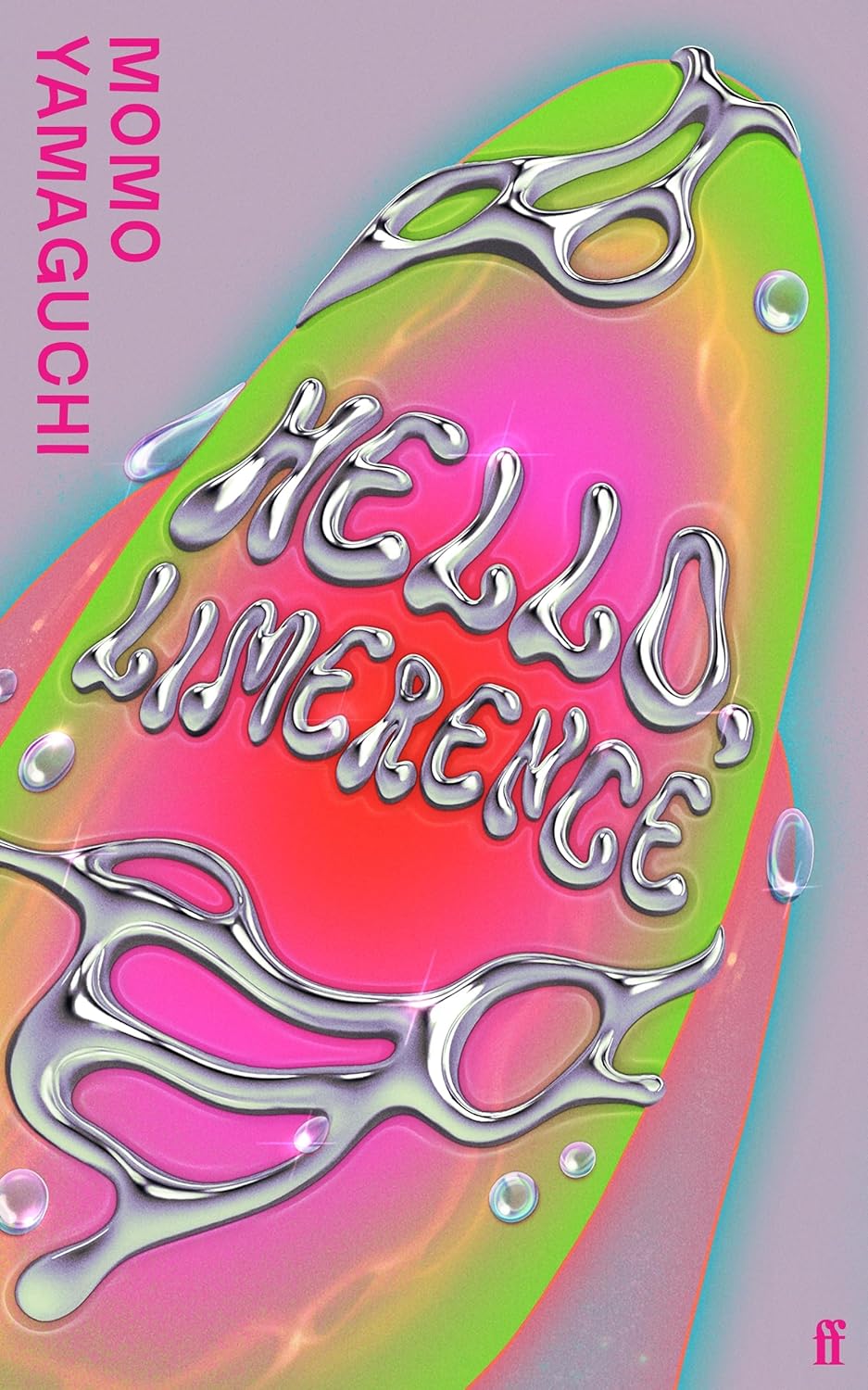
The unusual word “limerence” in the title of Momo Yamaguchi’s debut novel is never in fact used in the book itself. It is a term coined by a psychologist in the 1970s and which hasn’t yet entered common parlance, requiring it to be defined on the book’s back cover—“the state of being obsessively infatuated with someone, usually accompanied by delusions of or a desire for an intense romantic relationship with that person”—and providing something of a bankshot entrance into a comical story that reads a lot like a Japanese-set Bridget Jones’s Diary, including actual diary entries.
The novel begins as 24 year-old Mika rides the Tokyo subway on the way to her mundane office job. She’s never dated and wonders why she’s so different from the other women she sees out and about in Tokyo. Her active imagination is evident from the start of the story.
I envy them, the way they toss their hair as if they own everything in sight. It is that time of year again; the cicadas scream fi-fi-fi from the tree branches and drop dead onto unsuspecting heads with alarming unpredictability. The women carry dainty parasols and twirl them with a deft flick, so that the still-twitching bodies of the cicadas ping off the surface and sizzle atop the asphalt, lace wings aflutter.
Mika feels insecure, but that all changes when she attends a beach party with her best friend Nana and meets a Japanese American expat named Tyler. Their attraction is mutual.
He tells me that he noticed me the moment he saw me, had been trying to get me alone all afternoon. Such a boldly romantic declaration is utterly unprecedented in my twenty-four years of existence, and my heart threatens to bang its way out of my chest and flop about his feet like a dying fish.
She calls him Tai and days after they meet he asks if she wants to “kick it”. Mika is fluent in English after attending school in Ohio for a number of years when her parents’ jobs took the family there, but she doesn’t quite understand his intentions. After searching online for the exact meaning of “kick it”, she comes to the conclusion that he has not in fact asked her out on a date.
Yet things progress romantically, much to her liking. Just when she believes she finally has a boyfriend, Tai reveals that he’s just gotten out of a long-term relationship and isn’t looking for anything serious. Mika is not to be deterred and tells herself:
I shall call his bluff, and he shall fall in love with me, utterly, hopelessly, desperately. I will soon hold his devoted, throbbing heart in the palm of my hand because he will give it to me freely and I shall have it under my total control. He’s gonna love me, I know it.
This is when limerence enters the story. Mika stalks Tai’s social media and finds old photos of him with his ex-girlfriend, as well as new ones of him at a club with his arms around two women. When she texts him, she counts the hours and then days that her message has been read but not answered. Finally, a week later he sends a text devoid of punctuation: “hey how was your day”. Mika analyzes it for hidden meaning and decides that he is indeed interested in dating her seriously. She waits “an arbitrary seventeen minutes” before responding to his text, lest she seem needy.
As one can predict, Mika rarely hears from Tai and sets herself up for great disappointment. Her twenty-fifth birthday passes without any fanfare and she starts to date other men to make Tai jealous and take notice. It works sometimes, but he inevitably disappoints her. Other colorful characters help Mika keep her mind off her dating woes, including her grandmother, who suffers from her own anxieties.
I listen, ever the obedient granddaughter, but with one ear because she speaks of the war every day. I’ll wear ripped jeans to her house, and she’ll chase me like a crab with a pair of kitchen scissors in hand, dragging her bad leg behind her. Bristling with indignance at the absurdity of purchasing ripped clothing like a dirty beggar, as if we were still at war. Look at yourself! Let me fix that! A new brand of instant ramen will be on sale, and she’ll stock up on boxfuls, reminiscing about shopping at the black markets, trading a bag of rice for her best silks. The war lives on within her.
Mika learns some valuable lessons by the end of the story, which is short at 212 pages. As much as she obsesses over Tai, she realizes that his fear of commitment is something that has nothing to do with her. Even more, she finds that relationships work best when they are drama-free.