New Book Announcement: “Beyond the Sewol: Activist Theatre and Performance in South Korea and the Diaspora” by Areum Jeong
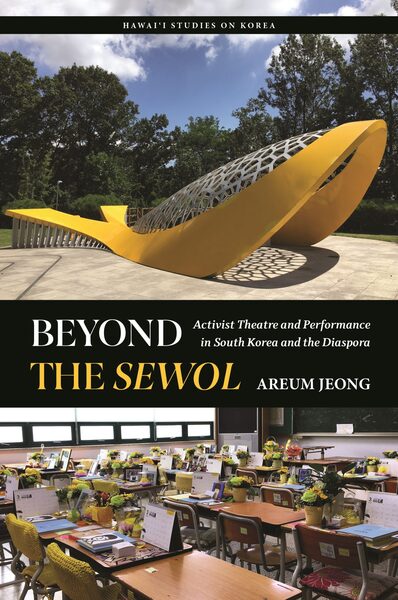
On April 15, 2014, the Sewol ferry departed from Incheon, bound for Jeju Island, with 476 people onboard. After receiving a distress call, authorities urged the crew to prepare for evacuation. Instead, passengers were told to stay in their cabins and wait for help. Most died waiting for rescue.
The helplessness many South Koreans and others felt at the sinking of the Sewol was sharpened by the ways the government mishandled the disaster, which has become the most galvanizing event in contemporary South Korean history.
Throughout this roller coaster of national disaster, public outrage, hope for change, and broken promises, an activist movement has emerged among artists working through the medium of performance to process the disaster, commemorate its victims, and advocate for public change.
Beyond the Sewol is the first book to spotlight this creative fluorescence of performative work, spanning theatre productions, exhibitions, interactive memorial events, site-specific public performances, street protests, and even commercial K-pop music videos. Korean artists, often collaborating with Sewol survivors and families, have created a public memory archive countering official versions of the event. Their work and activism link Sewol commemoration to broader demands for changes in politics and society, especially around government accountability, redress for victims, and public empathy for survivors.
By analyzing a multimedia collection of performative works commemorating the Sewol, this book reveals how activists and artists mobilizing performative strategies have transformed the meaning of Sewol from an unresolved national trauma into a catalyst for creating a safer, fairer, and more caring society.
Beyond the Sewol: Activist Theatre and Performance in South Korea and the Diaspora
by Areum Jeong
University of Hawaiʻi Press (September 2025)