Old post
This post was published before January 2026. Some links, images or other content may no longer display or work as originally intended.
Old post
This post was published before January 2026. Some links, images or other content may no longer display or work as originally intended.
Contributor
Now based in Washington, DC, Agnès Bun is a French reporter who has previously worked out of New Delhi and Hong Kong. She won the Daniel Pearl Award in 2010 and is the author of There’s No Poetry in a Typhoon: Vignettes from Journalism’s Front Lines (Abbreviated Press).

Tragedy finds its ideal form when a good character is partially responsible for her own downfall, which should unfold with the slow and inexorable force of a moral sentencing. Or so said Aristotle. Likewise, an irresistible blend of pity, horror, and satisfaction emerges through each of Ha Seong-nan’s short stories in this new collection. Even…
The Korean War began 70 years ago. In the United States, it is known as the “forgotten war”. Not so in China. In his new book Attack at Chosin, Professor Xiaobing Li, a prolific historian who teaches at the University of Central Oklahoma, and who once served in China’s People’s Liberation Army (PLA), explores the…
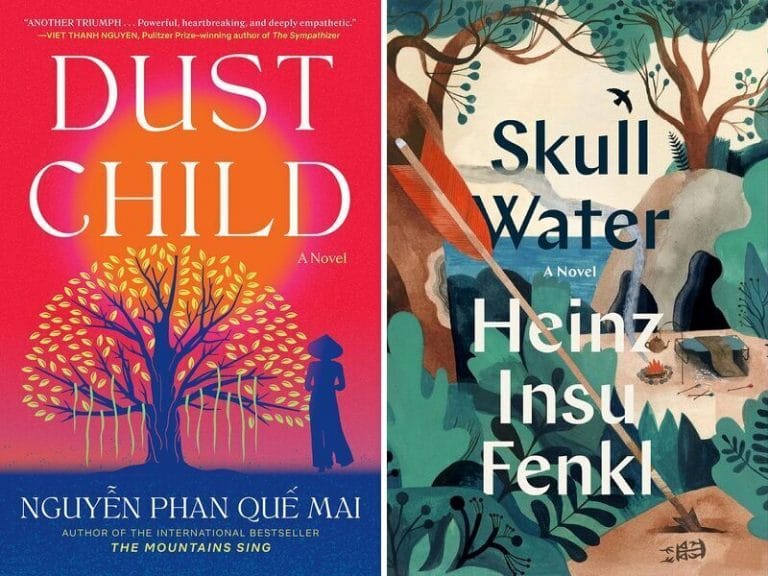
With war comes much trauma, and America’s Asian wars had the additional consequence of Amerasian children—too often left behind by both parents—who more times than not ended up on the streets. There is a term in Vietnamese that translates to “children of the dust” and it’s this concept that drives the story and title of…

In a dark alley in Oxford, Yohan finds his mentor Doha Kim stabbed. With moments left to live, Doha tells Yohan that he must go to the Soju Club and meet with Dr Ryu. These are the North Korean spymaster’s final instructions, which Yohan knows he must obey.

After many years of cutting a fairly small figure in the larger affairs of the world South Korea has spent the past decade transforming its profile among the middle powers, especially in the Asian region. Ramon Pacheco Pardo sees this as the result of a quiet but determined strategy combining economic clout, “soft power” cultural influence,…
The Kims, of North Korea, are perhaps the 21st century’s most successful family dictatorship—if only due to sheer longevity, having run North Korea for the almost eight decades since the country’s post-war founding. Kim Il-sung led North Korea for over half that time, from its founding in 1948 to Kim’s death in 1994.