“Plant Lady” by Minyoung Kang
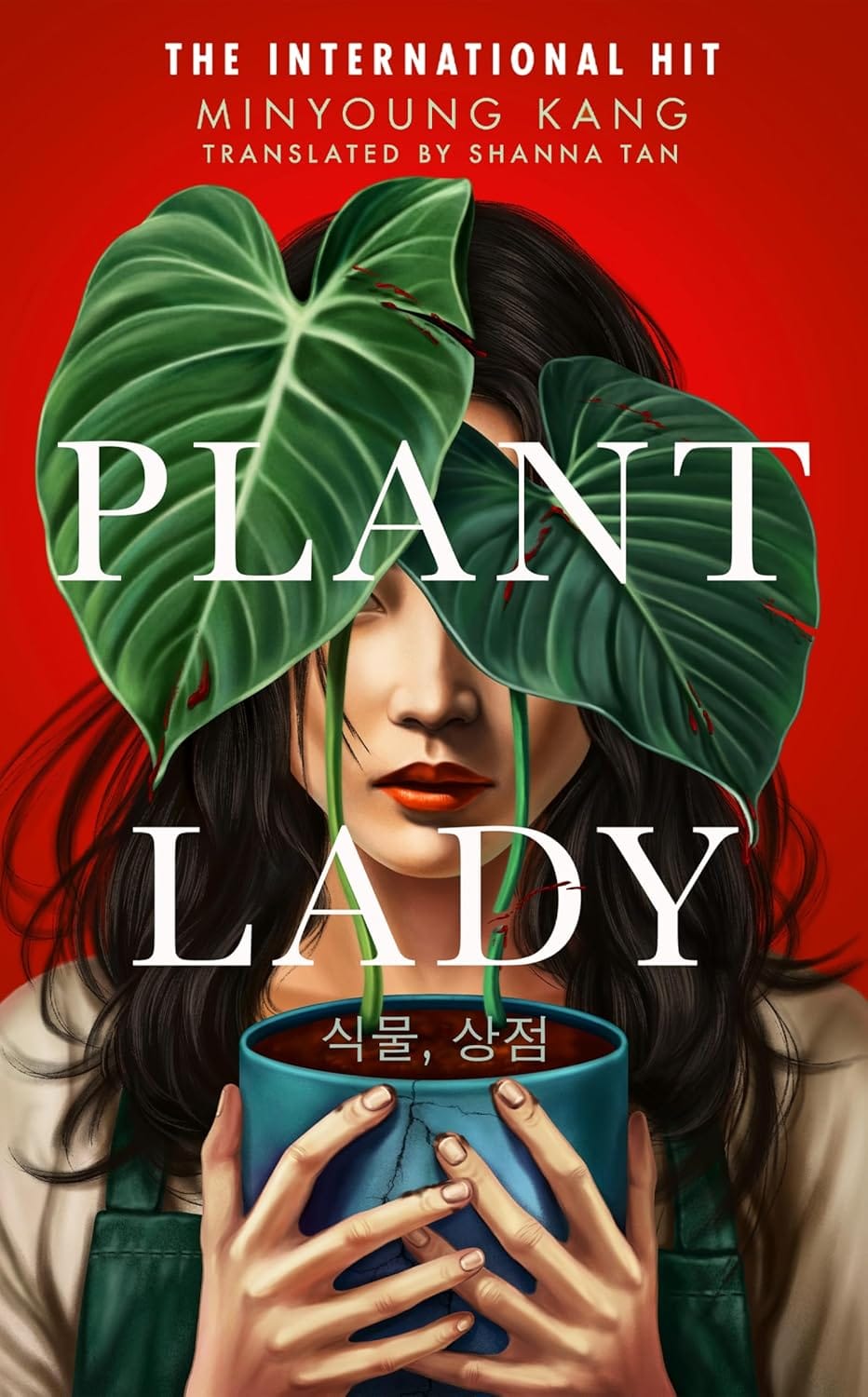
At first glance, Minyoung Kang’s new book, Plant Lady, might be mistaken for yet another addition to the Korean comfort fiction genre. After all, Shanna Tan has translated Korean novels set in bookshops, laundromats, and photo studios, to name but a few. On the cover of the US edition of Plant Lady, a young woman stands in a shop with pruning shears and tall rubber boots next to shelves of dark green plants with leaves of different shapes and sizes. But at closer look, her shears are dripping with blood onto one of her rubber boots. As Kang notes in an interview at the back of the book, she took inspiration from horror and noir stories to write Plant Lady. The book includes some elements of comfort fiction, but it is certainly a horror story through and through.
Yoohee Choi is a young plant store owner in a quiet neighborhood in Sejin City, also known as Sejong City. She’s enjoyed plants from a young age and has a special knack for taking care of them and keeping them alive. Her store, simply named Plant Shop, is initially in a quiet residential part of town, far from coffee shops or cafes. It doesn’t attract much foot traffic at first, but thanks to social media, Plant Shop quickly gains a following, not only in Sejin, but throughout South Korea.
Some people came to see the street cats, but what really drew the customers in was the “plant sanctuary” vibe of the place and the way Yoohee’s stock continually rotated to reflect the seasons. Moreover, Yoohee loved to offer detailed consultations on the care of any plant variety under the sun, whether she had one in stock or not.
She soon offers another service, one she can never advertise. After a boyfriend becomes too possessive of her shop and starts to take credit for its success, Yoohee hits him over the head with a metal shovel and he soon disappears forever. As more female customers come into her shop and tell her of their problems with an abusive father or neighborhood bully, Yoohee does away with them, too. The shovel is often her weapon of choice, but she also uses poisonous fruit her victims never suspect of being lethal.
Cats play a supporting role in the story, which overlaps with comfort fiction, but in this case Yoohee seeks revenge on their part when a member of an animal lovers group goes on a rampage killing pigeons and cats and posting online photos of their mangled bodies. Yoohee feels it’s her job to stop this killer on behalf of the cats.
Yoohee usually left them to their own devices, but sometimes she caught their yellow eyes staring at her. Perhaps they were wondering why this strange human was always digging in the garden in this otherwise laidback street, or maybe they just wanted food. Unlike plants, cats could express their emotions and wants clearly—much like humans. Yoohee found them harder to understand than plants, but she hated to see them come to harm.
As the story becomes darker and more men disappear—the victims are all men—a local police detective starts to look into their disappearance. These victims don’t have anything in common until the detective realizes they have all visited Plant Shop. Yoohee is questioned and cooperates with the police, answering their questions all while trying to protect herself.