Old post
This post was published before January 2026. Some links, images or other content may no longer display or work as originally intended.
“Ryu” by Akira Higashiyama
The ghosts of those wronged in war invariably call out for vengeance. When the conflict is a civil war, all the more so. Families may be split apart, feuds started, and children called upon to settle scores they weren’t alive to start. The civil war that swept through China from 1927 to 1949 is no exception, and the continued tension between Taiwan and the Chinese mainland is the legacy of that conflict. In his novel Ryu—translated into English by Alison Watts—Akira Higashiyama explores the history of the Chinese Civil War and the conflicts it engenders generations later. Although originally written in Japanese, Ryu (a transliteration of the novel’s Japanese title) is a thoroughly Taiwanese novel that takes readers on an exciting odyssey through life in Taipei in the 1970s.
Higashiyama, whose Chinese name is Wang Zhen-xu, was born in Taipei in 1968 to a family that, like Ryu’s protagonist, originally hailed from Shandong Province in mainland China. When he was still a young boy, Higashiyama immigrated with his family to Japan and has since written numerous Japanese-language novels and anime scripts. In writing Ryu, Higashiyama relied in large part on stories passed down to him from family members, especially his father. The novel has won numerous awards in Japan, including the Naoki Prize, Japan’s top award for popular fiction.
The plot of Ryu follows Yeh Chiu-sheng, a teenager in 1970s Taipei whose grandfather fought for the Kuomintang during the civil war and followed the losing side when it fled to Taiwan, where he and his family began a new life. Yeh is, at first, a normal, high-achieving student, but his life quickly changes when his grandfather is brutally murdered and he is the one to find his body. Yeh suspects the killer came from the mainland seeking revenge for crimes committed during the war, and the burning desire to uncover the culprit guides much of Yeh’s subsequent life, and thus of the narrative.
However, Ryu’s plot is wide-ranging, following its protagonist’s many ups and downs growing up in the dazzlingly colourful world of Taipei in the ’70s and ’80s. Among other adventures, Yeh is forced to transfer to a violent high school, falls in love, and gets in trouble with a local gang, all within a landscape populated by war-hardened grandparents, brawling teenage poets, and even gods. It is a world deeply marked by violence; the wounds left by the civil war and subsequent exile are still fresh, as is conflict with the native Taiwanese population. While the narrative can at times appear to be drifting away from its central mystery, even seemingly distant events become relevant to the murder. Thus a subplot involving a ghost, for example, leads to an important clue. Yeh’s experiences that aren’t as relevant—his love affairs and frequent fights, for instance—are worth the digression.
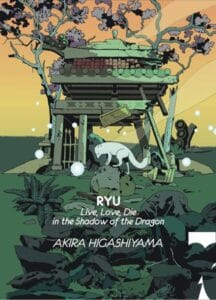
Ryu is difficult to characterize: it is part crime mystery, part romance, part ghost story, part bildungsroman. The story’s supernatural elements (ghosts, gods, and so on) might classify it as magical realism, depending on one’s cultural viewpoint. It is perhaps best compared to modern picaresque novels, like Saul Bellow’s The Adventures of Augie March. Regardless of classification, Ryu is an unendingly exciting and fascinating journey through Taiwan and the cycles of revenge that permeate society and history.
Indeed, revenge is arguably the novel’s primary theme. Everyone in the book, from petty gangsters to grandparents, seems to have a score to settle, either for themselves, their family, or their “sworn brothers.” The wide array of memorable characters are variously caught in these cycles as they try to survive and uphold their status in a turbulent society. Many are trapped by their own pain and anger and their inability to see the pain of others—as the novel’s epigram puts it, “My tears are not visible to you / Because I live in water, / Said the fish”—and this suffering and indifference drive the novel’s many violent feuds. Ryu continues to ask whether Yeh, or those around him, will be able to escape the cycles of revenge that characterize so much of his social life, his quest to find his grandfather’s killer, and the wider politics and history of China.
Higashiyama’s writing, at least as it appears in translation, is for the most part simple, casual, as if the narrator were sitting before the reader recounting the events. This style is effective for Ryu’s quick pace, however, and there are moments where the prose achieves a higher register: “Under the clear, blue autumn sky, the bracing scent of olive flowed in the air like a river.” That such sentences are juxtaposed with ones like “the poet badass also sees the enemy inside himself” is not as off-putting as one might expect, as both flow naturally from the personality of the narrator and the context of the story, and both are subservient to the fast progression of events. This casualness can on occasion distract from other elements of the book, however, and the otherwise-satisfying ending suffers somewhat in this regard.
Overall, Ryu overflows with riches. The narrative is deftly balanced between the central thread of mystery and its numerous subplots, and nearly every page is filled with characters and cultural insight at once believable and fascinating. The story’s engagement with history is illuminating, and it raises deep questions without sacrificing readability. Ryu’s appearance in English as a representative of both Taiwanese literature and diasporic writing from Japan is a welcome rarity, and its literary merits should earn it a wide English readership.

You must be logged in to post a comment.