“Shift” by Cho Yeeun
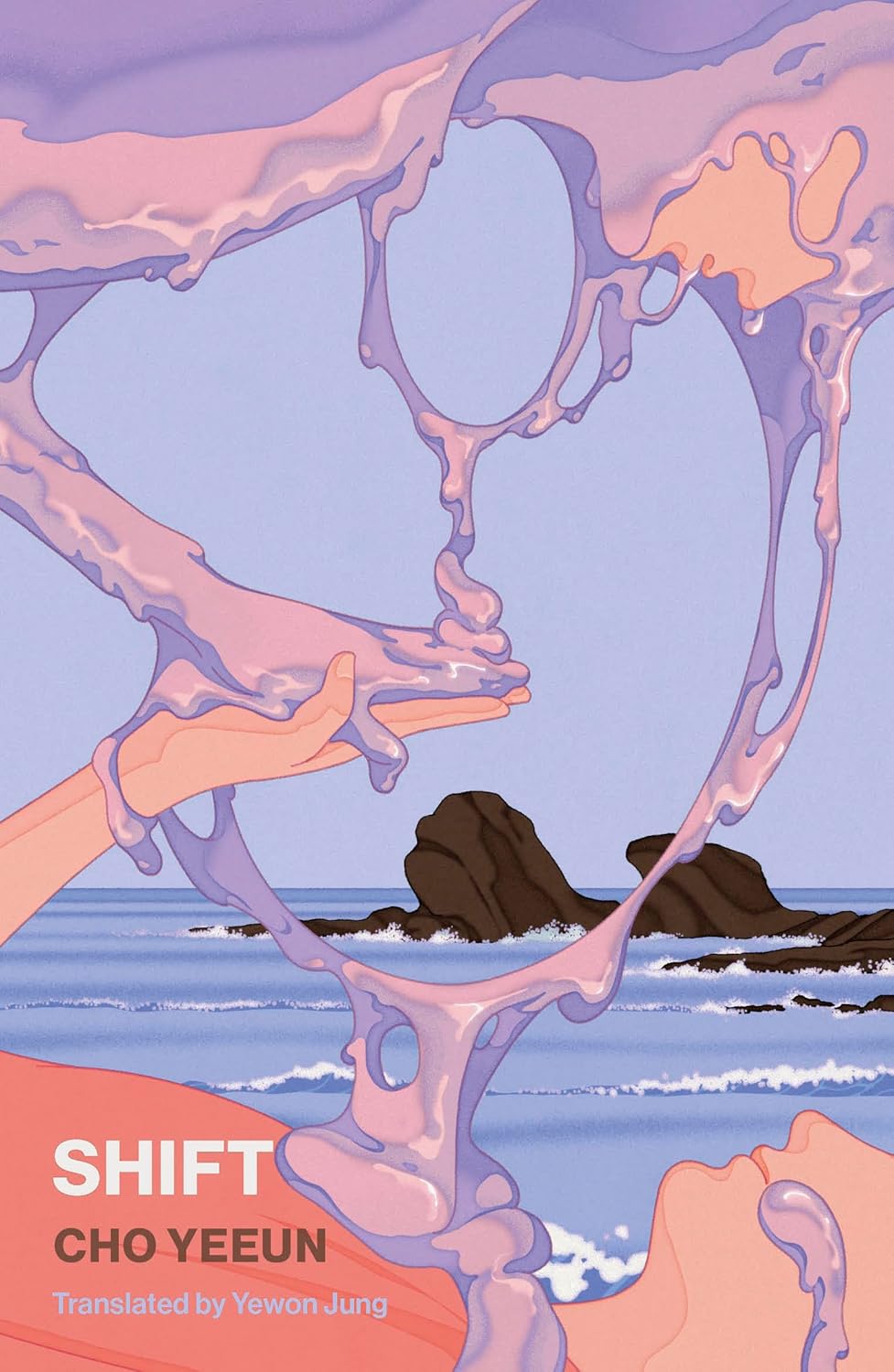
At first, Cho Yeeun’s Shift, recently translated by Yewon Jung, might be mistaken for a straight-up detective novel. Yi Chang, a police officer in a small seaside town, is searching for the leader of a mysterious cult, who claims to be able to cure any disease with his magical powers, in the hope of saving his terminally ill niece. He knows these powers are real, having seen them save his sister in the past. Before Yi Chang manages to track down the cult, the leader is suddenly found dead, and now the search for the culprit begins. But the whodunit premise is almost immediately disrupted as the story spirals into a thriller exploring the dark side of miracles.
Yi Chang’s narrative arc is however soon overshadowed by that of Lan, a twenty-something bar worker hiding a lot of secrets. As Lan and Yi Chang’s paths begin to cross more frequently, the stories of their pasts intertwine into a single narrative. At once disturbing and captivating, this narrative touches on guilt, religious fanaticism, greed and, yes, magic. Both characters secretly hope for a miracle to save them from trauma and loss, only to be confronted with a painful reality:
What the miracle required was simple: if you want something, you have to give something in return. It was an exchange, not a blessing.
Miracles come at a cost.
In Shift, miracles come at a cost. Cho Yeeun plays with the perception of magic as pure and unconditional, only to shatter this illusion time and again. The plot grows increasingly cruel, and Lan’s role in it features—readers be warned—numerous depictions of violence, including repeated child abuse. The search for the culprit turns into a quest to reconnect with the past as the characters recall their connection to the mysterious Church of the Heavenly Spirit. When their stories collide, they realize that miracles never come out of nowhere and that “unlike physical wounds, memories don’t vanish.”
The small, seemingly peaceful and boring town in which the story unfolds creates an impression of something menacing, further reinforced by the recurring image of the sea:
The sea always pervaded the air of this town. He both liked and hated the fishy smell that accompanied daily life here. He often wondered, What do you do when something really sticky and fishy clings to your body and doesn’t come off? Even worse, what if it’s something you can distinctly feel but can’t touch? You’d probably just have to get used to it, the way you get used to the dampness at night.
The sea becomes omnipresent but ever-changing, dangerous at times and liberating at others. Lan’s connection to it is particularly symbolic as his story begins—and ends—with the sea. Each time it is mentioned, the atmosphere grows increasingly dark as if foreshadowing the crimes to come. In this and many other instances, Cho Yeeun pays great attention to sensory descriptions of colours and smells. Lan experiences the world around him through sensations rather than words, especially in his recollections of his teenage years:
The thing that stood out in his memory was that everything was excessive—the violence, the temper, the blood. Things that should be kept under control ran riot. Images and sensations he could hardly endure got lumped together and buried in his consciousness, as ruins that shouldn’t ever be excavated.
This emphasis on emotions and abrupt, fast-paced action contributes to the novel’s uncanny atmosphere.
The Shift of the title is reflected in several “shifts” occurring within the story: the present changes to past; POVs of the characters merge into one narrative unfolding like a kaleidoscope; the focus of attention moving from Yi Chang to Lan. In just over 200 pages, the short novel weaves a story of crime and revenge through concise yet dynamic language. The action sequences are combined with an exploration of the nature of evil, with both protagonists and antagonists given a voice. And although miracles here are inseparable from pain and suffering, they nevertheless do occur, often in unsettling ways.