“Sutra Americana” by Monona Wali
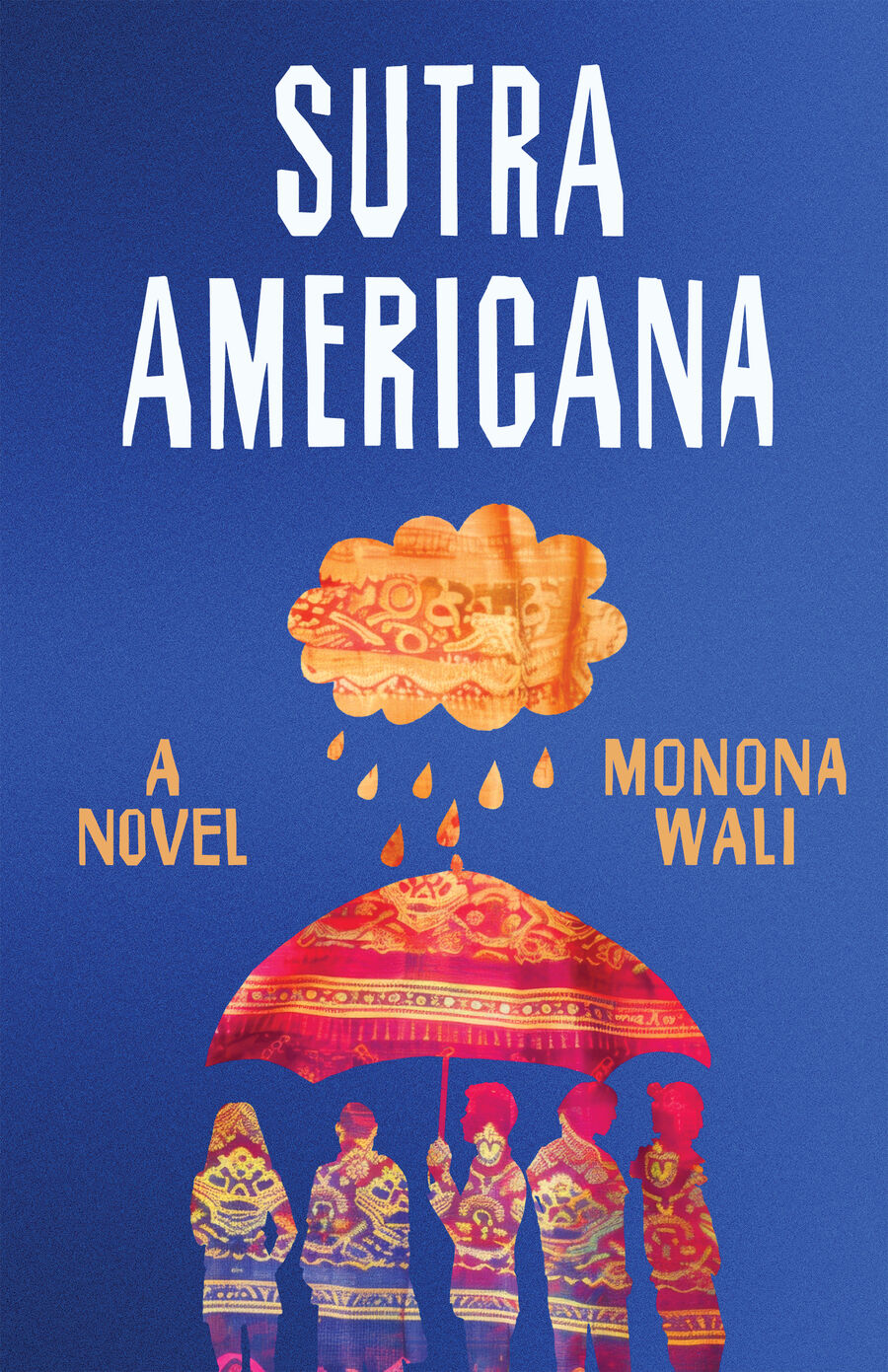
It’s not hard to picture the leap Monona Wali made from filmmaker to writer after reading her latest novel, Sutra Americana, a cinematic story of an Indian family that immigrated to the United States in the early 1960s. Continuing well into the 2000s, the story is at heart about how long it can take for immigrants to truly feel at home.
Sadashivayya Sharma is the patriarch of his family of five: his wife Sushila and their daughters Raja, Kiran, and Anu. He becomes known as Sharma in the United States after he moves to Baltimore for graduate work at Johns Hopkins in the late 1950s. It’s still several years before the groundbreaking 1965 US Immigration Act that abolished the quota system, so it’s impossible for Sushila and their daughters to join Sharma when he starts at Hopkins. Sharma convinces Sushila to join him in 1961 while they wait for their daughters’ visas to come through. The girls stay with their Aaji, Sushila’s mother. This is the first big decision that Sushila concedes to her husband and the first she second-guesses. It won’t be the last.
Once the family is reunited, Sushila feels relieved to be with her daughters, but something is missing. The family settles in Chicago, where Sharma secures a faculty position in cosmology at the University of Chicago. At first Sharma seems to be the only family member to adjust well to the United States; Sushila still feels unmoored.
They had dedicated their lives to the project of educating themselves; it had been their highest ideal. They had left India for America to fulfill their dreams of advanced study. Now they had three daughters who were curious and passionate. They were traveling and seeing the world as they had hoped.
As her daughters grow up, Sushila finds her place at the University of Chicago’s philosophy department, where she earns a doctorate. Each daughter forges her own path of independence. Raja attends Harvard and marries another first generation Indian and has three children of her own. Kiran is an Oberlin cellist who after graduation follows Theo, a Spanish student of her father’s, to Los Angeles where they have a baby before marriage. And Anu, the youngest, attends City College of New York and has a relationship with a woman, at first hidden from her parents. Each daughter’s journey could fill a novel, yet Wali doesn’t waste words and accomplishes in just over 200 pages what might well have taken double that.
Wali’s novel stretches well over a half-century. Since the book is on the short side, she often keeps the timeframe anchored in the current events of the day. When Anu returns to India to bring Aaji to the United States for Raja’s wedding, Wali writes:
The chaos of the streets was impenetrable. India was still under a state of emergency declared the previous year by Indira Gandhi. Her parents had always liked Indira Gandhi, and she wondered what they thought of her now that she had declared martial law. Anu read the papers avidly and followed the debates.
Although Sharma adapted to the US the quickest when the family was still new to Chicago, by the end of the story his character seems the most rooted in tradition. And even though the three daughters become mothers and experience great changes in their own families, it’s Sushila’s journey that is the most transformative and memorable.