“Swell” by Son Bo-mi
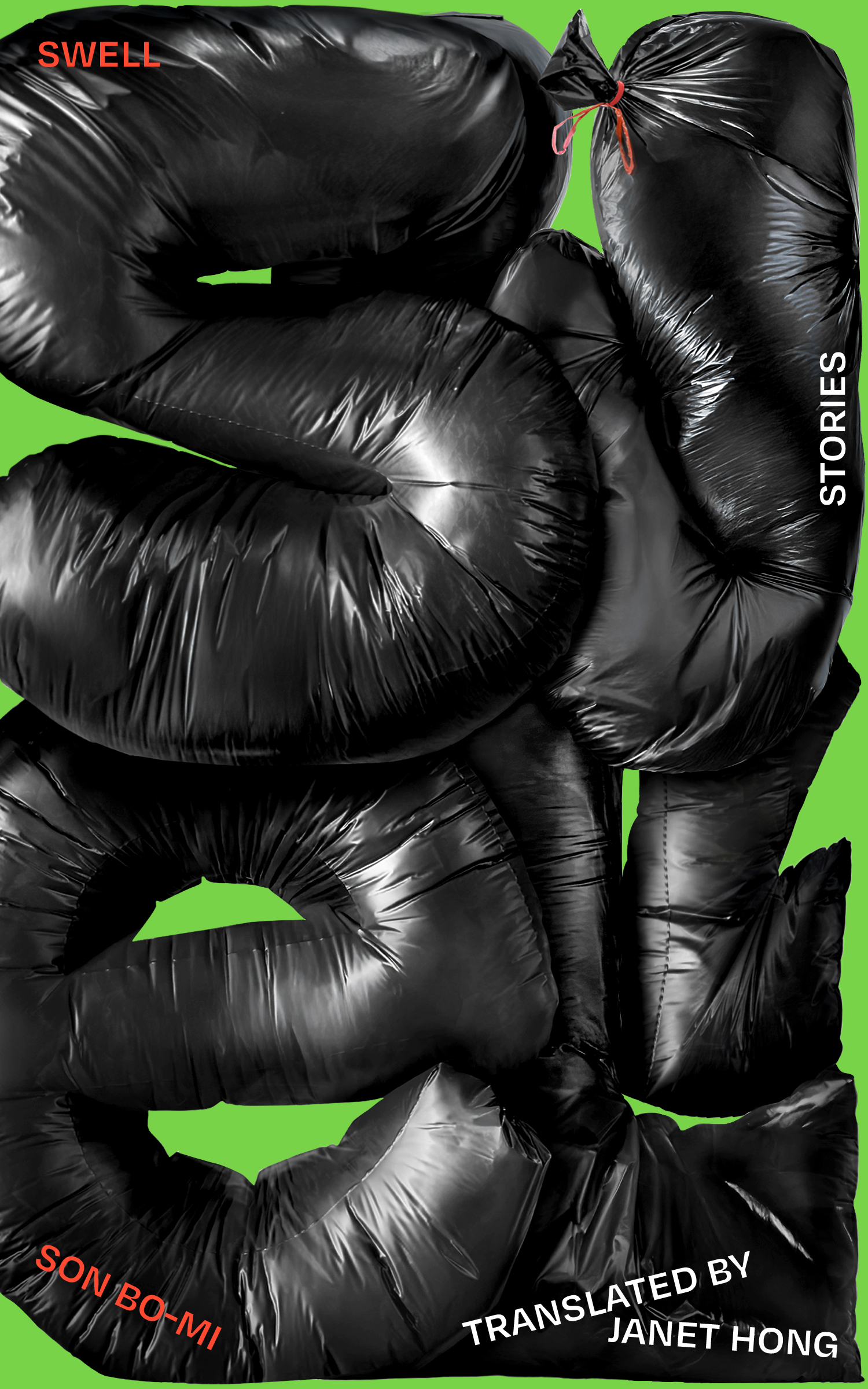
A teenage boy goes to a concert of his favourite rock band with his father only to become a victim of mass shooting. In a parallel lifetime, he returns from the concert completely unharmed while his father suffers life-altering injuries. Which of these two versions of their lives is “true”? Swell, Son Bo-mi’s collection of metafictional stories recently translated by Janet Hong, suggests that, actually, both are.
All nine stories in this collection challenge boundaries: the real and fictional, life and death, comedy and tragedy. Although not always thematically related, they remain in a conversation with each other, with characters migrating across the stories, if only to appear briefly as a tribute. The first and the last stories are directly related to each other while the rest share the same creative universe, making them all seem like an organic whole.
Son Bo-mi is playful with her texts, filling them with allusions and intertextual references and even inserting herself into them. The places are outlined rather than described in details, creating an impression of following a theatrical play. The characters appear and disappear, at times becoming increasingly self-aware and lost. Feeling like strangers within their own stories, they may break the fourth wall to address readers like the protagonist does in “A Table for Six”:
He suddenly thought of his wife. Where was she now? When had she left the group? She’d been there at lunch, hadn’t she? Then where had she gone? The thought came to him, swift and strange: Then where am I? Where exactly am I? No—where are we?
Shifts between points of view here are just as unexplained as the sudden intrusions of fantastical elements, yet both are treated as perfectly natural.
“Blanket”, the opening story, is told from the perspective of an unnamed writer, who uses his friend Han’s boss, Jang, as a model for his book. By fictionalising the murder of Jang’s son during a mass shooting at a concert, he becomes famous but irreparably damages his relationship with Han. When Han suddenly passes away, the protagonist is left plagued with guilt for what he had done until a twist of fate forces him to meet the real Jang. The more the two confront each other, the more vividly the narrator feels that Jang is not just “some magic trick that appeared and vanished with the snap of a finger” but a “real person, living his life”. The story shifts from doubting Jang’s existence to focusing on his grief, symbolized by the blanket he once bought for his son, which he now carries everywhere. For the narrator, facing this grief means discovering that boundaries between reality and fiction collapse when someone gets hurt:
I’d never meant to mock anyone. But had I done that to Jang? Had I believed he was a fool for carrying around the blanket that had belonged to his dead son? I don’t know. Up to that point, at least, I believed I was offering a fresh perspective on life and death. But after Han died, I realized my so-called perspective had been nothing but despicable.
As the two learn to listen to and actually hear each other, the guilt turns into forgiveness and the loss into bittersweet acceptance.
“Blimp”, the last story in the collection, reimagines the same plot from the perspective of Jang’s son. In this version, he stays alive and becomes a writer himself, but his father gets seriously injured. As the protagonist grapples with his own sense of guilt, the unavoidability of misery appears as a recurrent motif that ties the two stories together. In this version, however, the plot is increasingly surreal, with the protagonist dreaming of UFOs taking him away and eventually even contacting aliens.
In “Blimp”, just like in the whole collection, the absurd is closely intertwined with the mundane. Stories of unhappy relationships (“A Table for Six”, “A Sweet Sleep: Pang’s Story”, “Downpour”, “Silence”) are interwoven with an almost academic investigation of the history of non-existent movies (“Give Them the Lindy Hop”) and a pastiche reinterpretation of the biography of American physicist Gordon Gould (“The Love of a Scientist”). This metafictional cocktail might seem tricky to approach at first, but it clearly demonstrates Son’s creative range and shows why she has won virtually every major award in Korean literature. While reading the collection at times resembles riding a rollercoaster, for those interested in magical realism, psychological drama and literary experiments, it is a ride well worth taking.