“The Devil Takes Bitcoin: Cryptocurrency Crimes and the Japanese Connection” by Jake Adelstein
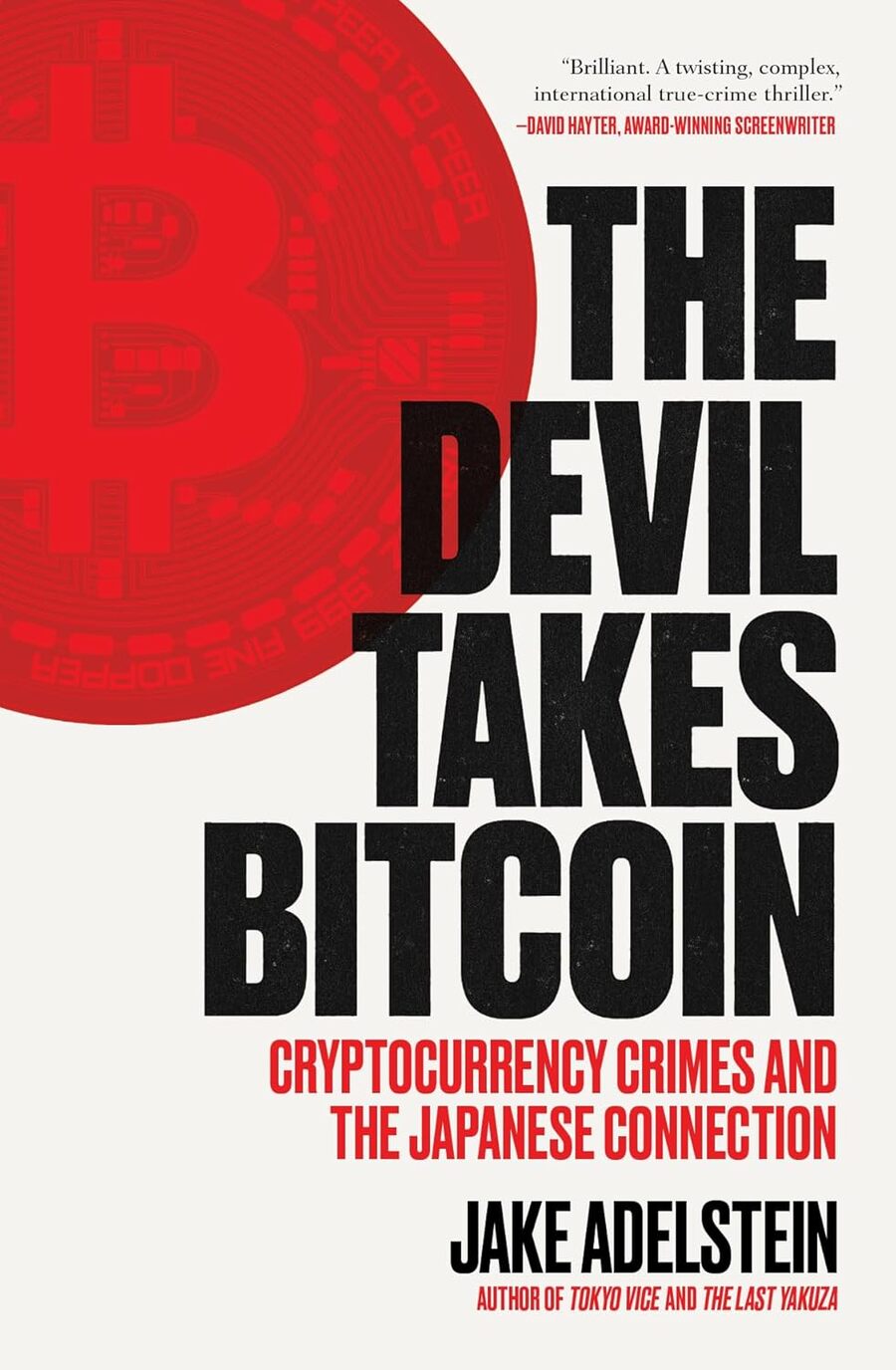
When Bitcoin first became a buzzword among early adopters around 2011, it was spoken of by devotees as a revolutionary force, promising to upend finance much like Jimi Hendrix redefined rock music with his electric guitar riffs. But for ‘normies’ or everyday people, the idea was baffling. How could something intangible, not backed by governments or banks, hold real value? In The Devil Takes Bitcoin: Cryptocurrency Crimes and the Japanese Connection, Jake Adelstein unpacks this world with a gripping narrative that blends true crime, investigative journalism, and cultural insight.
Drawing from his expertise in Japan’s underworld, Adelstein reveals how Bitcoin’s promise of freedom quickly entangled with crime, centering on the spectacular collapse of Mt Gox, the Tokyo-based exchange that once handled most of the world’s Bitcoin trades. Cryptocurrency is digital money that exists only online; Bitcoin, secured by complex math and computer code, is (or was at the time) completely unregulated, transactions are verified by a global web of anonymous computers rather than a government or central entity. It’s borderless, private, and resistant to inflation since there’s a fixed maximum supply of 21 million Bitcoins. For users, it’s like sending email but with money: fast, cheap, and without banks taking a cut.
Adelstein, known for Tokyo Vice—a memoir adapted into an HBO series about Japan’s yakuza—brings the perfect lens to this tale.
Adelstein’s book shines when exploring how this innovation provided the necessary financial infrastructure for the dark web, particularly through the Silk Road marketplace. Silk Road, launched in 2011, was the Amazon of the illicit world: an online bazaar where you could buy drugs, fake IDs, or even hacking tools using Bitcoin. What made it “juicy,” was its blend of high-tech anonymity and old-school vice. Vendors shipped heroin or ecstasy discreetly, rated by buyers like on eBay, with Bitcoin ensuring untraceable payments.
At the heart of Silk Road was Ross Ulbricht, a young Texan with a physics degree and libertarian ideals, who like his ideological brethren saw Bitcoin as a way to escape fiat currency’s control by “big brother” banks and regulators. Ulbricht, under the alias Dread Pirate Roberts (a nod to The Princess Bride), envisioned the Silk Road as a utopian experiment: a voluntary marketplace operating outside traditional laws, with self-imposed harm-reduction rules banning child porn or stolen goods. As Adelstein notes, quoting Ulbricht’s philosophy, it started as “beyond the law”, with him as the “captain of the ship”. But the libertarian dream soured. The site ballooned to $213 million in sales, drawing corrupt DEA agents who stole Bitcoin during busts. Ulbricht’s idealism cracked; he allegedly ordered hits on the people who were threats, though none were carried out. Arrested in 2013 in a San Francisco library, he got life in prison. Remarkably, in January 2025, President Trump granted Ulbricht a full and unconditional pardon, fulfilling a campaign promise to libertarian and crypto supporters who viewed his sentence as government overreach.
Adelstein, known for Tokyo Vice—a memoir adapted into an HBO series about Japan’s yakuza—brings the perfect lens to this tale. His background as a Tokyo-based reporter since 1993, covering organized crime for outlets like The Daily Beast, equips him to dissect cryptocurrency’s shadowy side. The book isn’t just a history; it’s a character-driven thriller focused on Mark Karpeles, the quirky French coder nicknamed “Magical Tux”. Karpeles bought Mt Gox in 2011, transforming it from a “Magic: The Gathering” card site into Bitcoin’s powerhouse. By 2013, it handled 80% of trades, but poor security and hacks led to its 2014 implosion, losing 850,000 Bitcoins worth billions today. Adelstein was there, advising Karpeles during his 2015 arrest and trial in Japan’s harsh “hostage justice” system, where he endured months in detention before a partial acquittal.
The language is racy and engaging: a quick, eye-opening read for crypto novices or crime buffs alike.
The premise is straightforward: Bitcoin’s decentralized genius invited chaos, from hacks by Russian cybercriminals to scandals like Coincheck’s 2018 theft. Adelstein argues this isn’t just about greed—the love of money as the root of evil—but something in cryptocurrency’s DNA that attracts the worst. Its importance lies in demystifying crypto’s hype, showing how Mt Gox’s fall, far from killing Bitcoin, birthed a resilient industry now worth trillions. Yet the book warns of ongoing risks, like destabilizing economies or enabling ransomware. This foresight feels prescient amid recent events.
The language is racy and engaging, with Adelstein’s wit shining through anecdotes and a prologue vividly depicting the dramatic 2015 police raid on Karpeles’s Tokyo apartment, where authorities arrested him amid media frenzy. Tying it all together is a Japanese saying Adelstein loves: “Jigoku no sata mo kane shidai” or “Even at the gates of hell, it just depends on how much money you have.” In crypto’s wild ride, money opens doors to heaven or hell. This book is essential for understanding that duality. At 224 pages, it’s a quick, eye-opening read for crypto novices or crime buffs alike.