“The Unrepentant” by Sharmini Aphrodite
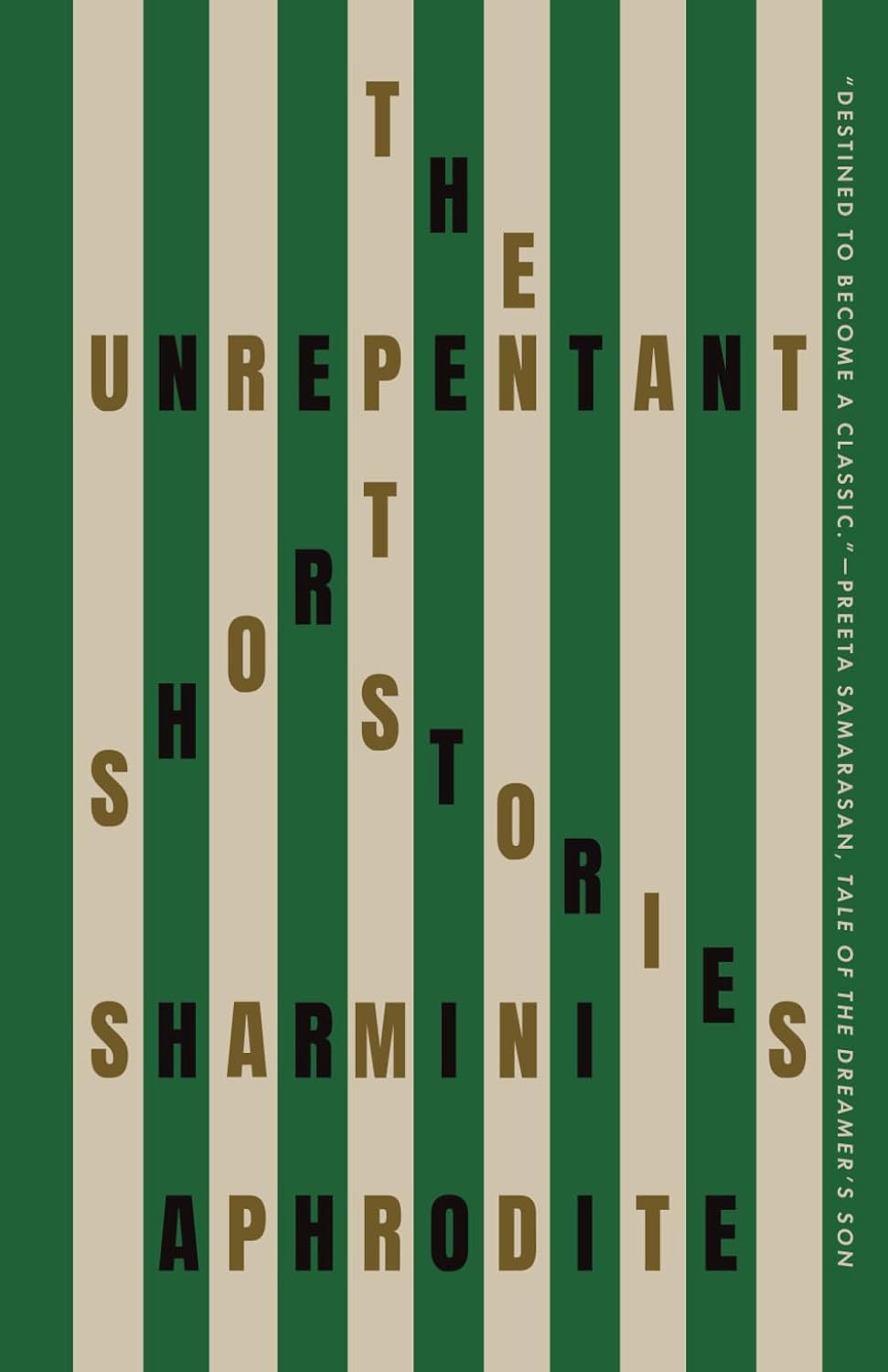
Rich in detail and the range of characters it features, The Unrepentant is as an impressive collection of 14 short stories that sheds light on the diversity of life and experiences in the Malay peninsula and Singapore during and in the aftermath of the Malayan Emergency (1948-1960), in which the communist pro-independence movement conducted guerilla warfare against the British-backed Federation of Malaya. True to its name, the collection is unapologetic in its intricacies, offering well-researched, complex stories that reveal themselves in the carefully crafted details rather than through explicit exposition. Together, the stories are more than just a reflection of this turbulent period in Malaysian history—they are also a rumination on history and the way that history is written.
Across the 14 stories, Aphrodite pieces together a tapestry of life during the struggle against colonial rule. The roster of characters captures the ethnic and cultural diversity present throughout the peninsula’s colonial history, including labourers mobilised within the British colonial system from southern India to Malaya to work on the rubber plantations, Chinese labourers who moved there in drove to work in mines, and local Malayans who connected with the land not only for its resources but also for their ancestral ties and their faith in the land’s spirits. Characters also vary in their social class and background: there are labourers as well as intellectuals, guerilla fighters as well as priests.
These characters encounter each other in various ways: in “Antipodal Points”, a priest and a revolutionary cross paths briefly at church, both pondering the meanings of collective action and community without exchanging a word about it. In “Kamus”, friction sparks as a Christian Chinese revolutionary is introduced to a group of Malay Muslim intellectuals who are working on a Malay dictionary that they believe would give shape to Malay national identity. Through these encounters, Aphrodite highlights the diversity of the guerilla pro-independence movement without overlooking the conflicts and internal struggles that people faced when working towards a sense of solidarity that transcended ethnic and religious groups. Striking in both its message and the unbroken style of its prose, written in the first-person plural perspective, the story “One Hundred Perumals” imagines a sense of solidarity among the revolutionary labourer community in a Malayan rubber plantation through the symbol of the Tamil deity, Perumal. This symbol not only rallies people, but it also blurs the distinction between individuals and thereby offer protection:
And still the British would not leave us alone. Still they would come to us and ask us again and again like flies like mosquitoes, asking Perumal Perumal have you seen Perumal. No, we would have said to them, no we have not seen Perumal because we are Perumal.
The perspectives featured in the stories also are from different generations. “Atlantic City”, a story told entirely through the answers that someone provides during an oral history interview, offers an exploration of how trauma is remembered and recalled. The interviewee is roundabout in his bilingual answers, flitting between English and Malay with an ease that the author chooses not to disrupt with explanations or translations, while he skirts around the main question that the young historian is asking. This question is never revealed to the readers, which is at once a compelling storytelling technique and a powerful nod to the interviewee’s avoidance of the matter—as if he had never been asked to talk about this before. The story ends with the revelation of the violent traumatic experience during the Emergency that the question addresses, about which the interviewee speaks hurriedly, smarting still from the hurt of it. Stemming from Aphrodite’s own experience as a historian, “Atlantic City” offers a nuanced reflection not merely on unspoken histories, but also on what it means to be researching such traumatic and censored parts of the past, and the emotional considerations one must take when uncovering such stories.
Yet even as the historian factors in the various perspectives and emotions of the topic they research, they do not always get to write the history that they find in their fieldwork. In “Again, Through the Looking Glass”, the processes of research and writing history are displayed in fragments, including transcriptions from interviews, sections of the drafted final paper, comments from the paper’s reviewer prior to publication, and the historian’s deliberations on what details to keep. In one comment, the reviewer ushers in the harsh reality of academia and publishing: “You need to decide what kind of story you are trying to tell.”
Poetic, intricate, and introspective, the stories in The Unrepentant come together to show the diversity of experiences in the Malay Peninsula and Singapore that history does not always capture. Impressive in both its scope and the literary techniques used to evoke this diversity, the series is a promising debut and an important read for anyone who wants to better understand this region.