“The Perilous Life of Jade Yeo” by Zen Cho
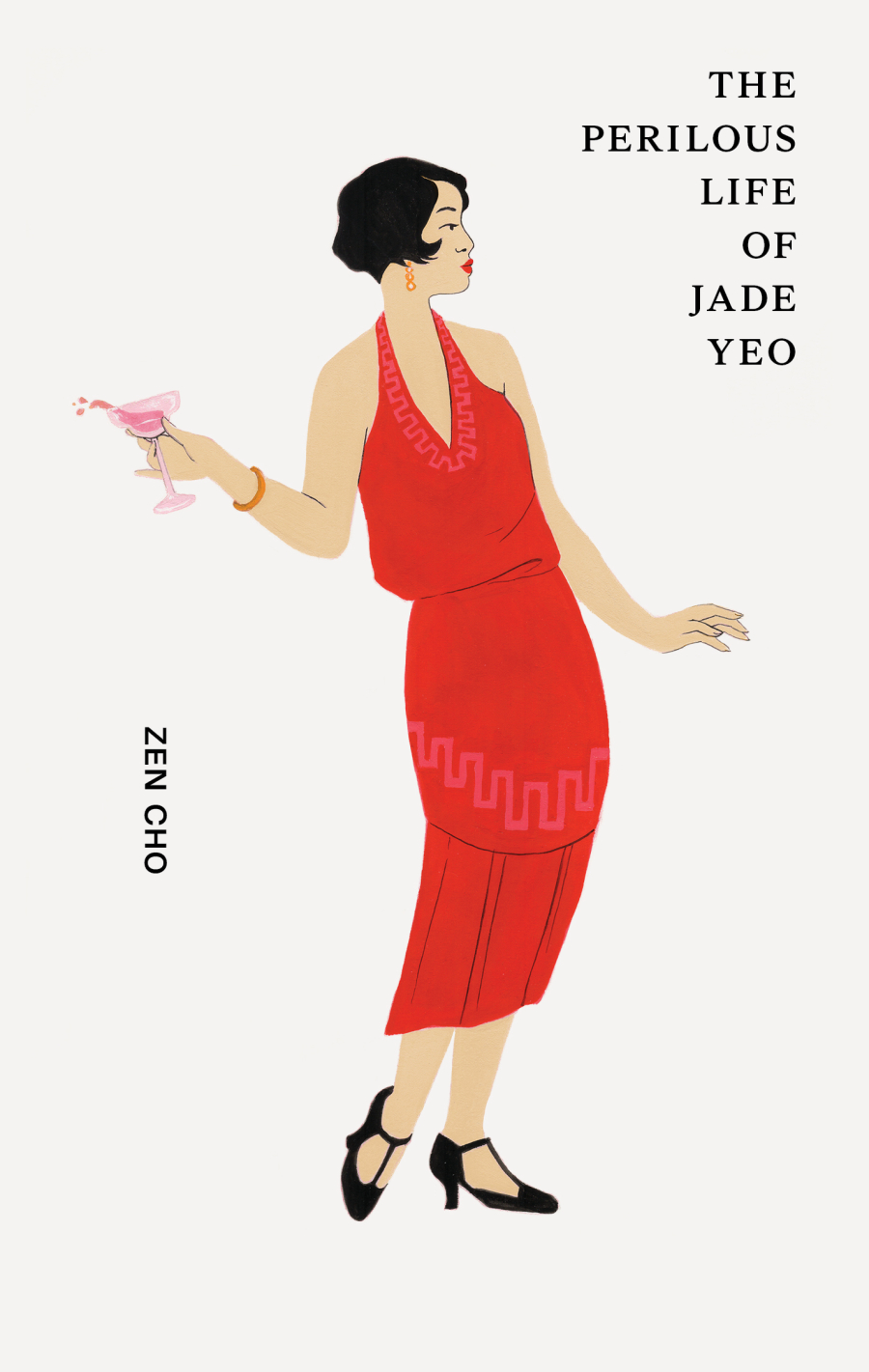
While it can certainly be awkward for book reviewers to meet authors after having panned their books, these are not usually life-altering experiences. But the same cannot be said for the protagonist in Zen Cho’s novella, The Perilous Life of Jade Yeo, a lighthearted story which nevertheless in many respects brings to mind Eileen Chang’s work.
Geok Huay, who goes by Jade among English speakers in London, is originally from Malaya and does all she can to ignore her parents’ pleas to return home and marry a Chinese man of their choice. Jade enjoys her freedoms in London and writes in a journal, which serves as the structure of Cho’s book. Each chapter is named for a different journal date, starting in the summer of 1920, ending eight months later. In Jade’s first entry, she complains about a review she’s slated to write for Oriental Literary Review, a publication to which she frequently contributes.
I am reading a terrible sententious book called The Wedding of Herbert Mimnaugh. Firstly, what sort of a name is Herbert and why would a parent with any trace of natural affection wish to afflict their child with such a name? Herbert’s parents do not feature prominently in the book when this choice alone makes it obvious that they are the most interesting people in it. Secondly and cetera, it is awful—hollow intellectual grandstanding that always stays five steps away from any true feeling even while it professes to plumb the depths of human experience. And no sense of humour. I cannot forgive a book that has no sense of humour.
The editor of the Oriental Literary Review is a man named Ravi. He likes Jade’s review of Mimnaugh and believes it will gain some attention in the London literary scene, although he warns her that the author, Sebastian Hardie, will probably be offended. But Hardie is hardly offended; he sends Jade an invitation to a party he’s throwing. In her journal, she writes of her surprise and wonder about this invitation.
He has written on the card that he has read my review of “what you were so kind as to call ‘the terrible Mimnaugh’” in the Oriental Literary Review and should very much like to meet me. How ominous. I wonder if he means to squash my presumption in person, or if it is a matter of heaping coals on my head.
At the party, Jade is mistaken for a member of the waitstaff because most of the other non-white people at the party are there to work. Her editor, Ravi, is there, though, and she’s happy to see a familiar face. When she meets Hardie, he’s not what she expects. And as it turns out, he is not in the least insulted by her review.
I read your review with great interest, if not precisely pleasure—I’m not quite advanced enough for that, I’m afraid. But it would have been churlish to be offended. A really serious reader is a treasure for any author.
If Hardie left it at that, there would be no story. Instead, he pursues Jade romantically even though he is married. Jade is a little taken aback by what Hardie describes as his open marriage—it is the swinging 20s, after all—but her curiosity takes over and soon she’s presented with a proposal to become a regular fixture in the Hardie household as a concubine. She struggles to preserve her independence even though the Hardies both Sebastian and his wife Diana—continue to pressure her to move in with them. Although Jade has allowed others to influence her choices during the eight months of her diary entries, she must ultimately decide her future for herself.
As with many of Eileen Chang’s characters, Jade is an independent young woman who has a somewhat strained relationship with her parents. Eileen Chang’s female characters often become involved with unsavory men and the same could be said of Jade when she gives into Hardie. Whether or not Cho had Chang in mind when she wrote this story, she manages to successfully portray a young independent Chinese woman at a time when women often had little say in their futures.