“The Final Six” by Akinari Asakura
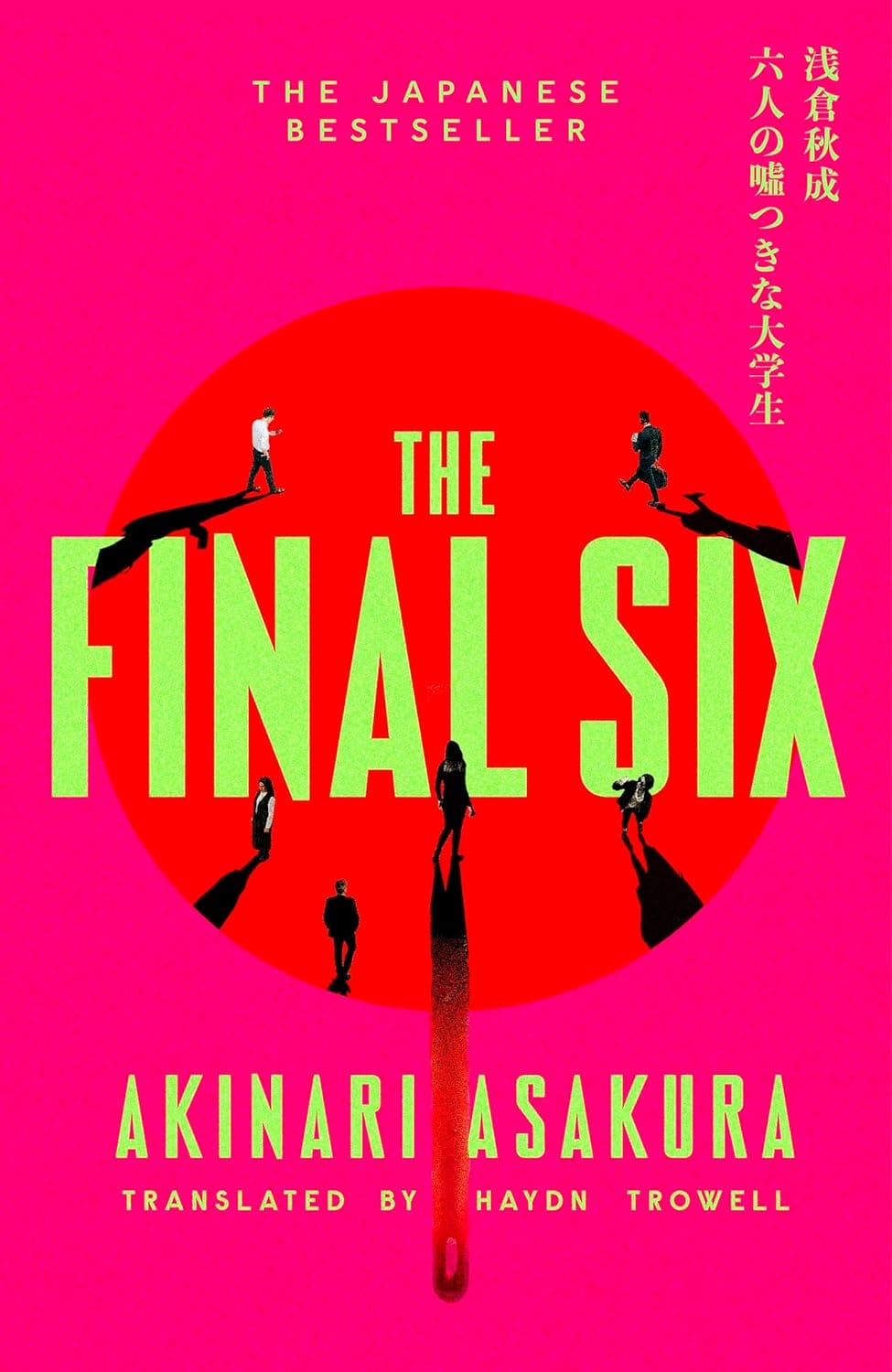
A prestigious IT company sets six job finalists, all fresh out of university, an unusual task: through a group discussion, they have to decide who among them will get the job. If they manage to do so, the company will extend an offer to the winner. If they fail, everyone goes home empty-handed. The conversation quickly grows heated when the participants suddenly discover a package containing envelopes with their darkest secrets and realize that whoever prepared them must be in the same room at this very moment. But will they be able to discover who did it and, most importantly, why?
The Final Six by Akinari Asakura, recently translated by Haydn Trowell, is a suspense novel that uncovers the absurdity of the Japanese job-hunting system. Through the perspectives of its narrators, both at the time of the final interview (Shogo Hatano) and eight years later (Iori Shima), Asakura portrays the system as flawed, mechanical, completely indifferent to individual candidates. Each of the “final six” is forced to exaggerate or distort some facts of their biography to appear more likeable to the hiring committee and is anxious to cover up their lies. They are also willing to do whatever it takes to get the job, which promises an impressively high starting salary. Together, these factors contribute to the unnerving, paranoid atmosphere that shapes their relationships with each other, turning them from fast friends into enemies in the blink of an eye. The characters have to betray each other, but they also end up betraying their own ideals. Job-hunting becomes a psychological experiment, with the interviewees themselves cynically describing the process as one big lie:
It’s a sick cycle. Students lie to get into companies. Companies lie to reel students in. HR can’t actually judge anyone, so unqualified idiots slip through. Those idiots get hired and realize the company wasn’t what they expected. HR realizes they hired the wrong people. And the cycle just keeps going, day after day, forever. Lies upon lies, creating a bigger and bigger system of screw-ups.
The social critique here is far from subtle, at times even making the suspense and detective elements seem almost secondary. Just as much as it is a story about finding a culprit, The Final Six is a story of growth and disillusionment. The characters, and especially the two narrators, not only grow up but also outgrow themselves, so that the darkest secrets they had in their early twenties become just one part of their biographies. Unable to change the system, they still attempt to resist it, refusing to see the sabotage during the final interview in black-and-white terms. If Hatano’s storyline highlights the worst sides of each character, Shima’s more mature narrative then redeems them. Revisiting the interview in retrospect helps both move on and reflect on their experience, showing how much more mature (if somewhat bitter) they have grown:
There were countless things that didn’t sit right with me, but how could I [Hatano] argue? How could any of us? We were job-seeking university graduates—we didn’t understand anything about the real world, and besides, we were dealing with Spiralinx, one of the most cutting-edge and exclusive firms in all of Japan. For all I knew, what I regarded as amoral practices could be commonplace in the adult world, or at least in Japan’s top-tier IT companies. Maybe it was all just the norm?
As the characters come to terms with the grotesque, gruesome system that benefits none of the parties involved, Asakura sprinkles in glimmers of hope, emphasizing that everyone is flawed but everyone can also change. Always on the verge of turning dark, the story manages to remain bittersweet and, at times, surprisingly wholesome. With just enough suspense maintained across both arcs, the novel could appeal to readers of detective fiction and psychological thrillers, as well as anyone tired of navigating the weird tragicomedy that is job-hunting, whether in Japan or elsewhere.