“The Wall Dancers” by Yi-Ling Liu
In 1998, Ma Baoli, a closeted gay police officer living in Hebei, China, stumbled on the online novel Beijing Story while visiting an alleyway internet café. Deeply moved by its tale of gay romance, Ma’s life was changed forever, not just by the discovery of media made for gay men, but by the internet as a platform for media consumption and connection. Two decades later, Ma would be CEO of Blued, the “largest gay social networking app in the world.” But it wouldn’t last. After a few years, he stepped down amid heightened regulation of the tech industry and an illiberal turn that threatened to erode gains made by the LGBTQ community. Ma’s remarkable boom to bust story is told in journalist Yi-Ling Liu’s new book The Wall Dancers: Searching for Freedom and Connection on the Chinese Internet. His journey exemplifies the utopian promise and crushing limitations of the internet in China.
“To understand China today and where it’ll go tomorrow, we must learn to read the Chinese internet,” writes Liu in her introduction. This is undoubtedly true, but The Wall Dancers is only indirectly focused on the Chinese internet as a sort of text that can be read. The book is about “the dancers”.To live in China is to participate in a dance: a dynamic push and pull between state and society. Censor and censored tango to an erratic rhythm of subversion and acquiescence… Nowhere has the drama of this Chinese dance been more evident than on its internet.
This book is about that dance, which has evolved over the past three decades, a period that encapsulates China’s transformation into both the world’s largest online user base and one of its longest-running authoritarian states.
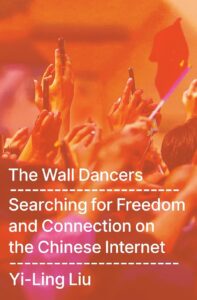
In addition to Ma Baoli, Liu’s dancers include a feminist activist, a hip-hop artist, a sci-fi author, and a Weibo censor. Liu excels at the magazine-style profile, engagingly dramatizing the experiences and interior lives of her subjects. She deftly builds in contextual detail, ranging from political slogans to the rise of ByteDance (the parent company of TikTok). While packaging the book in chapters that alternate between individuals, the resulting narrative is more than a sum of its parts. The narrative arc maps a general trend from “liberalization to retrenchment”, punctuated by turning points like the 2008 Beijing Olympics, the rise of Xi Jinping, and the Covid lockdowns. Liu’s subjects, for all their differences, experience larger shifts in parallel ways. By the end of the book, the feminist activist Lü Pin and the former Weibo censor Eric Liu are both living in exile in the United States. As for Ma Baoli:

You must be logged in to post a comment.