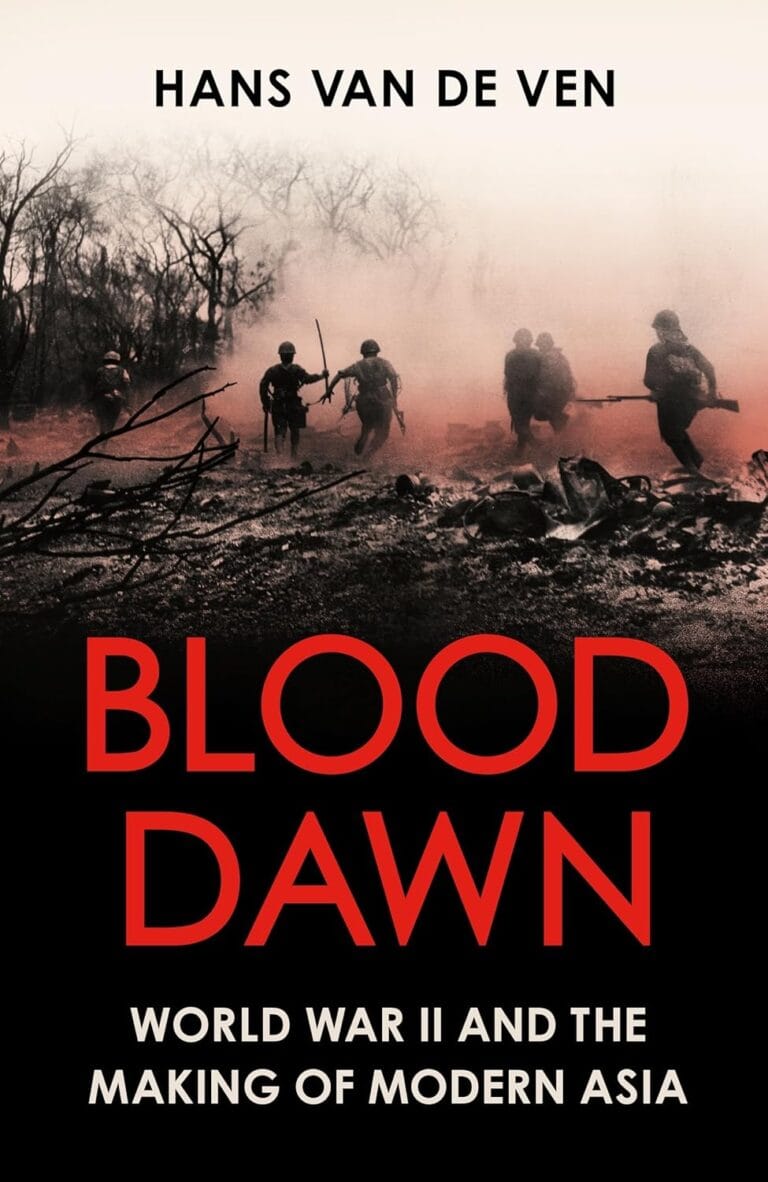
“Yakuza” by Andrew Rankin
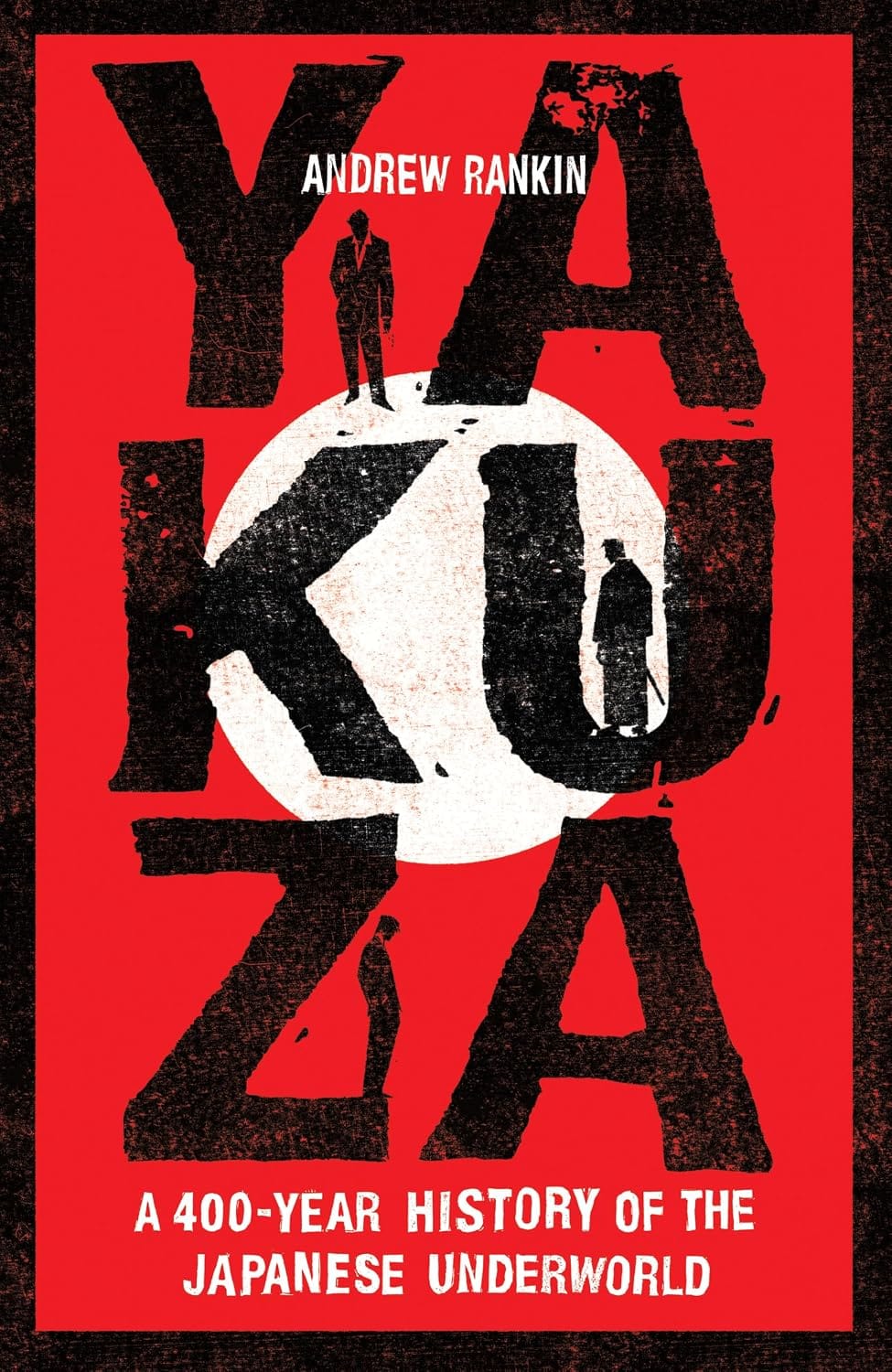
The word yakuza has its own history, and it is not what most readers assume. Kabuki theater and popular fiction gave the word its start, with a stock character called a yakuza-mono: an outlaw or drifter who lived off the gambling tables. The literal meaning is close to “a useless one” or “a bad one”, and the irony is that gamblers adopted it themselves, a self-mocking title for men who made their living by wits and risk while calling themselves worthless. The word stayed slang for a gambler until the early 1900s, when it hardened into a straightforward synonym for gangster. American journalists covering postwar Japan finished the job. They capitalised it into “the Yakuza” the way they capitalised “the Mafia”, and the word spread around the world. The gangsters have spent the century since fighting a label they never chose for a life they mostly did.
That self-mocking title outlasted the men who coined it, and so did the culture that grew up around them. My own interest in that culture began with tattoos. Years ago in Kyoto, a friend showed me her back: intricate artwork worthy of hanging in a gallery, a dragon coiled the length of her spine, a koi climbing one shoulder blade through a drift of chrysanthemum petals. She told me the dragon stood for strength and command over fortune, and the koi for the will to keep fighting upstream, since in the old story a koi that swims far enough against the current turns into a dragon itself. I went looking for more on my own. Andrew Rankin’s Yakuza: A 400-Year History of the Japanese Underworld, is the most definitive study of the yakuza, and the tattoos they are synonymous with, that I have come across.
Tattooing, as it turns out, began as punishment. The Tokugawa shogunate introduced punitive inking in the 1720s. It was meant as a “progressive” replacement for cutting off a criminal’s ears or fingers, and the marks were coded with a bureaucrat’s precision. A band around the forearm marked a thief. A wrist tattoo marked a gambler caught running loaded dice. The character for “dog”, branded across a man’s forehead, marked a repeat petty offender. As crime control, it failed completely. A man carrying “twice convicted thief” on his arm had nowhere left to go but back into crime. The marked men banded together. Punishment hardened into culture.
That hardening took a few more turns before it became art. Japan’s volunteer fire brigades, staffed by townsmen from the early 1700s on and quickly filled with gamblers, popularised ornate chest-and-sleeve tattoos, a style still called gaen by tattooists today. A 19th-century print boom, built around the outlaw heroes of the Chinese epic Water Margin, turned tattoo designs into a fashion craze. By the early 1900s the mark of shame had become a genuine art form, respected enough that British royalty went looking for it. Princes Victor and George, grandsons of Queen Victoria, each had a dragon tattooed down the arm during a stop in Yokohama in 1879. Prince Arthur of Connaught went further in 1906: he had Horiuno, the tattooist attached to Kyoto’s most powerful gang, cover his back with the image of a wrathful Buddhist deity, working out of a suite at Tokyo’s Imperial Hotel.
A mark once used to brand thieves and repeat offenders had become something European princes requested for themselves. That reversal, shame turning into status, is the whole book compressed into a single motif. The yakuza are leftover men. When the samurai class was disbanded, thousands of trained, armed men found themselves with nothing left to fight for. Two and a half centuries of Tokugawa peace turned these “warrior dropouts” into gamblers, pimps, and protection men. The claim to chivalry came after a code of honor was invoked to dress the operation up. It worked well enough that chivalry has stayed their chosen self-description for four hundred years. Rankin keeps returning to the gap between that myth and the men who invoked it.
Rankin’s organising idea, the through line of the entire book, borrows an old saying originally aimed at hatamoto, the samurai retainers who served the shogun directly and drew a stipend whether or not there was any fighting left to do: useful, they were tigers; no longer needed, they turned into rats. Applied to the yakuza, the line holds up as an argument every time Rankin tests it across four centuries. American-led Postwar reconstruction needed the yakuza to run black markets nobody else could organise. The Cold War needed them as anti-communist muscle. The bubble economy needed them to pressure landowners into selling. Each moment Japan required violence it couldn’t officially authorize, the underworld stepped in and grew fat on it. Each time that need lapsed, the yakuza shrank back toward the margins they had spent centuries trying to escape.
Rankin writes this history with a journalist’s eye rather than a scholar’s, even though his credentials run academic: a Cambridge PhD in Japanese literature, twenty years living in Tokyo before any of this. The instincts on the page are a reporter’s. Chapters tend to open on scenes rather than arguments: a prison break timed to Commodore Perry’s gunships arriving off the coast, a massacre inside Tel Aviv’s airport carried out by Japanese terrorists a century later. He resists embellishing any of it. The material carries its own weight. Gangsters lecturing visiting Nazi officers on discipline. Sumo wrestlers defying their gangster patrons by publicly shaving their own heads in front of the press. A dockland gambler elected to parliament, nicknamed “Minister of Tattoos” once he made cabinet, whose grandson later served as prime minister of Japan. That kind of restraint means Rankin trusts his sources enough to get out of their way.
The book’s darkest material comes in a chapter on trafficking, and it stands apart from everything colourful that surrounds it. From the 1870s into the early 20th century, yakuza-run networks moved Japanese girls out of poor rural villages and into brothels across Asia. Recruiters called zegen toured the countryside posing as peddlers of pocket watches and medicine, and left with signed contracts binding a farmer’s daughter to six years of debt servitude. The fine print let a brothel owner beat her if she was lazy, hunt her down if she ran, and walk away clean if she died in his house. One trafficker working out of Singapore, Muraoka Iheiji, ran the trade like a company, with a forger on staff and a former blackmailer who had switched careers after a beating from an angry husband and a bad case of gonorrhea. His men lied to teenage girls about maid jobs overseas, smuggled some of them onto ships inside barrels, and sold girls as young as eight once they reached port.
In the middle chapters charting how Japan’s postwar gangs consolidated into national syndicates, however, names and percentages pile up faster than a reader without prior context can hold onto them. That’s a small cost against a book this well sourced and this alive to its own subject.
The tattoo on my friend’s back was never just a tattoo. Rankin’s history makes clear what that ink used to cost the people who wore it, and how long it took for punishment to turn into pride. Four hundred years later, the design on her back carries none of that cost. It carries all of that history.