“Hooked: A Novel of Obsession” by Asako Yuzuki
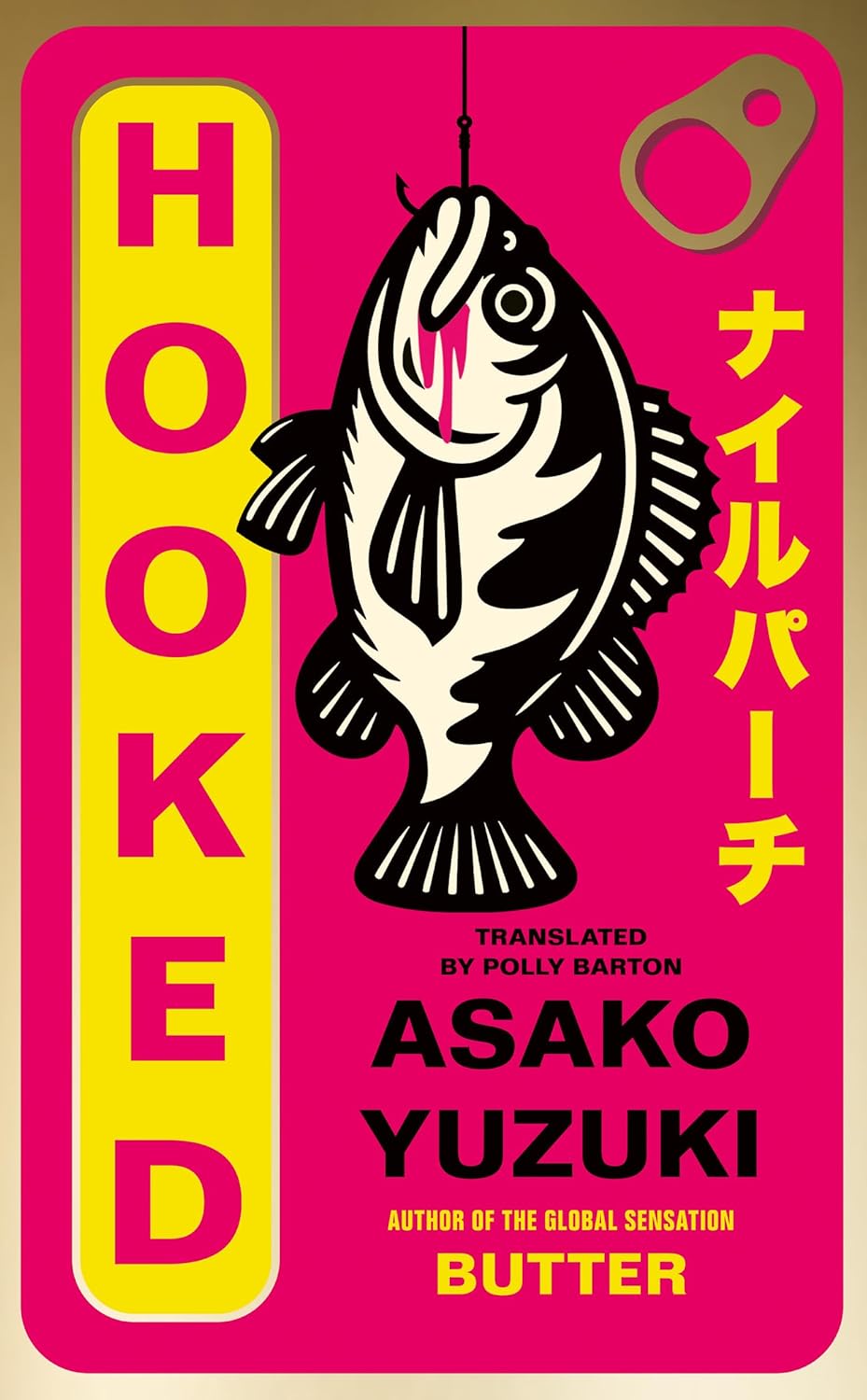
Asako Yuzuki came onto the English literary scene with her best-selling novel, Butter: A Novel of Food and Murder, based on the true story of a female serial killer. Her latest novel, Hooked: A Novel of Obsession, also translated by Polly Barton, explores female friendship. The story may not be as frightening as that of a serial killer, but Yuzuki clearly captures the psychological terror involved in stalking and obsession.
As in Butter, where a blog serves as a plot point, Hooked’s narrative revolves around a corporate executive named Eriko, a devoted follower of a homemaker blog called The Diary of Hallie B, the World’s Worst Wife. Eriko is unmarried, has no friends, and doesn’t seem to know how to properly interact with people apart from her colleagues at a Tokyo fish distribution corporation. After reading this blog for a couple of years, Eriko feels close to Hallie, whose real name is Shoko.
She liked the way Hallie didn’t put on airs and played a touch dumb, if anything, while actually being sharp in her thinking. She selected her words gently, yet in a way that conveyed a certain intelligence, and she was never hurtful to others. She lived a pretty idle life but didn’t seem ashamed of that fact, nor did she try to force any meaning onto it. Above all, her blog was dotted with nice turns of phrase that lingered with Eriko and uncontrived ideas that she found herself wanting to imitate.
The original title in Japanese is The Nile Perch Girls’ Gathering. It refers to the women’s common interest in this fish, which is invasive and has displaced many other fish species. The clever English-language title Hooked incorporates Eriko’s career in fish and seafood distribution as well as the psychological bent of A Novel of Obsession. Eriko hooks Shoko into her mentally unstable orbit. This preoccupation begins when she takes clues from Shoko’s blog to casually bump into her at a favorite café. The two hit it off. Shoko believes she has met someone new in a natural, casual way.
For Eriko, the friendship that develops is something thoroughly different from her interactions with her coworkers.
The sensation of making a new friend, which she hadn’t experienced for decades, came flooding back to her. It wasn’t dissimilar to that sense you had when you were falling in love that the world was opening out in front of you, but it was also distinct from that feeling. With a new friend, the world around you seemed subtly different. You discovered a new side to yourself. The change was only a minor one, and yet it set your heart singing. Now I’ve found her, Eriko thought, I’m not going to lose her. Having a female friend clarified her own contours and colours, gave her a feeling of confidence in herself.
When Shoko stops blogging for several days to attend to her father out of town, Eriko panics. She is so used to hearing about Shoko’s whereabouts through her blog posts that this absence unsettles her. Through more descriptions in Shoko’s blog posts, Eriko figures out where Shoko and her husband Kensuke live and shows up at their apartment unannounced. Shoko hadn’t given Eriko her address, so it seems very out of the ordinary for someone she’d just met once to know where she lives. Kensuke senses something is off with Eriko and warns Shoko to be wary of her new friend. He even worries Eriko is a stalker and is jealous that Shoko is married and has a successful blog. At first, Shoko doesn’t believe Kensuke and can’t see how someone with Eriko’s high-powered job could envy a housewife who blogs about her lack of domesticity, but that will soon change.
There is a jarring narrative shift about a quarter of the way into the novel—it’s unclear if something is lost in translation or whether the shift was Yuzuki’s intention. Up to that point, Eriko has come across as a socially awkward woman; suddenly, she is a strikingly beautiful executive. Reconciling both versions of the character is difficult.
As the story progresses, Shoko befriends Eriko’s former best friend from childhood, a woman named Keiko, and learns about Eriko’s ability to socially ostracize those closest to her when she doesn’t get her way. Soon Shoko can’t see a way out of Eriko’s web. In the second half of the story, Shoko, Eriko, and some colleagues of Eriko spiral into a snarl of chaos that probably could have been consolidated into fewer pages.
The book’s jacket copy attributes a “razor-sharp insight and disarming empathy” to Yuzuki’s characters in their quest to be seen. While it’s difficult to feel empathy for some of the characters as the story plays out, by the end of the 400 page book, Yuzuki eventually shows the human side to all of her characters, including the unsavoury Eriko.