“Rising China, Chinese Cultural and its Transformation in Southeast Asia”
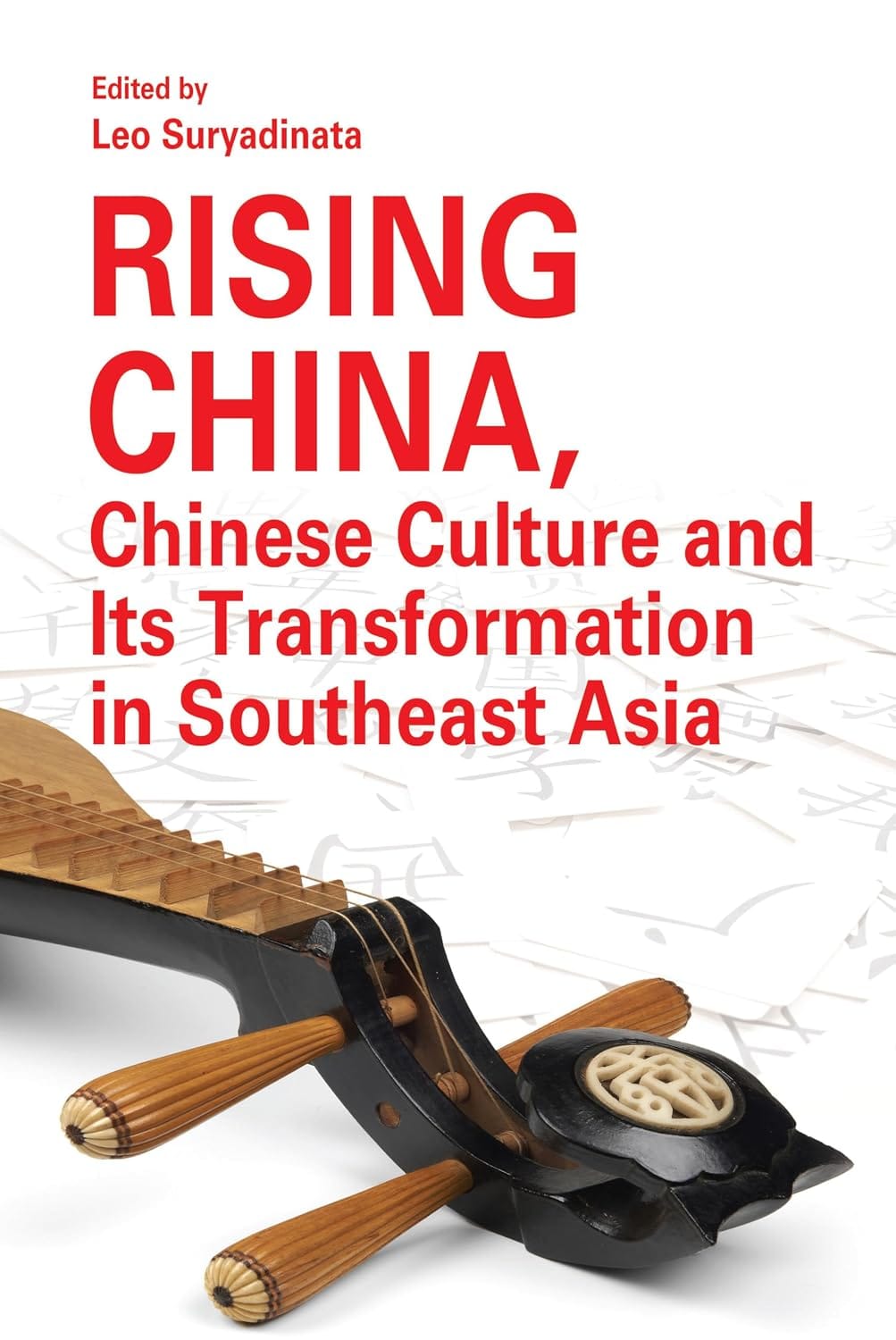
The rise of China as a global superpower, and the myriad impacts of “rising China” on Southeast Asia have energised a sizeable volume of scholarly literature and punditry. Singapore’s Institute of Southeast Asian Studies (ISEAS)-Yusof Ishak Institute—one of the leading think tanks in Southeast Asia—has made notable efforts in explaining these impacts, especially in relation to the region’s sizeable communities of settled ethnic Chinese minorities. Three recent volumes in its “Rising China and Southeast Asia Series”—broaching topics ranging from new immigration, to soft power initiatives in education and culture—have attempted to shed light on how the diverse impacts of “rising China” have reshaped communities across the region. Emerging from a series of workshops hosted by ISEAS’s “China and Southeast Asia project” over the past decade, these volumes have the flavour of conference proceedings, that would interest predominantly specialist audiences rather than generalists.
Rising China, Chinese Culture and its Transformation in Southeast Asia is the latest publication in this series, dealing with the question of how “rising China” has impacted Southeast Asia’s “local Chinese cultures”—here, presumably referring locally inflected forms of cultural expression pre-dating the more recent “rise of China”— and its prospects for the future. Edited by Leo Suryadinata, a veteran scholar of Chinese migration in Southeast Asia who has long advocated studying the Chinese minorities across the region within the context of their own nation-states rather than from a cultural essentialist perspective, this volume has gathered a range of scholars from within the region, whose individual chapters discuss the range of religious, artistic, and literary practices that may be loosely labelled as “Chinese”. Following a brief introductory section, the book is organised into three main sections dealing with the themes of Chinese religions, music and opera, language and literature. Drawing on archival research, interviews and ethnography, the individual chapters feature life stories and contemporary experiences of Buddhists in Malaysia and Indonesia, to ritual specialists in Brunei, writers from Malaysia and the Philippines and opera performers in Singapore; what unites them are the ways an ostensibly “Chinese” culture is transforming in light of “rising China”.
The entire book is premised on the fact that there is indeed a distinctly “Southeast Asian Chinese culture” that now faces challenges to its further transformation or development because of the broad spectre of China’s rising presence. The overarching question, as Suryadinata notes in the book’s pithy preface, asks “whether the further localization of local Chinese culture is being increasingly challenging, if not impossible, in light of China’s growing influence?”
The findings of the chapters suggest that such fears are misplaced. Indeed, despite the fact that this entire volume is premised on anxieties that “rising China” will foreclose the development of “local Chinese culture” in Southeast Asia, the fifteen chapters suggests that “rising China” is hardly on the minds of the various communities profiled. Rather, the picture which emerges is of individuals and communities embedded in various national contexts, whose preoccupations and interests are only tangentially connected to China, and to varying degrees intersecting with “Chinese” identities. A few chapters have little to no mention at all of Chineseness or China; for instance, Tan Lee Ooi’s chapter on lay Buddhism in Malaysia gestures towards the universal crisis of secular modernity, while Jack Chia’s chapter on a Buddhist pop-music group in Indonesia reveals the challenge of an evangelical Christianity, not China. While the presence of China emerges intermittently in various chapters—in the presence of a new ambassador visiting Brunei’s religious sites, or daily interactions between Hui Muslims in Malaysia—these are presented as local interactions and hardly proxies of a powerful or hegemonic Chinese state.
One could almost fault the editors for misrepresenting the contents of the book, given the paucity of references to “rising China” or even the PRC in its various chapters. An increasingly assertive China is no doubt at the backdrop, but there are obviously other considerations and reference points that have nothing to do with China or Chineseness that the chapters illustrate. To be sure, the phenomenon of re-Sinicisation and opportunism among Southeast Asia’s Chinese communities eager to leverage China’s rise is an important one, but it is not treated at length in this book. Rather, the argument which repeatedly emerges—most clearly in chapters by veteran scholars Wong Yoon Wah and Chua Soo Pong—is an insistence on “indigenization”, or looking beyond Chineseness to privilege local contexts. These are all valid points, but it seems a missed opportunity to grapple with the issues the book’s title and back cover seemed to promise but then failed to deliver.
I set down this volume wondering whether its whole premise had been in fact a misdirection; that at least according to the individual case studies presented here, Chinese communities in Southeast Asia have not, in fact, been overrun by the spectre of rising China, nor do they evidence any such fears. A more interesting question, perhaps would be how cultural production from Southeast Asia is instead finding new audiences in China, and the recasting the nature of such encounters as generative rather than stifling. For instance, how are China’s increasingly cosmopolitan audiences accessing and engaging with Chinese-language texts, literary works or musical genres created in Southeast Asia? Can such interactions enlarge conceptions and definitions of Chesneses outside the parameters defined by the party-state? This volume does not deal with these questions; any future attempt to look beyond the real or imagined impact of China on the diaspora would do well to grapple with the multidirectional nature of such encounters and their generative legacies.