“Abandoning a Cat” by Haruki Murakami
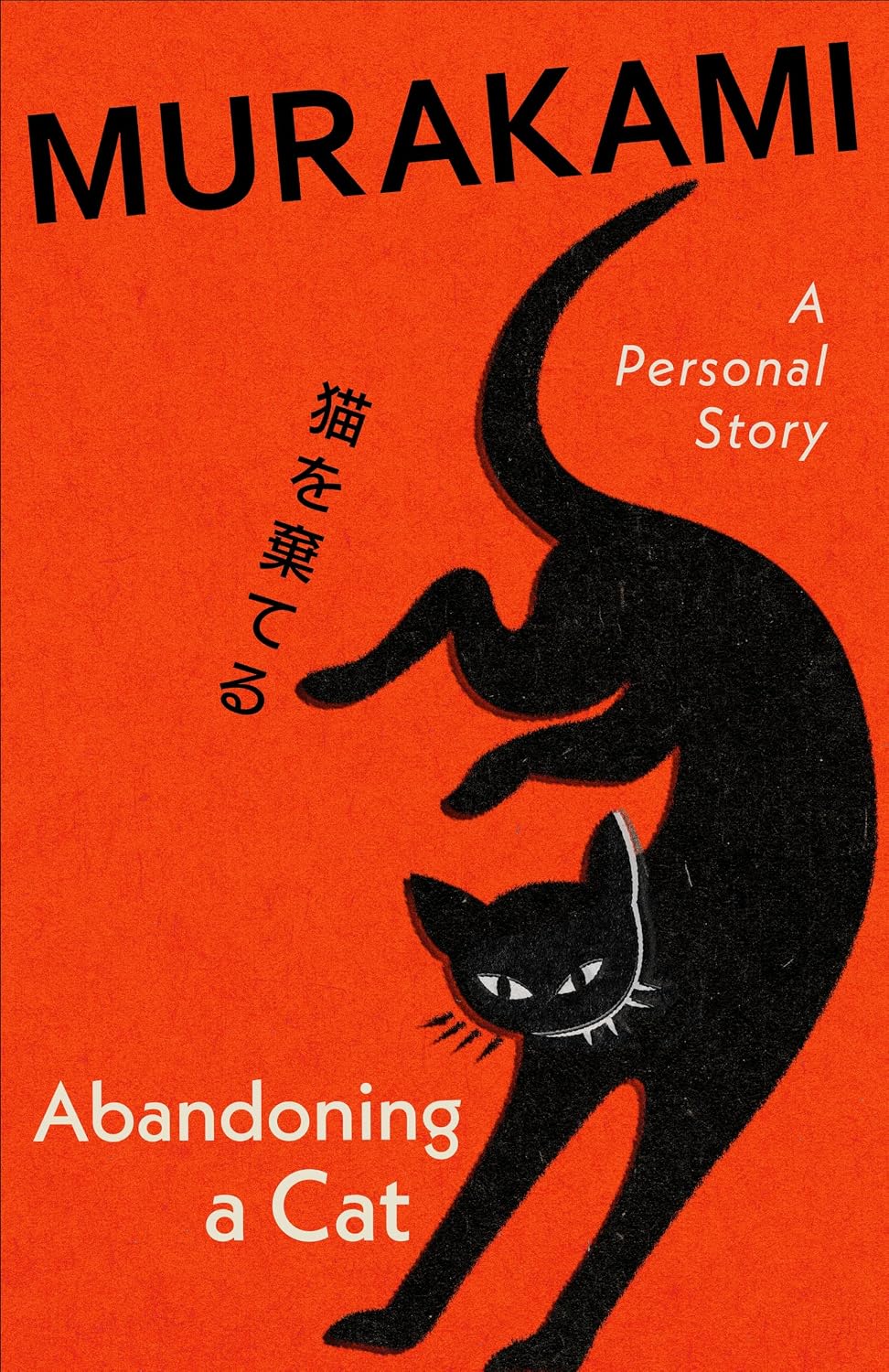
Parents are few and far between in Haruki Murakami novels. The Japanese author’s protagonists are adrift, often removed from their friends but nearly always removed from their families. This fictional alienation reflects a postwar dilution of collectivism in Japan as Murakami was growing up, not to mention a widening ideological gap between the wartime generation and their children. Even accounting for the breakdown of the traditional family unit, however, Murakami’s characters are extreme examples of a trend; they suggest a deeper, more personal source. In his 2026 memoir, Abandoning a Cat, Murakami opens up about his own father, with the usually private author offering readers an intimate account of a relationship made raw by generational abrasion.
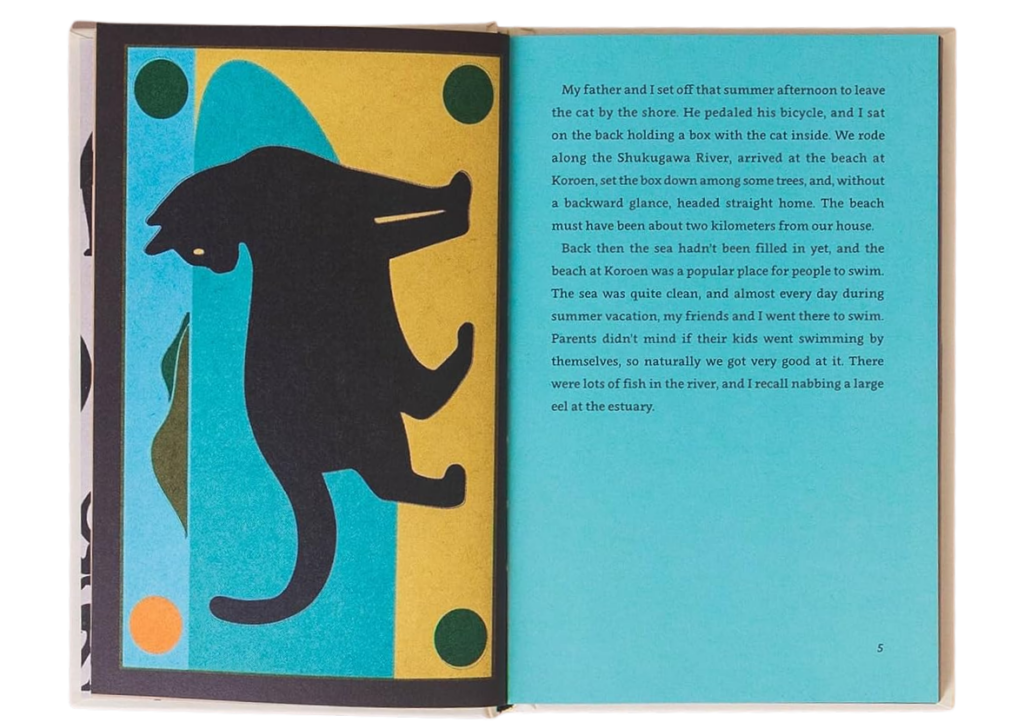
Originally published as a New Yorker article in 2019, Penguin Random House’s generously illustrated and expanded edition of Abandoning a Cat provides a fuller picture of Murakami’s father. It begins with Murakami senior and his childhood son abandoning their pet cat on a beach. The two leave the animal, now a burden on the family, in a cardboard box and cycle the two kilometers home. When they arrive back they find that the forsaken animal has beaten them there. Impressed by its miraculous return, Murakami’s father allows the cat to resume its domestic role.
The memoir continues with more anecdotes of Murakami’s father, who, born in 1917, was an apprentice Buddhist priest before being drafted into the military on three separate occasions. Tension here between the spiritual and martial suits a paternal figure who becomes increasingly bifurcated as the book progresses. Knowing him as someone capable of compassion and spite, of cruel practicality and poetic romance, Murakami’s image of his father is torn between the man’s genuine faith and the violence he likely committed on the battlefield. He was, after all, part of the division sent into Nanjing shortly after the city fell in 1937, a period marked by atrocities—atrocities so damning that Japanese revisionists have been indefatigable in their efforts to remove them from school textbooks. Too afraid to broach the subject when he was younger, and estranged from his paternal figure for most of his adult life, Murakami never discovered if his father partook in this widespread cruelty.
What he does discover, poring over historical records and the personal accounts of soldiers, is the unsanitary and poorly provisioned conditions his young father endured in service of his nation. The harsh realities of wartime Japan, whether the shocking violence or chronic neglect, become a generational wound that niggles at Murakami. Fans of the Japanese author may recall evidence of this persistent trauma in his novels, especially The Wind-up Bird Chronicle. For Murakami, history is not just a dispassionate account of the past but, as he puts it here, a “warm blood flowing in both our conscious and unconscious mind[s].”
Murakami’s resistance against this indomitable flow, he acknowledges, resulted in profound familial tension. Murakami senior, a studious academic who had to drop out of graduate school, was keen for his only child to follow in his footsteps. “I get the feeling,” writes Murakami,
that my father pinned his hopes on me, his son, to carry out what he’d been unable to accomplish in his own life. As I grew up and formed my own personality, the psychological disconnect between us got worse and more obvious. Both of us were unbending and wouldn’t give in to the other. When it came to not expressing our thoughts directly, maybe we were two of a kind.
Murakami has become known for—indeed takes pride in—the stubborn pursuit of his goals, a single-minded perseverance that has fuelled his prolific output. It is unsurprising that he was unwilling to accept the imposition of another’s aspirations, even those of his own father. There is nevertheless a note of regret as he describes the rift opening up between them, one that resulted in decades of estrangement.
Abandoning a Cat is a story of clashing generations, each coloured by its environment. Murakami’s father spent his youth in the “Dark Valley” of the 1930s and 40s, a period of rampant militarism and authoritarian rule in Japan. Though aspiring to be a poet-scholar, he was repeatedly dragged into warfare and later tasked with supporting his family in the poverty of the early-postwar period. Murakami, hitting his teens in the ’50s and a highschooler by the ’60s, was, in contrast, part of a freer Japanese youth who defined themselves by rejecting the values of their elders. Murakami, no doubt influenced by a liberal and ideologically rich two decades, had little time for the didactic and outdated views of his father. He had his own dreams to follow, including the eventually realized one of running a jazz cafe.
A disregard for parental wishes comes naturally to the young, but the Murakami writing here is seventy years old. He accordingly adopts a more conciliatory tone. For those mercifully spared the past’s great follies, it is easy to criticize former generations, but the author is careful to give his dad a fair shake. In a memoir that lies somewhere between historical record and personal account, he admits his father was not perfect, but he also acknowledges that the man was abandoned by his own economically challenged parents and then exploited, like so many young Japanese men, by a government heedlessly chasing its own violent ambitions. To put it simply, Murakami’s father was in part a product of his times.
As is highlighted so often in the author’s own novels, people are dragged kicking and screaming by the flow of history—but they do on occasion wriggle free. Murakami’s father abandons their cat at the beginning of the book because that was common practice in the fifties. And yet when the pet miraculously arrives home, he lets it stay. It is a moment of feeling and a reminder to Murakami that, whatever the generational and ideological distance between people, compassion is another inheritance of that “warm blood” of history.
“All we can do,” Murakami writes towards the end of this brief but weighty book, “is breathe the air of the period we live in, carry with us the special burdens of the time, and grow up within those confines.” Whatever the difficulties of the period, the good person is ultimately the one who finds the space to be compassionate within their own confines.
Abandoning a Cat may be marketed on its feline content, but it is, above all, relatably human. The memoir is for anyone intrigued by the moral knots of generational time and the efforts of those, like Murakami, attempting to untie their own historical and familial tangles.

You must be logged in to post a comment.